Hydro-Jetting vs. Snaking: The Best Strategy to Clear Tree Roots from Sewer Lines
How to Clear Tree Roots From a Sewer Line
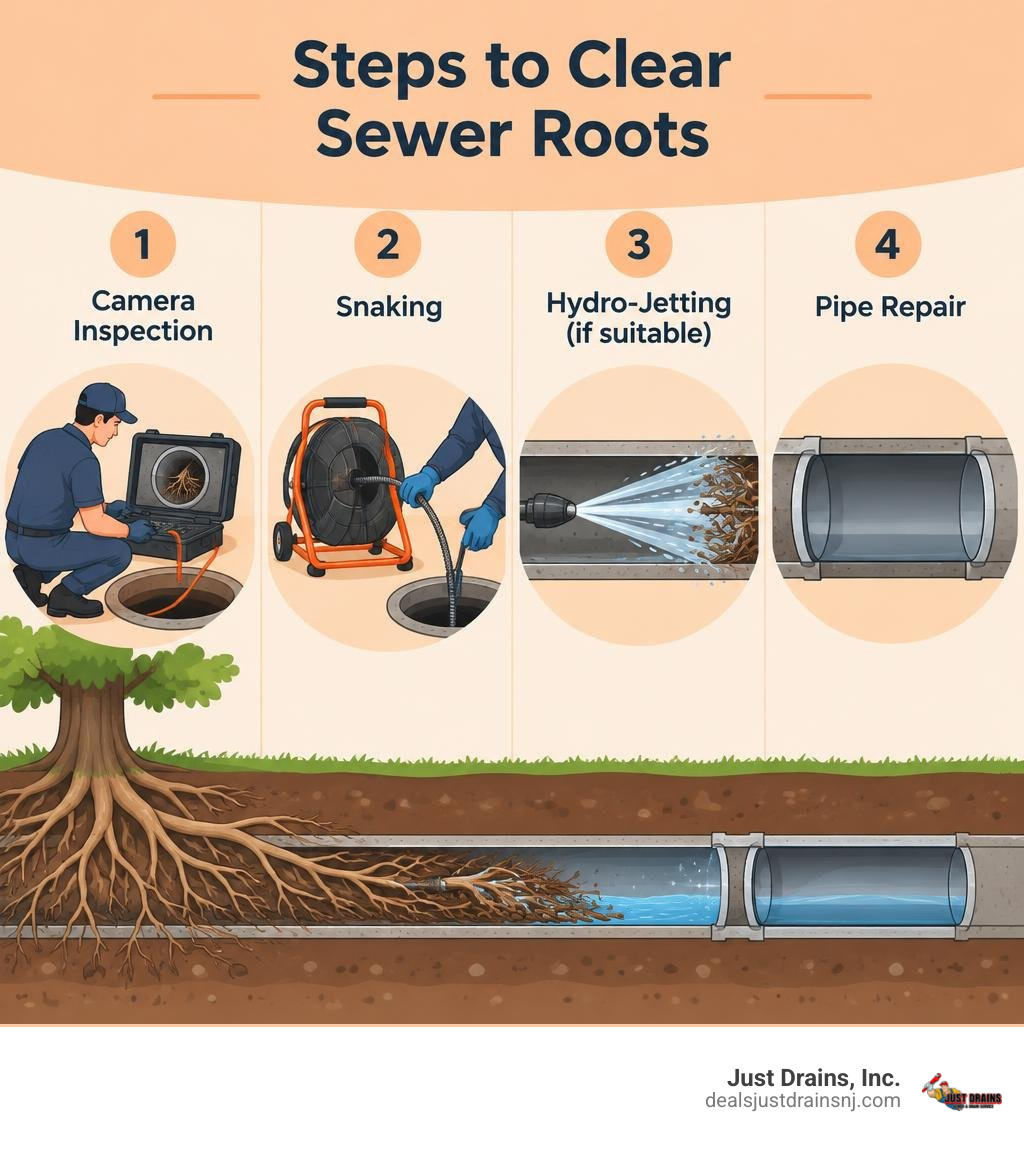
Stop using water if sewage is backing up. To clear tree roots from a sewer line, have a plumber inspect the pipe with a camera, cut through the roots with a sewer snake, and use hydro-jetting to wash out remaining roots and debris if the pipe can handle the pressure. Cleaning restores flow, but roots can return through the same crack or loose joint. A damaged pipe may need relining or replacement.
I’m Judy Weissberg, and my 29 years leading home-service field teams inform this practical guide to clear tree roots from sewer line blockages. Let’s start with how roots get into the pipe, then compare the ways to remove them.
How Tree Roots Invade Underground Sewer Pipes
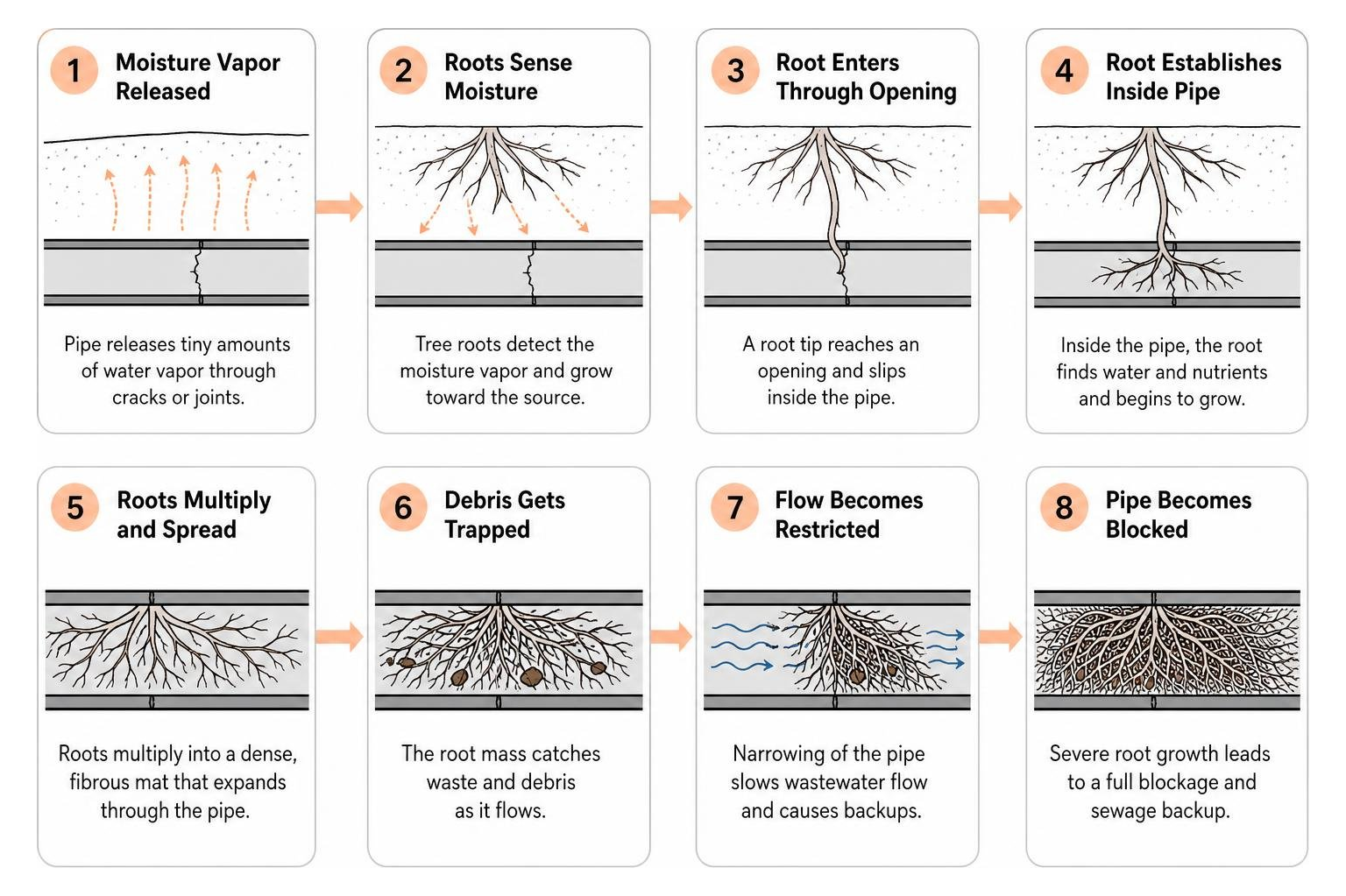
Trees are remarkably efficient survival machines. Their underground root networks constantly forage through the soil for moisture, oxygen, and nutrients. Because underground sewer lines carry a warm, nutrient-rich slurry of water and organic waste, they naturally act as underground magnets for nearby plant life.
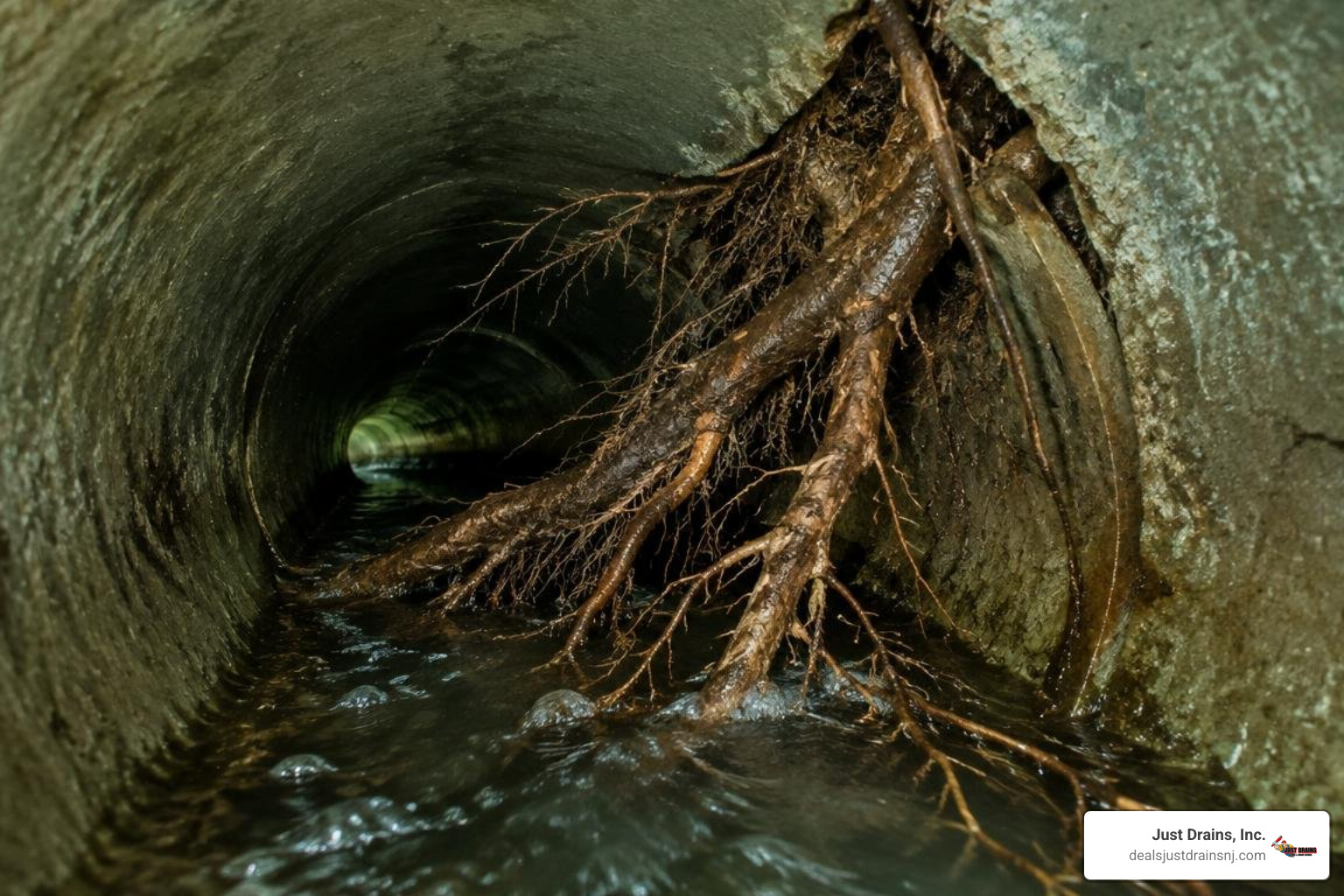
Pipes constantly release minute amounts of water vapor into the surrounding soil through microscopic imperfections, temperature differentials, or joint connections. Tree roots sense these faint vapor trails and naturally grow toward the source. Once a hairline root tip reaches an opening, it squeezes inside. Once within the line, where water and nutrients flow freely, that tiny hair multiplies into a dense, fibrous mat that catches waste and restricts flow.
The vulnerability of your lateral line depends heavily on its construction material and age:
- Vitrified Clay Pipes: Common in homes built before 1980, clay pipes consist of short sections joined together with mortar or friction rings. Over decades, ground shifting breaks these seals, allowing roots effortless entry. Clay is also brittle and prone to structural cracking.
- Cast Iron Pipes: While strong, cast iron eventually corrodes from the inside out. As it develops channel rust and scale along the bottom, pinholes and cracks form, inviting thirsty roots inside.
- PVC and ABS Plastics: Modern plastic lines with solvent-welded joints are far more impervious to intrusion. However, improper installation, poor joint gluing, or mechanical damage from settling stones can still crack the plastic or compromise fittings.
Environmental factors accelerate this intrusion. During dry summer spells or extended drought conditions, root systems expand aggressively across wide distances in search of moisture. Fast-growing trees with water-hungry root systems—such as willows, silver maples, and cottonwoods—are notorious for infiltrating underground infrastructure. Navigating these risks requires understanding your property’s specific sanitary service line guidelines, as homeowners are almost universally responsible for maintaining the lateral line from their building to the municipal main.
Warning Signs of Infiltration in Your Main Line
Root invasion doesn’t happen overnight. It develops gradually over months or years, showing distinct symptoms before causing a complete, catastrophic backup:
- Gurgling Toilets and Drains: As root mats obstruct normal airflow and water flow, air bubbles get trapped in the lateral. When you flush or drain a basin, air forces its way up through trap seals, producing distinct bubbling or gurgling sounds.
- System-Wide Slow Drains: If only one sink drains slowly, the issue is likely a localized trap clog. But when multiple fixtures across the house drain sluggishly at the same time, the main line is obstructed. Homeowners often struggle with how to tell whether a clog is in one fixture or the main sewer line until lower fixtures start acting up.
- Low-Level Backups: Wastewater follows gravity and path of least resistance. When tree roots choke the main exterior lateral, understanding why sewage backs up into the lowest drain first helps explain why basement floor drains, utility sinks, or ground-floor bathtubs overflow before upstairs fixtures show signs of trouble.
- Sewer Gas Smells: Trapped organic waste decaying behind root dams pushes foul methane and sulfur odors backward through plumbing vents and fixture traps into your living spaces.
- Lush Lawn Patches or Sinkholes: In severe scenarios where roots break open the pipe, leaking wastewater supercharges nearby grass growth, creating an unusually green, spongy patch in your yard. In extreme cases, washed-out soil creates localized sinkholes above the line.
Mechanical Solutions: How to Clear Tree Roots from Sewer Line Systems
When roots choke a main drain, mechanical clearing methods offer the most reliable immediate relief. Before selecting a mechanical method, a professional technician should always run a high-resolution CCTV sewer inspection camera down the cleanout.

A camera survey typically costs between $350 and $400. It pinpoints the exact location and depth of root entry, evaluates pipe structural integrity, and determines whether the line can safely handle aggressive cleaning tools.
| Feature / Metric | Mechanical Drain Snaking (Augering) | High-Pressure Hydro-Jetting |
|---|---|---|
| Primary Mechanism | Rotating steel cable with expanding C-cutters or blades | High-pressure water stream (up to 4,000 PSI) with spinning nozzles |
| Root Removal Efficacy | Punches a hole through the center; cuts core roots | Shears roots flush against the pipe wall (360-degree clean) |
| Pipe Wall Cleaning | Leaves perimeter roots, scale, and grease intact | Completely scours grease, sludge, and mineral deposits |
| Typical Cost | $200 – $450 | $450 – $900 |
| Risk to Fragile Pipes | Low-to-moderate mechanical vibration | High risk on cracked clay or severely rusted, thin cast iron |
| Durability of Results | Short-term (roots regrow within 3 to 9 months) | Long-term (pipe remains clear for 12 to 24+ months) |
Drain Snaking and Root Cutters: Capabilities and Limits
A mechanical sewer snake (motorized auger) drives a heavy, flexible steel cable through the sewer pipe. For root cutting, the technician attaches specialized expanding blades—such as dual C-cutters, spade blades, or saw-tooth heads—matched to the inner diameter of the pipe.
As the machine rotates the cable, the spinning blades chop through dense root masses, snagging fibrous strands and punching an open passage through the blockage to restore basic flow.
However, snaking has physical limitations. The rotating head naturally follows the path of least resistance down the center of the pipe. While it bores a clean core hole, it often leaves root ends clinging to pipe joints and wall fractures.
These remnant roots act as an underground trellis, catching toilet paper and debris. This explains why drain clogs keep returning within a few short months if no further corrective action is taken.
Using Hydro-Jetting to Clear Tree Roots from Sewer Line Walls
Hydro-jetting represents the gold standard for comprehensive, non-invasive line restoration. Operating at pressures up to 4,000 PSI and water volumes around 12 to 18 gallons per minute, a commercial hydro-jetter uses specialized forward- and rear-facing nozzles to propel a heavy hose through the lateral.
As the jetter nozzle moves through the pipe, forward-firing water jets penetrate dense root masses, while high-velocity spinning rear jets slice root intrusions completely flush against the interior pipe wall.
Beyond shearing roots, hydro-jetting completely scours away built-up sludge, scale, and grease buildup that accumulate over decades.
Evaluating main sewer line cleaning costs shows that while jetting requires a higher initial investment than basic snaking, its ability to completely clear the entire pipe circumference significantly extends the time needed between service visits.
Chemical Root Treatments: Foaming Killers vs. Copper Sulfate
After mechanical clearing restores baseline flow, chemical treatments help suppress root regrowth inside the pipe. These products fall into two primary categories: contact herbicides and foaming barrier agents.
1. Copper Sulfate Crystals
Copper sulfate is a traditional, inexpensive contact herbicide. When dissolved in water, copper ions penetrate root cells, causing rapid dehydration and tissue death. A 10-pound bag often costs under $20, translating to a maintenance cost of less than $4 per treatment.
However, copper sulfate has clear functional drawbacks:
- Gravity Flow Limitation: As crystal-infused water flushes down the toilet, it travels exclusively along the bottom third of the pipe. Because many tree roots penetrate through joints at the top or upper sidewalls of the pipe, standard copper sulfate washes beneath them without making contact.
- Environmental Concerns: Copper is a heavy metal that does not degrade. It passes through municipal wastewater systems and proves highly toxic to aquatic ecosystems. Consequently, multiple states and municipalities have strictly banned its residential application.
- Septic System Disruption: If applied excessively down lines connected to septic tanks, copper sulfate can kill the beneficial bacteria responsible for digesting solid waste. While small, controlled doses (up to 2 pounds directly into a tank, or 2 to 6 pounds via the distribution box) are sometimes tolerated, caution is essential when using this chemical.
Homeowners interested in traditional chemical applications should review guidelines on how to use copper sulfate for tree roots to balance efficacy, pipe material safety, and local environmental compliance.
2. Foaming Root Control Products (Dichlobenil Blends)
Modern foaming root treatments—such as RootX (which runs around $62 to $88 per 2-to-4-pound jar) or Green Gobbler Foaming Root Killer ($19.98 per 10-pound bag)—solve the gravity problem. When mixed with water, these powdered compounds react immediately to generate a thick, expanding foam that fills the entire pipe volume.
The foam coats the top, sides, and joints of the pipe interior, directly contacting all root entry points. The active ingredient (typically Dichlobenil) penetrates root cell walls and creates an inhospitable barrier that retards new root sprout development for up to a year, without harming the main tree above ground.
Application Timing and Maintenance Cycles
Timing determines how well chemical root treatments work:
- Wait After Mechanical Snaking: Never apply root killers immediately after mechanical cutting while roots are actively bleeding sap. Wait 2 to 3 weeks for the cut root ends to recover and form fresh cellular tips capable of absorbing the herbicide.
- Apply During Low-Usage Hours: Introduce chemicals right before bed or prior to leaving the house for the day. This leaves the solution undisturbed in the pipe for 6 to 12 hours rather than immediately washing it out with sink and shower water.
- Follow a 6-to-12 Month Cadence: Apply treatments semi-annually—ideally in late spring during active growth and early autumn when roots seek moisture ahead of winter.
- Avoid Using on Sound, Uncompromised Lines: Applying chemical root killers to completely undamaged pipes without active root growth provides zero preventive value and unnecessarily wastes money.
Long-Term Prevention and Pipe Repair Strategies
Mechanical clearing and chemical herbicides manage symptoms, but they do not structurally repair cracked or broken pipes. As long as cracks remain open in moist soil, tree roots will eventually return. Permanent resolution requires structural intervention or targeted landscape management.
CIPP Trenchless Relining vs. Full Pipe Replacement
Homeowners facing persistent, severe root intrusions generally choose between two primary structural fixes, as highlighted in guides on solving tree roots in sewer lines:
Cured-In-Place Pipe (CIPP) Relining:
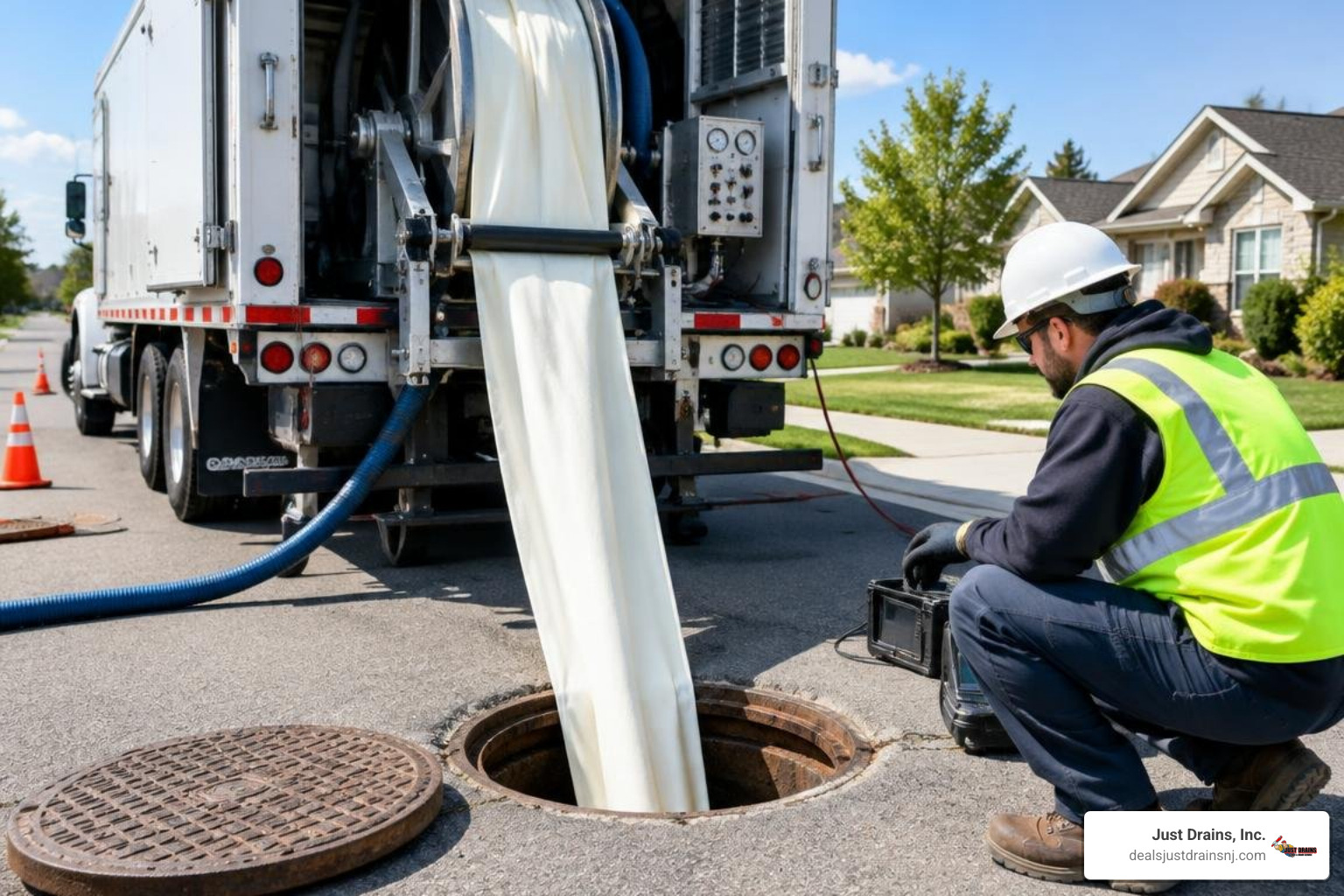
- The Process: Trenchless relining inserts an epoxy-saturated felt tube into the damaged lateral through an existing cleanout. Once positioned across the damaged section, an internal bladder inflates the sleeve against the old pipe walls while steam or hot water cures the resin into a rock-hard composite.
- The Result: A jointless, smooth, structural pipe-within-a-pipe with an expected lifespan of up to 50 years. Because the new interior has zero joints or seams, roots cannot re-enter.
- Cost: Typically ranges from $80 to $250 per linear foot, often eliminating the need to excavate lawns, driveways, or finished landscapes.
Open-Trench Pipe Replacement:
- The Process: Excavators dig up the old, compromised clay or iron line and lay modern, schedule-40 PVC pipe with solid, solvent-welded connections.
- Cost Factors: While standard pipe replacement runs between $1,253 and $4,701, total costs can climb to $8,500 or more if the lateral runs under concrete driveways, retaining walls, or deep municipal connections. Excavations that require removing concrete slabs routinely add $3,000 or more to baseline estimates.
When managing recurring blockages or emergency main sewer line clogs, deciding between recurring cleanouts, relining, or replacement comes down to structural integrity, surface restoration expenses, and long-term property plans.
Best Practices to Permanently Clear Tree Roots from Sewer Line Networks
To protect your drainage infrastructure without clear-cutting your yard:
- Plant Sewer-Safe Species: Choose slow-growing, shallow-rooted trees and shrubs (such as Japanese maples, dogwoods, or flowering crabapples) rather than aggressive water-seekers like poplars, willows, or silver maples.
- Maintain Proper Planting Buffers: Plant small trees at least 10 feet away from sewer laterals; place large-canopy trees at least 30 to 60 feet away.
- Install Physical Root Barriers: When landscaping near existing utilities, install high-density polyethylene (HDPE) root deflection barriers 24 to 36 inches deep to redirect roots away from buried lines.
- Schedule Annual Video Audits: An annual camera inspection catches new root intrusions early, before they cause catastrophic structural damage or complete household backups.
Frequently Asked Questions About Clearing Sewer Roots
How much does it cost to clear tree roots from a sewer line?
Standard mechanical snaking to punch an opening through a root blockage generally costs between $200 and $450. Comprehensive hydro-jetting, which shears roots flush with the pipe walls and flushes away all debris, typically ranges from $450 to $900.
A diagnostic sewer camera inspection costs $350 to $400. If root growth has collapsed or structurally cracked the pipe, full lateral replacement runs from $1,253 to $4,701, reaching $8,500+ for complex excavations under driveways or deep municipal tie-ins.
Standard homeowner insurance policies usually exclude root-related pipe damage, though optional sewer line service endorsements are often available for around $8 per month.
Can chemical root killers permanently destroy tree roots in pipes?
No. Chemical treatments (like foaming Dichlobenil or copper sulfate) temporarily kill the localized root tips inside the pipe and suppress new growth for several months. They do not travel backward into the soil to kill the entire tree, nor do they seal the structural crack where roots first entered.
Once the residual chemical washes away, nearby root systems will exploit the opening again unless the pipe is structurally sealed with CIPP lining or replaced with PVC.
Will snaking alone completely remove a root blockage?
No. A mechanical snake with a cutting blade punches a hole through the center of the root mass to restore water flow, but it leaves root ends attached along the walls and joints. These remaining root strands act as a catchment net for waste, toilet paper, and flushable wipes, frequently leading to another blockage within a few months. Hydro-jetting after snaking scours the walls clean for a far more thorough clearing.
Professional Sewer Cleaning Solutions in Central New Jersey
Root intrusions require quick, decisive action using proper commercial equipment. At Just Drains, Inc., based in Howell, NJ, we bring over 30 years of specialized drain-and-sewer cleaning experience directly to your doorstep across Monmouth, Ocean, and Mercer Counties.
We don’t do general plumbing rough-ins or install bathroom fixtures; we focus exclusively on cleaning, diagnosing, and clearing residential and commercial drainage lines. When roots choke your lateral, our service vans arrive equipped with high-definition CCTV camera systems, heavy-duty mechanical augers, and commercial hydro-jetting equipment.
We take pride in our straightforward approach: you get clear, upfront, flat-rate pricing with zero hidden fees or unnecessary upsells. If you are struggling with recurring sewer backups or suspect tree roots have invaded your underground lines, contact our team today for professional drain and sewer cleaning services you can count on.