Main Sewer Line Cleaning Cost in Monmouth County, NJ: What Homeowners Actually Pay
Main sewer line cleaning costs more than a standard drain clearing, and the final price depends on how severe the blockage is, how easy it is to access your sewer line, and when you need the work done. Understanding what drives the cost is the best way to evaluate whether a quote you receive is fair.
If you are dealing with a backed-up sewer line right now and every drain in the house has stopped working, getting the problem solved fast is probably your first priority. That is completely understandable. Whether you are actively dealing with a backup or just trying to make sense of a quote, this guide breaks down what actually drives the cost so you can make a confident decision. Just Drains handles main sewer line cleaning for homeowners across Monmouth County and the surrounding Central New Jersey area, and we want you to understand exactly what you are paying for before you pick up the phone.
Why Main Sewer Line Cleaning Costs More Than a Regular Drain Clearing
Before getting into what affects cost, it helps to understand what you are actually paying for. Main sewer line cleaning and drain cleaning are two different services, and mixing them up is one of the most common reasons homeowners feel surprised by a price.
A drain cleaning addresses a single fixture. Your kitchen sink is slow. Your shower is not draining. Your toilet keeps backing up. These clogs usually sit in the branch drain line connected to that one fixture. They are typically quicker to clear and less expensive. At Just Drains, drain cleaning starts at $63, which covers the kind of single-fixture clog that most homeowners run into.
A main sewer line cleaning is a bigger job. Your main sewer line is the single pipe that carries wastewater from every drain in your home out to the municipal sewer connection at the street. When that line gets blocked, it does not affect just one sink or one toilet. It affects everything. Water backs up in the lowest drains first, usually a basement floor drain or a ground-floor bathtub, and the problem escalates from there.
The equipment is larger, the access requirements are different, and the blockage is usually deeper and harder to reach. That is why main line work costs more than clearing a single slow drain.
How to Tell If You Need Main Line Cleaning or Just a Drain Clearing
This is one of the most practical things you can figure out before calling anyone, because it directly affects what you will pay.
Signs you probably have a single-fixture clog:
- Only one sink, toilet, tub, or shower is slow or backed up
- Other drains in the house are working normally
- The problem started recently and affects one bathroom or one kitchen drain
Signs you probably have a main sewer line blockage:
- Multiple drains in different parts of the house are slow or backing up at the same time
- Water comes up through a basement floor drain or a first-floor tub when you flush a toilet or run a washing machine
- You hear gurgling sounds from drains you are not using
- There is a sewage smell in the basement, near the foundation, or around exterior cleanout caps
- A plunger is not helping, or it temporarily clears one drain but another one starts backing up
If you are seeing any of the main line warning signs, a standard drain clearing is unlikely to solve the problem. The blockage is deeper in the system and needs to be addressed at the main line itself.
Practical rule of thumb: If only one fixture is affected, it is probably a branch drain clog. If two or more fixtures in different areas of the house are backing up, the problem is most likely in your main sewer line.
What Affects the Cost of Main Sewer Line Cleaning in Monmouth County
When you call for main sewer line cleaning and the price comes in higher or lower than you expected, it is almost always because of one of these factors. Understanding them helps you evaluate whether a quote is fair.
Whether Your Home Has an Accessible Exterior Cleanout
A sewer cleanout is a capped pipe, usually four inches in diameter, that sticks up from the ground near your foundation or in your yard between the house and the street. It provides direct access to the main sewer line without needing to go through an interior drain.
If your home has an accessible exterior cleanout, the technician can get to work quickly. If there is no cleanout, or it is buried under landscaping, a deck, or a patio, the job takes longer and may require accessing the line from inside the house. That adds time and complexity, which raises the cost.
Many homes built before the 1970s in Monmouth County were not required to have exterior cleanouts. If you have never had your main line serviced, it is worth checking whether you have one. Look for a small capped pipe in your yard, typically within a few feet of the house, along the path between your foundation and the street.
How Severe the Blockage Is
A slow-draining main line caused by grease buildup or accumulated debris is a simpler job than a fully blocked line with sewage backing up into the house. More severe blockages may require more time, heavier equipment, or multiple passes with a sewer snake to clear the line.
Tree root intrusion is one of the most common causes of serious main line blockages in Monmouth County. Established trees extend their roots in the direction of sewer lines, drawn by the consistent moisture and organic material the pipes contain. Roots can enter through pipe joints, cracks, or deteriorated sections and create dense blockages that take more effort to clear than a standard grease or debris clog.
Pipe Material and Age
Older homes in Monmouth County, particularly those built before the mid-1980s, may have sewer lines made from clay, cast iron, or a material called Orangeburg, which is a compressed fiber pipe that degrades over time. These older pipe materials can be more difficult to clean without risking damage, which may affect the approach a technician takes and the time the job requires.
Newer PVC sewer lines are generally smoother, more durable, and easier to clean effectively.
Line Length and Depth
The distance from your house to the municipal sewer connection at the street varies from property to property. Longer runs require more cable, more time, and sometimes more powerful equipment. Homes on larger lots or properties set farther back from the road tend to have longer main sewer lines.
When You Need the Service
Calling during regular business hours on a weekday is almost always less expensive than calling on a weekend, holiday, or late at night. Emergency and after-hours calls often carry a premium because they require a technician to respond outside normal scheduling.
That said, a backed-up sewer line is not something you can easily wait on. If sewage is actively backing up into your home, the health risk and potential for property damage mean getting it handled quickly is usually the right call.
What Happens During a Main Sewer Line Cleaning Visit
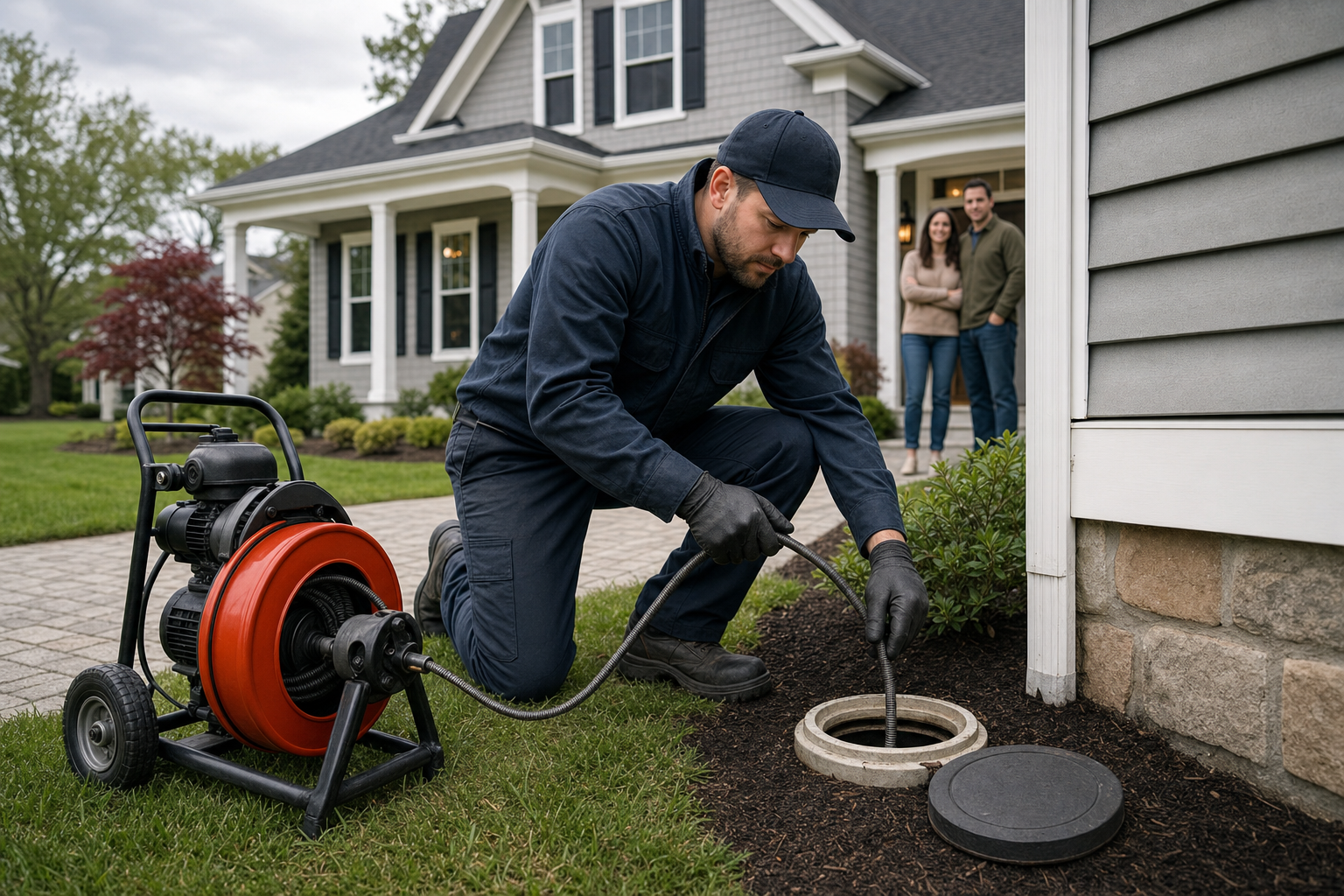
The most common method for clearing a residential main sewer line is snaking, also called rodding or augering. A motorized sewer snake feeds a flexible steel cable with a cutting head into the pipe. The cable breaks through the blockage and restores flow.
Snaking is effective for most standard clogs, including grease buildup, paper products, and moderate root intrusion. It is generally the first approach a technician will use.
One honest note about snaking: it clears the path through a blockage, but it does not always remove every trace of buildup from the pipe walls. For recurring blockages, especially from tree roots, snaking may need to be repeated periodically. That does not mean the service failed. It means the underlying cause, such as root growth at a cracked pipe joint, may continue producing new blockages over time.
What to Expect Step by Step
- The technician locates the cleanout or access point. If you have an exterior cleanout, they will usually start there. If not, they may access the line through an interior drain, often in the basement.
- They feed a motorized sewer snake into the line. The cable is pushed through the pipe toward the street connection, and the cutting head works through the blockage as it advances.
- They run water through the line to confirm flow is restored. Once the blockage is cleared, the technician will flush the line with water to verify that wastewater is draining properly.
- They clean up the work area. Main line work can be messy, particularly if there was active sewage backup. A good technician leaves the area in reasonable condition.
Most standard main sewer line cleanings take one to three hours, depending on the severity of the blockage, the length of the line, and how easily the cleanout can be accessed.
What you can do to help before the technician arrives:
- Note which drains are affected and when the problem started
- Stop running water and avoid flushing toilets to prevent additional backup
- If you know where your exterior cleanout is, clear any landscaping, debris, or objects away from it
- Keep pets and children away from any areas where sewage has backed up
- If sewage has reached floors or living areas, avoid direct contact with the water and ventilate the space
Questions to Ask Before You Say Yes to a Quote
One of the best ways to protect yourself from an unfair price is to ask clear questions before work begins. A trustworthy company will not have a problem answering these.
- Is the price flat-rate or hourly? A flat rate means you know the total cost upfront. Hourly pricing can increase if the job takes longer than expected.
- What method will you use, and why? The technician should be able to explain what they plan to do and why that approach fits your situation.
- Are there any additional fees beyond the quoted price? Ask specifically about emergency or after-hours charges, dispatch fees, and whether any add-on services are included or billed separately.
- What happens if the clog comes back within a few weeks? Ask whether there is any follow-up policy or re-service option.
- Are you licensed in New Jersey? This is a basic requirement, and any legitimate company should be able to confirm it immediately.
You should not feel pressured to agree to additional services, repairs, or upgrades on the spot. A fair company gives you the information you need to make a decision without rushing you.
How Often Should You Have Your Main Sewer Line Cleaned
There is no single answer that applies to every home, but here are some general guidelines.
Older homes with mature trees near the sewer line may benefit from having the line cleaned every one to two years as a preventive measure. Root intrusion tends to recur, and periodic cleaning can prevent a full blockage before it happens.
Newer homes with PVC sewer lines and no nearby trees may not need scheduled cleanings at all. Cleaning on an as-needed basis, when you notice signs of a slow or partially blocked line, is often sufficient.
Signs it is time to call:
- Multiple drains in different parts of the house are slow
- You notice gurgling sounds in drains you are not using
- There is a sewage odor near your cleanout, basement, or foundation
- Your last main line cleaning was more than two years ago and you have a history of blockages
When a Main Line Cleaning May Not Be Enough
In some cases, cleaning the line restores flow temporarily but the problem returns within weeks or months. This can happen when the pipe itself has structural damage, such as a collapsed section, a severe crack, or a joint that has separated underground.
If a technician cleans your main line and the blockage returns quickly, it is worth asking whether the pipe may need further evaluation. That does not necessarily mean a major repair is needed, but it does mean the blockage may be a symptom of a deeper issue that cleaning alone cannot permanently resolve.
A licensed professional can help you understand the difference between a recurring clog that responds to periodic cleaning and a damaged pipe that needs a different solution.
Getting Help in Monmouth County
If your main sewer line is backed up and you need help now, or if you are not sure whether you have a main line problem or a simpler drain clog, Just Drains can help you figure it out.
We are a licensed drain and sewer cleaning company serving homeowners in Monmouth County and across Central New Jersey, including Mercer, Union, Morris, and Ocean Counties. We specialize in exactly this kind of work: clearing clogged drains, backed-up sewer lines, and main line blockages for homeowners who need the problem handled fast.
If it turns out your issue is a single clogged sink, toilet, tub, or slow drain rather than a main line blockage, Just Drains offers drain cleaning starting at $63. When you call, we work to have a technician at your door within 60 minutes.
Call Now: (732) 279-2427
Frequently Asked Questions
How do I know if my main sewer line is clogged?
The clearest sign is multiple drains backing up at the same time, especially in different parts of the house. If flushing a toilet causes water to come up through a basement floor drain, or if you hear gurgling from drains you are not using, the blockage is likely in your main sewer line rather than in a single branch drain.
Does my house have a sewer cleanout?
Many homes do, but not all. Look for a capped pipe, usually about four inches in diameter, sticking up from the ground near your foundation or in the yard between your house and the street. Homes built before the 1970s may not have one. If you cannot find a cleanout, mention that when you call for service so the technician can plan accordingly.
How long does a main sewer line cleaning take?
A standard main line cleaning typically takes between one and three hours. The actual time depends on the severity of the blockage, the length of the sewer line, and how easily the cleanout or access point can be reached. Severe root blockages or lines without a cleanout may take longer.
Is a main sewer line cleaning the same as a drain cleaning?
No. A drain cleaning addresses a clog in a single branch line connected to one fixture, like a kitchen sink or a shower. A main sewer line cleaning clears a blockage in the larger pipe that carries wastewater from the entire house to the municipal sewer. Main line work requires heavier equipment, takes longer, and costs more than a single-fixture drain clearing.
What should I do if sewage is backing up into my house right now?
Stop using all water in the house immediately. Do not flush toilets, run sinks, or start the washing machine. Do not touch any backed-up water with bare hands, and make sure children and pets stay out of any affected areas. Ventilate the space if possible. Then call a licensed drain and sewer cleaning company to clear the line as soon as possible. If you are in Monmouth County or the surrounding Central New Jersey area, Just Drains can help. Call Now: (732) 279-2427
Why does main sewer line cleaning cost more than a regular drain clearing?
Main line work involves heavier equipment, deeper access, and a blockage that affects every drain in your home rather than a single fixture. The job typically takes longer and requires accessing the line through a cleanout or an interior drain point rather than the fixture itself. Those factors combine to make it a more involved service than a single-fixture drain clearing.