Down the Drain: Why Flushable Wipes End Up Costing Homeowners Thousands
Are Flushable Wipes Really Safe for Your Drains?
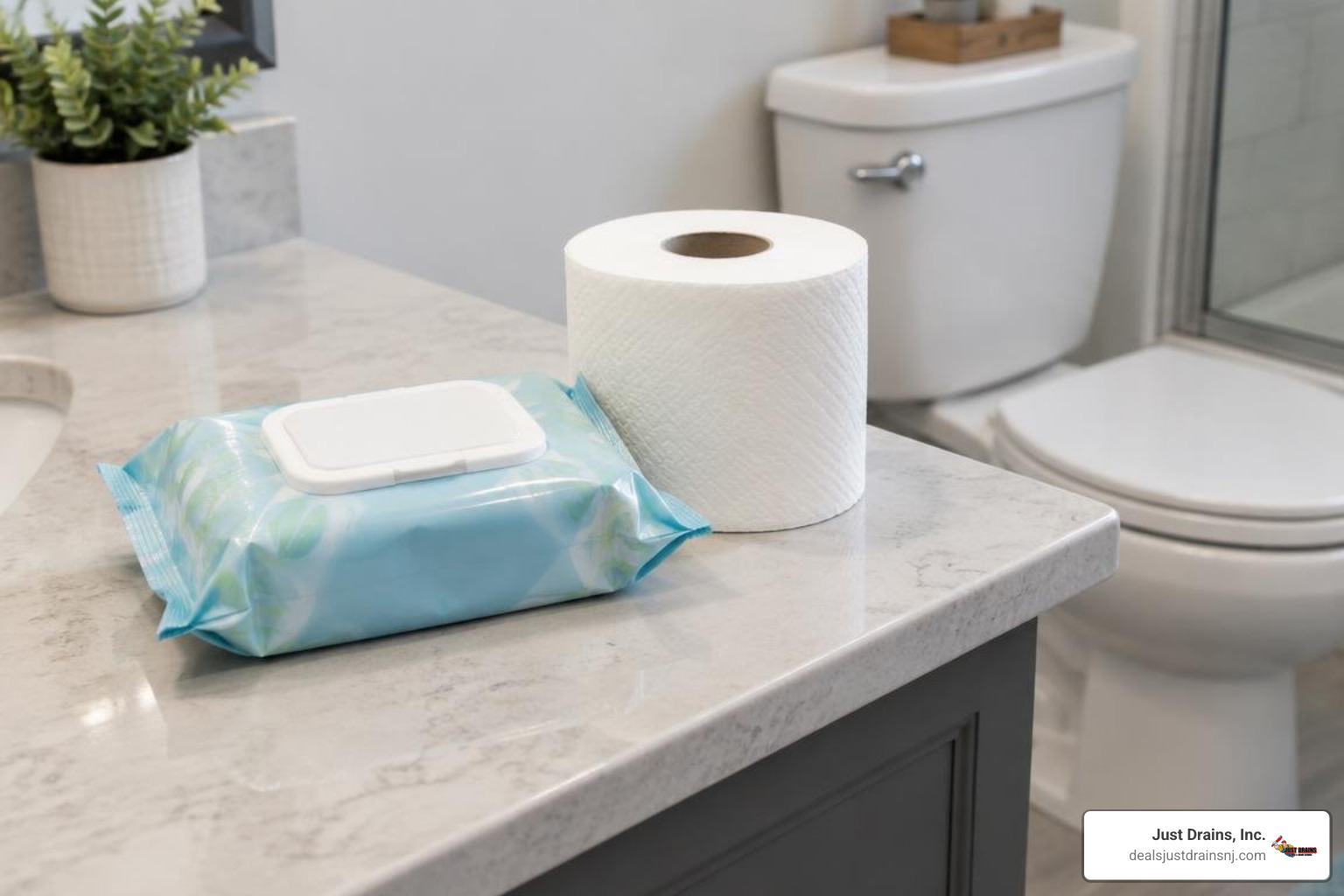
A wipe can go down the toilet without being safe to flush. Even wipes labeled “flushable” may stay intact longer than toilet paper. They can catch in a drain or sewer line and help cause a costly backup. The safest choice for your home’s plumbing is simple: flush toilet paper, and put wipes in the trash.
If your toilet is slow to drain or water is backing up into another fixture, stop flushing and get the line checked. The guide below explains what flushability tests measure, why wipes can still cause trouble, and how to keep them out of your pipes.
Are Flushable Wipes Really Flushable? The Science Behind Flushability Standards
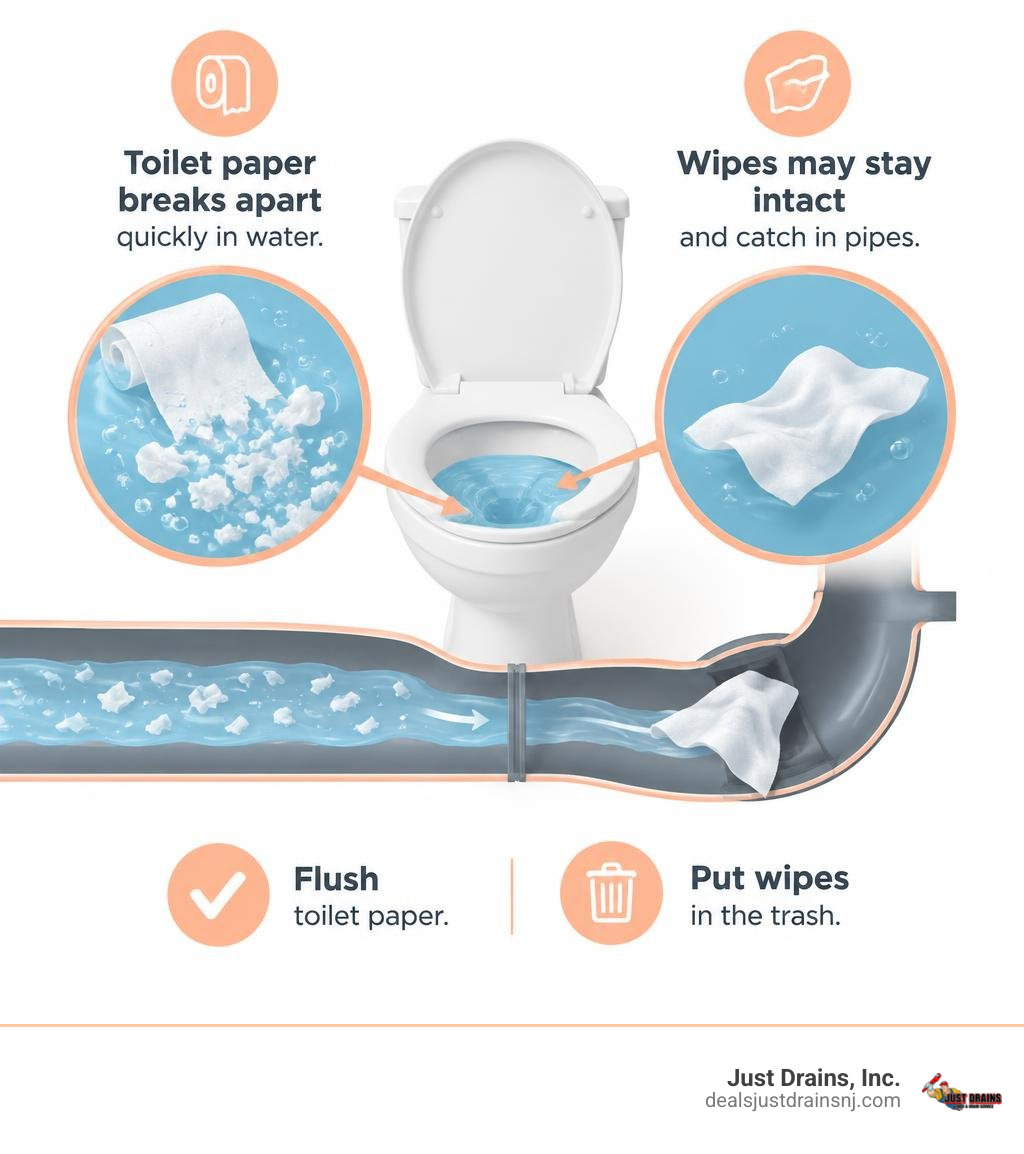
When evaluating personal hygiene products, consumers often ask: are flushable wipes really flushable? In technical plumbing terms, the short answer is no. While a wipe can easily clear your toilet bowl siphon when you pull the handle, clearing the bowl is entirely different from disintegrating safely in your plumbing pipes and municipal sewer systems.
Standard toilet paper is engineered from short cellulose wood fibers bonded lightly together. The moment toilet paper hits water, those weak hydrogen bonds dissolve. Within seconds of agitation, toilet paper shreds into tiny, harmless fragments that flow effortlessly through residential waste lines.
In contrast, moist wipes require high tensile strength so they do not tear apart in your hand during use. Manufacturers achieve this durability by weaving long fibers together using high-pressure water jets—a process called hydroentanglement. Many wipes also blend synthetic polymers or chemical binders into the matrix. As a result, when these wipes travel down your plumbing, they remain completely intact.
The nonwovens industry created self-regulated testing guidelines, such as INDA GD4 (Guidance Document for Determining the Flushability of Disposable Nonwoven Products). However, municipal wastewater engineers developed the stricter International Water Services Flushability Group (IWSFG 2020) standards because real-world sewer systems were failing.
Comprehensive scientific research on wipe impacts on sewer systems confirms that physical disintegration rates vary drastically between standard paper products and wipes:
| Material Type | Primary Composition | Disintegration Time in Water | Risk to Plumbing & Sewers |
|---|---|---|---|
| Standard Toilet Paper | Short wood pulp fibers | 10 to 60 seconds | Extremely Low |
| Non-Flushable Wipes | Polyester, polypropylene, viscose | Does not disintegrate | Severe Blockage Hazard |
| Industry “Flushable” Wipes | Regenerated cellulose / synthetic blends | 30 minutes to several days | High Risk of Snagging |
| Certified Flushable Wipes | 100% plant-based pulp (IWSFG compliant) | Gradual breakdown over hours | Moderate Risk in Aged Pipes |
What Industry Testing Reveals: Are Flushable Wipes Really Flushable in Real-World Sewers?
Laboratory conditions rarely mimic the physical reality of residential drainage. In controlled manufacturer tests, wipes are placed in mechanical slosh boxes filled with clean water running at consistent agitation rates. Under the IWSFG PAS3 test, a compliant wipe must achieve physical disintegration within a 30-minute dispersion test window.
Real sewer lines do not operate like clean, churning laboratory flumes. In home drain lines, wastewater flows intermittently in short flushes. Pipes have joint offsets, rough cast-iron surfaces, and minimal grade slopes. Independent evaluations, including extensive Consumer Reports flushability testing and analysis, demonstrate that many wipes marketed as flushable stay whole for ten minutes or longer under continuous mechanical agitation, easily resisting the brief flush cycle of a residential toilet.
When a product fails to break down instantly, it does not survive sewer transit. Instead, it maintains its structural integrity, lodging in pipe transitions, catching on microscopic burrs, and laying the groundwork for severe household backups.
Are Biodegradable and Plastic-Free Wipes Truly Safer for Your Pipes?
Many modern brands market wipes made from plant-derived materials such as viscose, lyocell, or 100% tree pulp, advertising them as “plastic-free” and “biodegradable.” While these materials are better for environmental decomposition in soil over several months, biodegradability is not the same as rapid flushability.
A wipe can be completely biodegradable while remaining physically robust enough to clog a sewer line today. Studies show that more than 50% of wipes labeled biodegradable contain a combination of cellulose and low-degradable fibers or synthetic wet-strength binders. In laboratory testing of twelve wet wipe samples, all plastic-based wipes failed sewer disintegration tests, and four out of eight cellulose-based wipes also failed drain clearance thresholds.
These misleading claims have drawn significant regulatory pushback. Regulatory bodies worldwide have stepped in, including notable regulatory legal action on misleading flushable marketing where consumer protection commissions challenged major manufacturers for selling wipes that did not disperse like toilet paper. Even plastic-free wipes shed synthetic microfibers and persist long enough in sewage streams to create downstream environmental and mechanical hazards.
How Flushable Wipes Destroy Residential Plumbing and Municipal Sewers
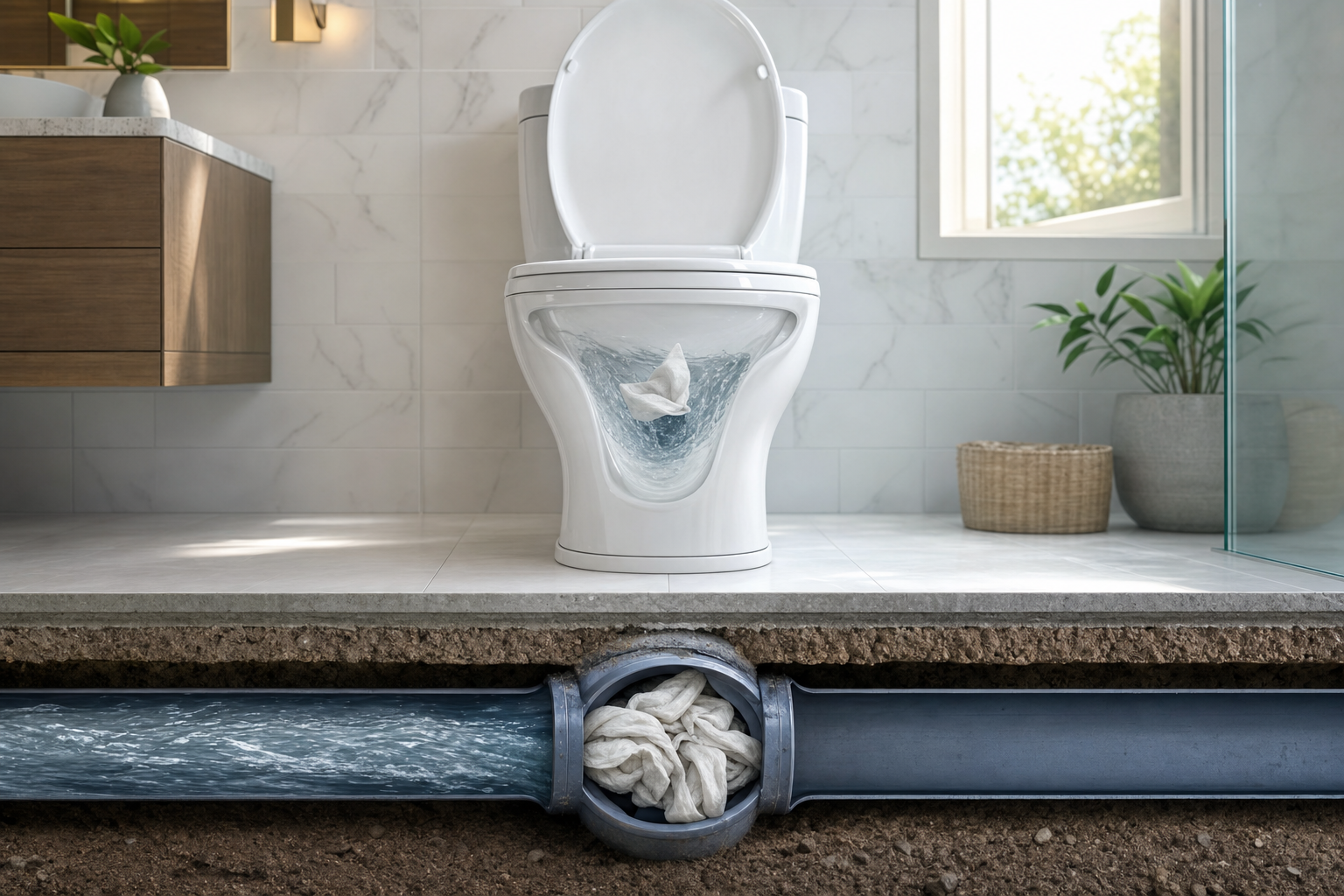
When flushed wipes leave a home, they enter municipal wastewater collections, where they wreak financial and structural havoc. In municipal sewer mains, wipes mix with fats, oils, and grease (FOG) poured down kitchen drains. The durable fabric of the wipes acts like reinforcing rebar inside concrete, binding with hardened grease to form massive obstructions known as fatbergs. In London, one notorious fatberg composed primarily of wet wipes weighed 286,601 pounds and stretched over 820 feet.
Municipal lift stations and pumping facilities are hit especially hard. Intact wipes wrap around pump impellers, leading to motor burnout and lift station failures that force wastewater workers to clear tangled pump blades by hand at 2:00 a.m.
Wipes cost U.S. clean water utilities an extra $441 million annually in operating and maintenance expenses. Furthermore, the EPA estimates that utilities will need $630 billion over the next 20 years to meet Clean Water Act infrastructure requirements—costs that inevitably pass directly to homeowners via rising utility bills. Understanding how flushable wipes clog home sewer lines reveals that the damage begins right underneath your own floorboards.
Why Wipes Cause Costly Main Line Backups in Homes
Before a wipe ever reaches a city main, it must navigate the private lateral line connecting your home to the street. In older cast-iron or clay pipes, natural scale, corrosion, and minor tree root intrusions create jagged anchor points.
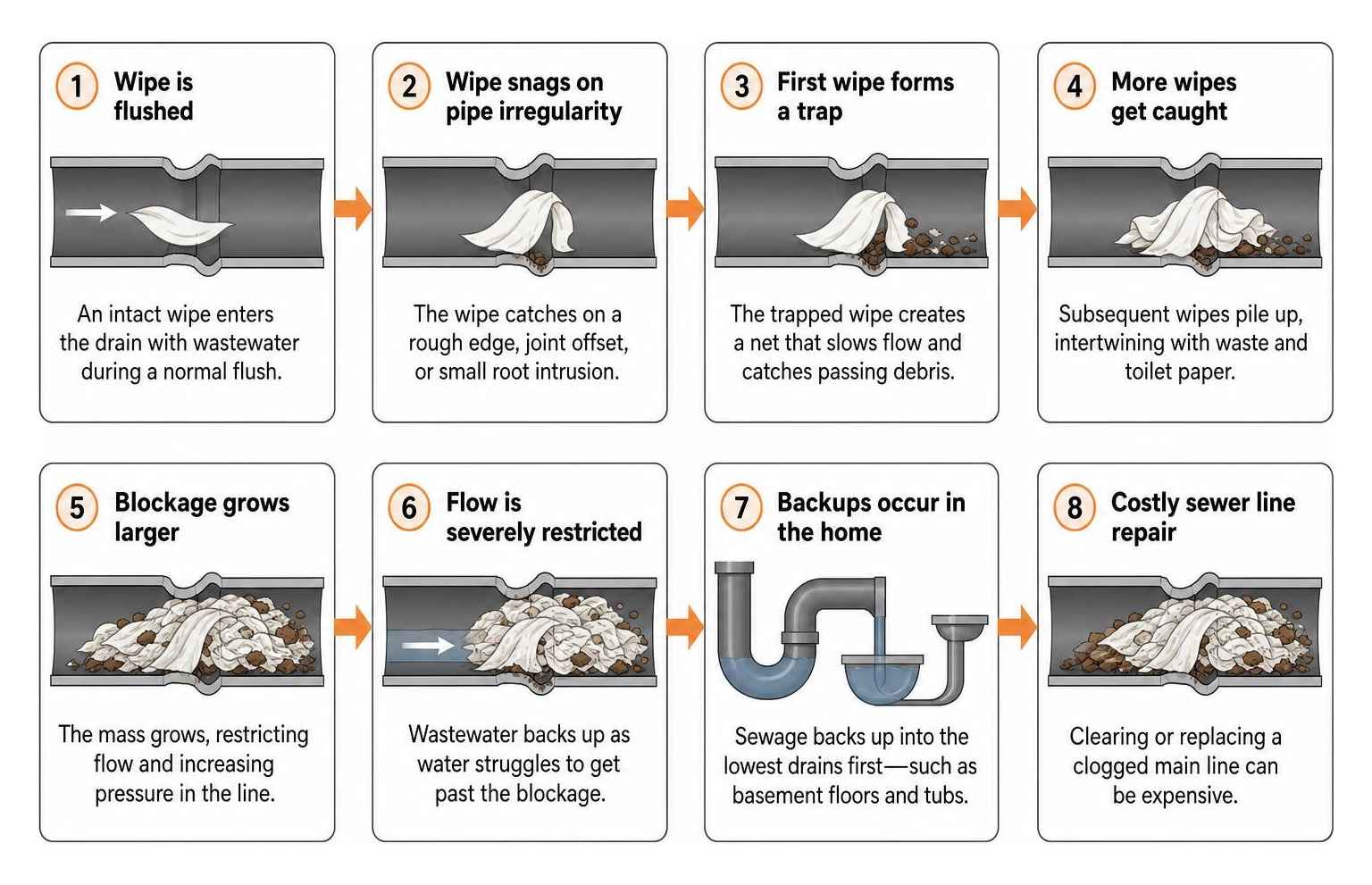
Toilet paper simply shreds when brushing past these imperfections. Wipes, however, snag on root filaments or rough iron edges. Once the first wipe catches, it creates a net that traps subsequent wipes, waste, and toilet paper.
Homeowners facing this problem need to recognize the warning signs of a clogged main sewer line. Because water seeks the path of least resistance, understanding why sewage backs up into the lowest home drains first helps explain why basement floor drains, downstairs bathtubs, and lower-level toilets overflow first. Repairing an excavation-damaged main sewer lateral in urban or suburban neighborhoods can easily run between $10,000 and $15,000.
The Destructive Impact of Wipes on Private Septic Systems
For homeowners on private waste systems, flushing wipes is one of the quickest ways to cause a system failure. Septic tanks rely on natural anaerobic bacterial colonies to break down solid organic matter in the sludge layer.
Wipes do not break down in septic environments. Instead, they:
- Fill the tank rapidly, requiring frequent, costly pumping cycles.
- Float into the scum layer and block inlet and outlet baffles.
- Pass into the septic distribution box and leach field lines, blinding the soil absorption trenches.
When synthetic wipe fibers infiltrate a drain field, the soil pores clog permanently. Replacing a failed private leach field ruined by wipe accumulation typically costs between $15,000 and $20,000.
Professional Plumbing Perspectives and Clearing Wipe Blockages
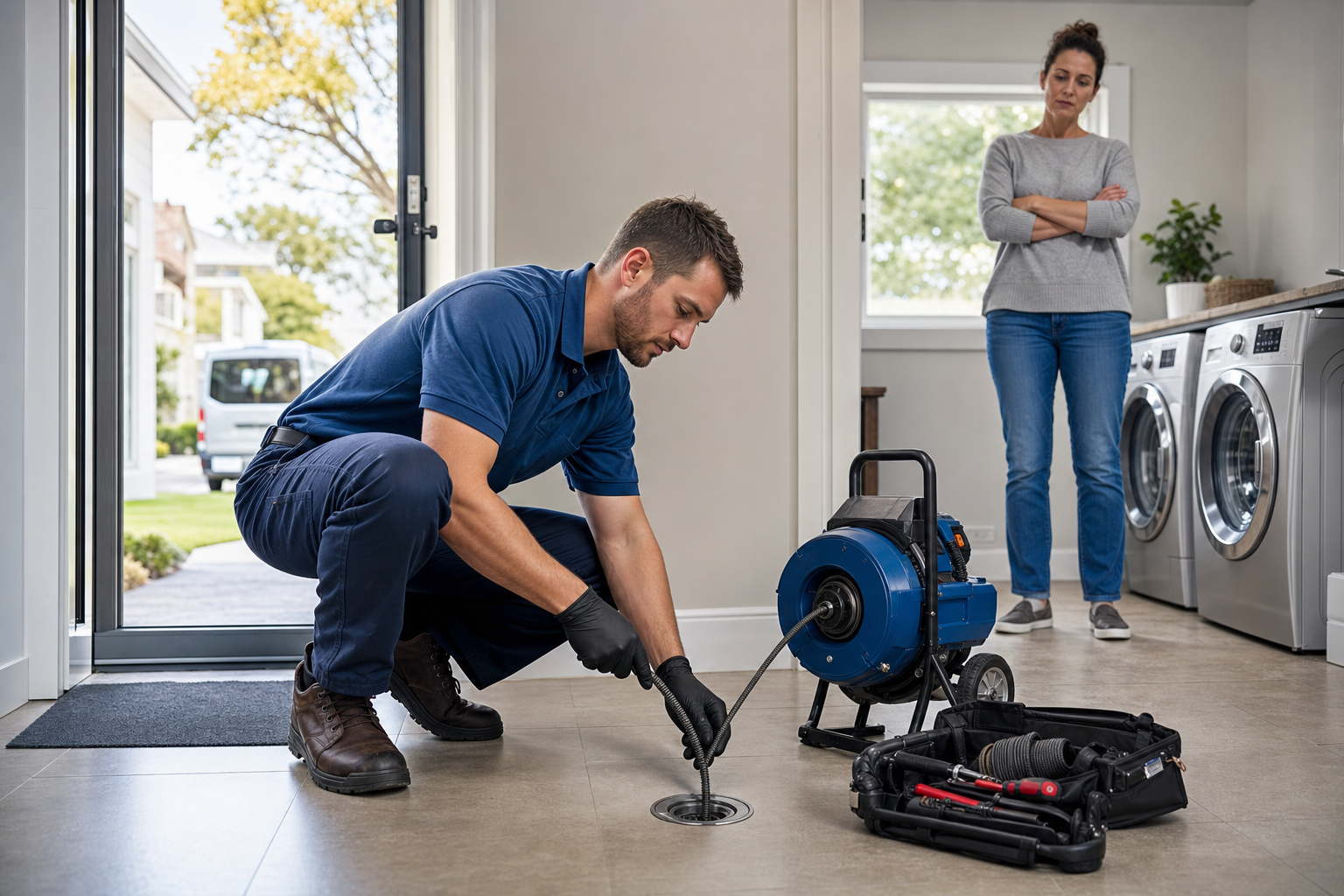
Ask any service technician with decades of field experience, and they will tell you that wipes are one of the most common causes of preventable sewer clogs. Wipes do not dissolve; they turn into thick, rope-like bundles that choke pipes.
When a homeowner experiences recurring backups, exploring the reasons drain clogs keep returning often reveals that an old mass of tangled wipes is still lodged deep in the line. Furthermore, knowing how to differentiate single-fixture clogs from sewer line blockages ensures you take the right corrective action before wastewater causes extensive structural water damage.
Professional Drain Cleaning: Are Flushable Wipes Really Flushable or a Plumbing Hazard?
Even if you have good habits, you might wonder why toilet clogs happen despite proper flushing habits. In many shared households or older properties, previously flushed wipes remain lodged in lateral lines, restricting water volume until normal paper use causes a sudden overflow.
When wipe clogs strike, chemical drain openers will not solve the issue. Caustic chemicals generate heat that can damage PVC or cast iron without dissolving fibrous nonwoven materials. Homeowners evaluating professional drain cleaning options need mechanical solutions:
- Heavy-Duty Drain Snaking: High-torque drain snakes equipped with specialized retrieving augers physically hook and extract dense bundles of wipes.
- High-Pressure Hydro Jetting: Industrial hydro jetters blast water at high pressure, shearing grease and thoroughly scrubbing wipe fibers off pipe walls to restore original flow capacity.
Legal Battles, Labeling Standards, and Bathroom Alternatives
The discrepancy between marketing claims and real-world plumbing damage has triggered regulatory battles and legal actions across the globe. In the United States, municipal associations and property groups have filed class action suits against major retailers and wipe manufacturers. A notable class action complaint on flushable wipe damages highlighted how residential developments incurred thousands in emergency repair fees after pumps clogged with wipes.
To combat misleading claims, lawmakers and wastewater authorities are implementing concrete labeling mandates:
- The WIPPES Act: Proposed federal legislation in the U.S. aiming to establish strict national “Do Not Flush” labeling requirements for non-flushable wipes.
- State Mandatory Labeling Laws: States such as California, Washington, and Illinois require clear, prominent “Do Not Flush” symbols on packages of non-dispersible wipes.
- Fine to Flush (WIS 4-02-06): The UK water industry standard that tests whether a product breaks down under authentic low-shear water conditions before earning flushability certification.
About 90% of wipes sold in the United States are non-flushable baby, cosmetic, or cleaning wipes. Clear labeling helps prevent consumers from mistakenly flushing items never intended for plumbing.
Safe and Hygienic Alternatives to Flushing Personal Wipes
You do not have to sacrifice cleanliness to protect your plumbing infrastructure. Modern bathroom alternatives provide superior hygiene without endangering your sewer lines:
- Install a Bidet Attachment or Bidet Seat: Bidets clean effectively using fresh water, drastically cutting down your paper consumption and eliminating the need for wipes entirely.
- Moist Toilet Tissue Sprays: Specialized cleansing sprays applied directly to standard toilet paper moisten the tissue for personal comfort while allowing the paper to disperse instantly.
- Dedicated Bathroom Trash Cans: If your household prefers moist wipes, place a hands-free, sealed step trash can next to the toilet. Disposing of wipes in the garbage keeps them out of your pipes.
- Follow the 3 Ps Rule: Protect your drains by flushing only Pee, Poo, and Paper (traditional toilet paper).
For comprehensive plumbing protection across your home, consult our room-by-room guide to maintaining drains and preventing clogs.
Frequently Asked Questions About Flushable Wipes
Do flushable wipes dissolve as quickly as standard toilet paper?
No. Standard toilet paper is made from short plant fibers that disperse within 10 to 60 seconds of contact with water. Flushable wipes are manufactured using hydroentangled fibers, synthetic binders, or regenerated cellulose designed to hold together when wet. Even wipes that pass industry disintegration tests take 30 minutes or longer to begin breaking down, allowing them to remain intact as they travel through your plumbing.
Can flushing just one wipe at a time prevent plumbing blockages?
Flushing a single wipe does not eliminate the risk of a blockage. If your home’s sewer lateral has internal rough spots, corrosion, sagging sections, or fine tree root intrusions, even one intact wipe can snag on the pipe wall. Once caught, that single wipe acts as an anchor point, trapping toilet paper and solid waste that follow behind it until a complete mainline backup occurs.
What does it cost to repair plumbing damaged by flushed wipes?
Clearing a localized wipe blockage using a professional drain snake or hydro jetter typically costs a few hundred dollars. However, if wipes cause a main sewer line backup into your home, repair, excavation, and structural remediation costs often run between $10,000 and $15,000. For properties with private septic systems, replacing a ruined drain field clogged with wipe fibers can cost from $15,000 to $20,000. Investing in proactive care through the benefits of regular drain maintenance for homeowners saves thousands over time.
Conclusion
While product packaging may claim a wipe is flushable, real-world plumbing and sewer networks tell a different story. Flushed wipes resist quick disintegration, catch on internal pipe imperfections, contribute to massive municipal fatbergs, and cause thousands of dollars in private property damage. Keeping your drainage system flowing smoothly comes down to a simple habit: enjoy the comfort of wipes if you choose, but always dispose of them in the trash bin.
If wipes have already slowed down your drains or caused a backup in your home, our team at Just Drains, Inc. is here to help. Based in Howell, NJ, we bring over 30 years of drain-and-sewer cleaning experience straight to your doorstep. We provide fast, plumber-style service that arrives in minutes, equipped with upfront flat-rate pricing and no upsells. Discover our professional solutions when flushable wipes clog your sewer line and let us restore your home’s plumbing today.