Biodegradable Toilet Wipes: The Truth Behind Septic-Safe Claims
Biodegradable Toilet Wipes: What to Know Before You Flush
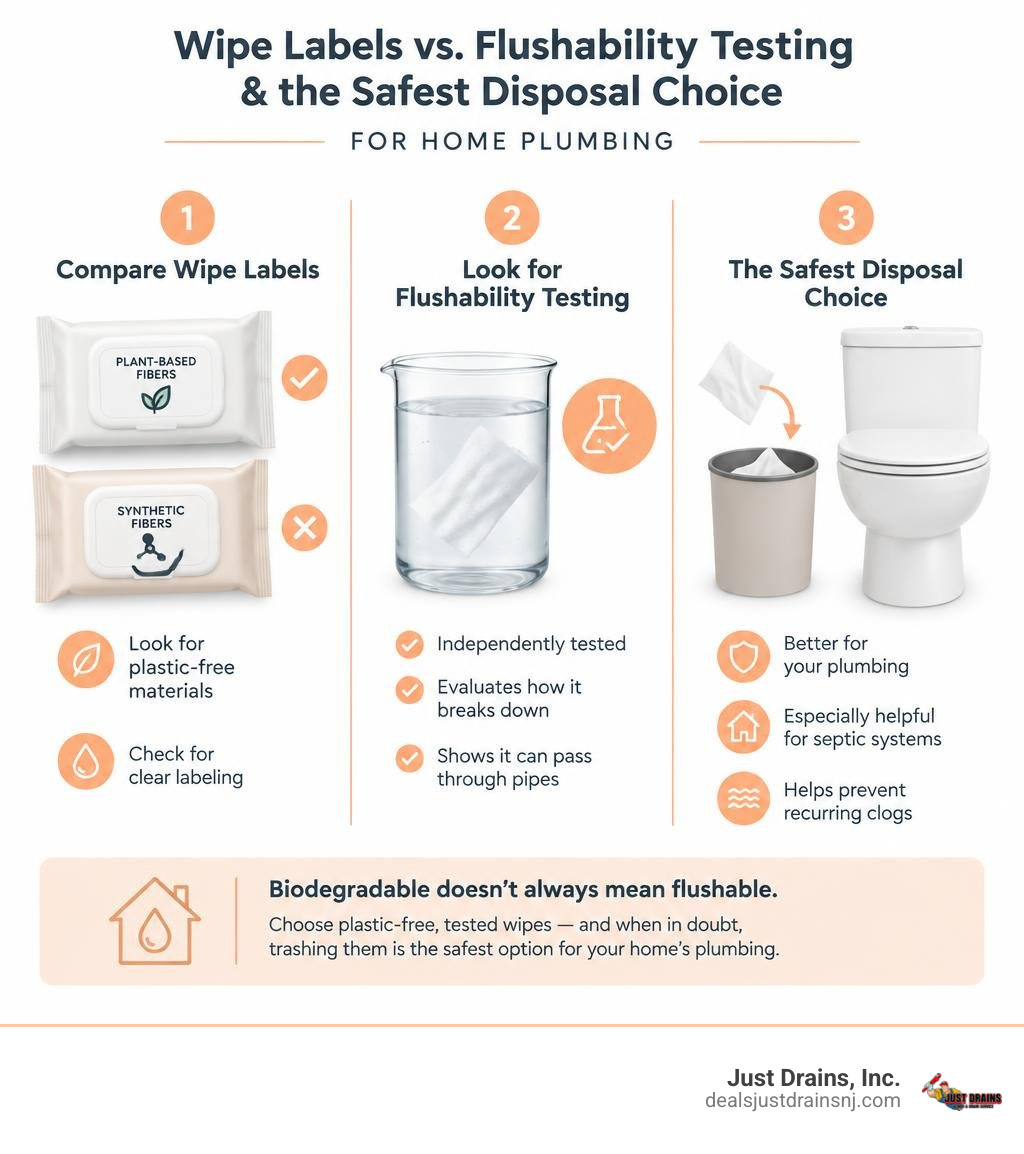
Biodegradable toilet wipes are not automatically safe to flush. The label describes how a material may break down over time, not whether it will come apart fast enough to pass through your home’s pipes. If you want a wipe, look for a plastic-free product with independent flushability testing. Even then, putting it in the trash is the safer choice for your plumbing, especially if you have a septic system or recurring clogs.
This guide will help you compare wipe claims, materials, and disposal options without taking “septic-safe” at face value.
I’m Judy Weissberg. My 29 years leading home-service and field teams shape how I assess the practical risks of biodegradable toilet wipes for homeowners.
What Are Biodegradable Toilet Wipes Made Of?
To understand how personal wipes interact with plumbing, we have to look closely at their physical composition. Standard consumer wet wipes rely heavily on synthetic petrochemical fibers like polyester and polypropylene. These polymers are essentially woven plastics engineered never to tear or break apart during use.
In contrast, wipes marketed as eco-friendly use organic or regenerated cellulose substrates. The base materials typically come from wood pulp or rapidly renewable, FSC-certified bamboo. Manufacturers process these raw plant fibers into soft sheets using viscose, lyocell, or airlaid manufacturing technologies.
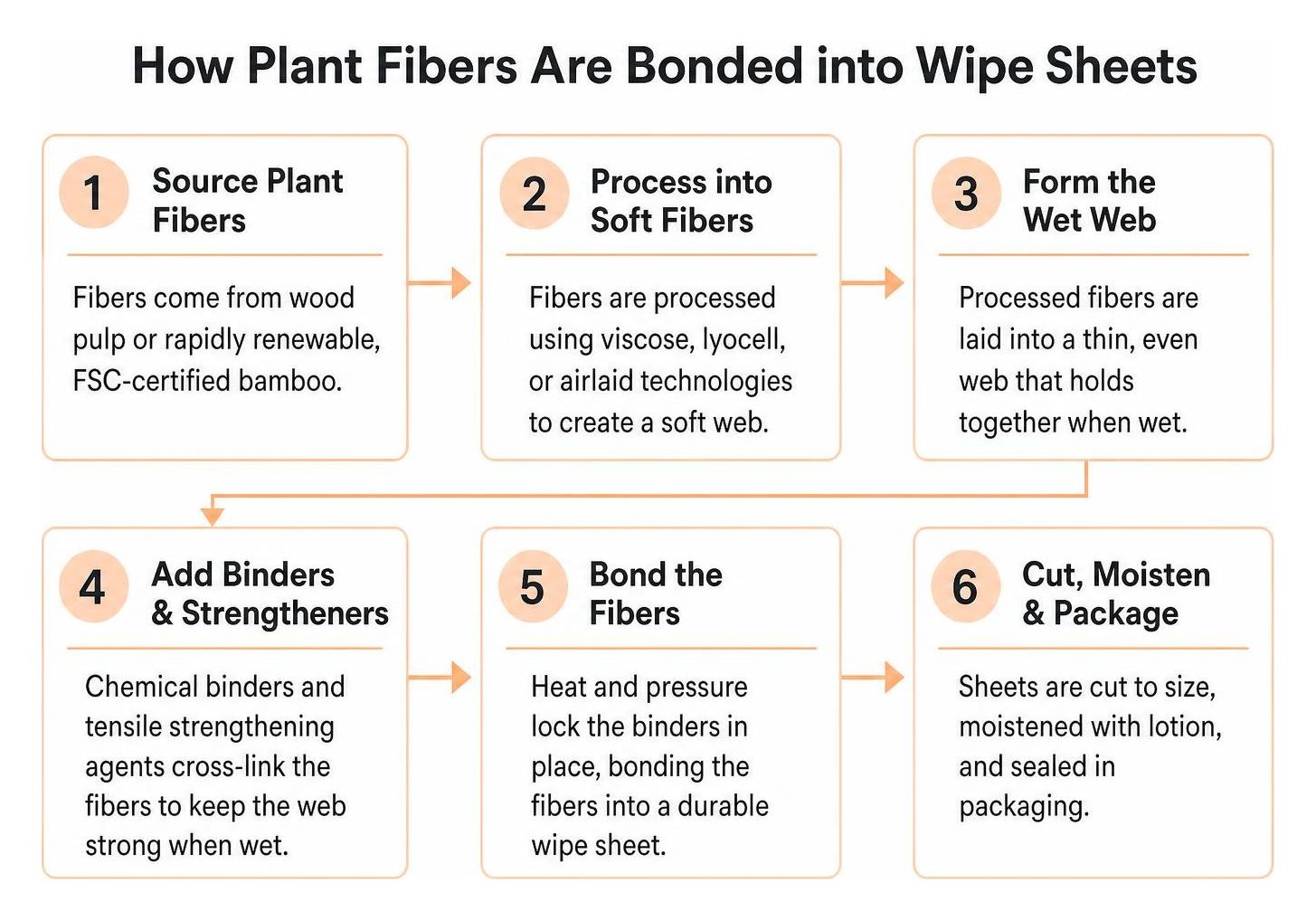
However, creating a wet wipe out of pure natural plant fibers introduces a major manufacturing hurdle: water makes plant fibers fall apart. To keep a pre-moistened wipe strong while sitting in wet lotion inside plastic packaging on store shelves, chemical binders and tensile strengthening agents are added. These cross-linking chemical additives hold the organic web together, but they also prevent the wipe from disintegrating rapidly when introduced to your drain lines. Furthermore, scientific life-cycle testing indicates that cellulose wipes subjected to sewer turbulence can shed an average of 548,000 microfibres per gram, demonstrating that even non-plastic wipes shed microscopic particles during water transport.
Plant-Based vs. Synthetic Materials in Wet Wipes
More than 50% of wipes sold under “green,” “flushable,” or “biodegradable” banners actually contain blends of natural cellulose fibers mixed with low-degradable synthetic fibers. These hidden plastic filaments reinforce the sheet, preventing the physical breakdown required for home plumbing safety. Truly plastic-free alternatives rely entirely on virgin wood pulp, cotton, or pure bamboo cellulose, yet their structural integrity remains far higher than standard bathroom tissue.
| Product Type | Primary Fiber Material | Chemical Binders Added | Wet Strength Loss After 15 Min | Dispersion Time in Moving Water |
|---|---|---|---|---|
| Standard Toilet Paper | Short-fiber virgin wood pulp | Minimal / None | ~91% | Under 2 minutes |
| Bamboo Flushable Wipes | FSC Bamboo Viscose | Moderate (Plant Resins) | ~29% | 30 to 60+ minutes |
| Traditional Baby Wipes | Polyester & Polypropylene | High (Synthetic Polymers) | 0% | Indefinite (Does not disperse) |
Why Tensile Strength Prevents Rapid Dispersal
The primary reason wet wipes wreak havoc on home plumbing comes down to wet tensile strength. Toilet paper is engineered to lose its structural cohesion almost immediately upon getting wet, dropping roughly 91% of its wet strength within moments of flushing.
Testing reveals that flushable wet wipes have nearly 23 times greater wet breaking force than standard toilet paper. When submerged, these wipes experience an average wet strength loss of only 29%. Because they retain over 70% of their tensile durability inside your drain, they cannot tear or pulp against the natural bends and turns of residential drain lines. Establishing proactive home drain maintenance practices is critical for keeping bathroom drains clear of these resilient, non-dispersing fibers.
The Reality of Flushable Certifications: IWSFG, Fine to Flush, and Beyond
Over the past decade, wastewater utility organizations and trade groups have established strict testing criteria to separate durable baby wipes from genuinely dispersible tissues. The International Water Services Flushability Group (IWSFG) and the Water UK “Fine to Flush” framework require products to undergo rigorous physical agitation testing.
These standards dictate that a product must rapidly disintegrate into tiny fragments without snagging on pump components. Regional standards like the Australian/New Zealand AS/NZS 5328:2022 benchmark have pushed manufacturers toward genuine water-dispersion formulations. Certain lab-tested dispersal standard wipes demonstrate measurable compliance by dispersing into at least 10 pieces within 30 minutes under turbulent flow conditions.
Can Biodegradable Toilet Wipes Really Break Down in Municipal Sewers?
While a certified wipe may break down in 15 to 30 minutes inside an industrial testing flume with violent water turbulence, household drainage lines are not high-energy test flumes. When you flush a toilet, the wipe takes only a few seconds to travel through your internal building drain and into your outdoor lateral pipe.
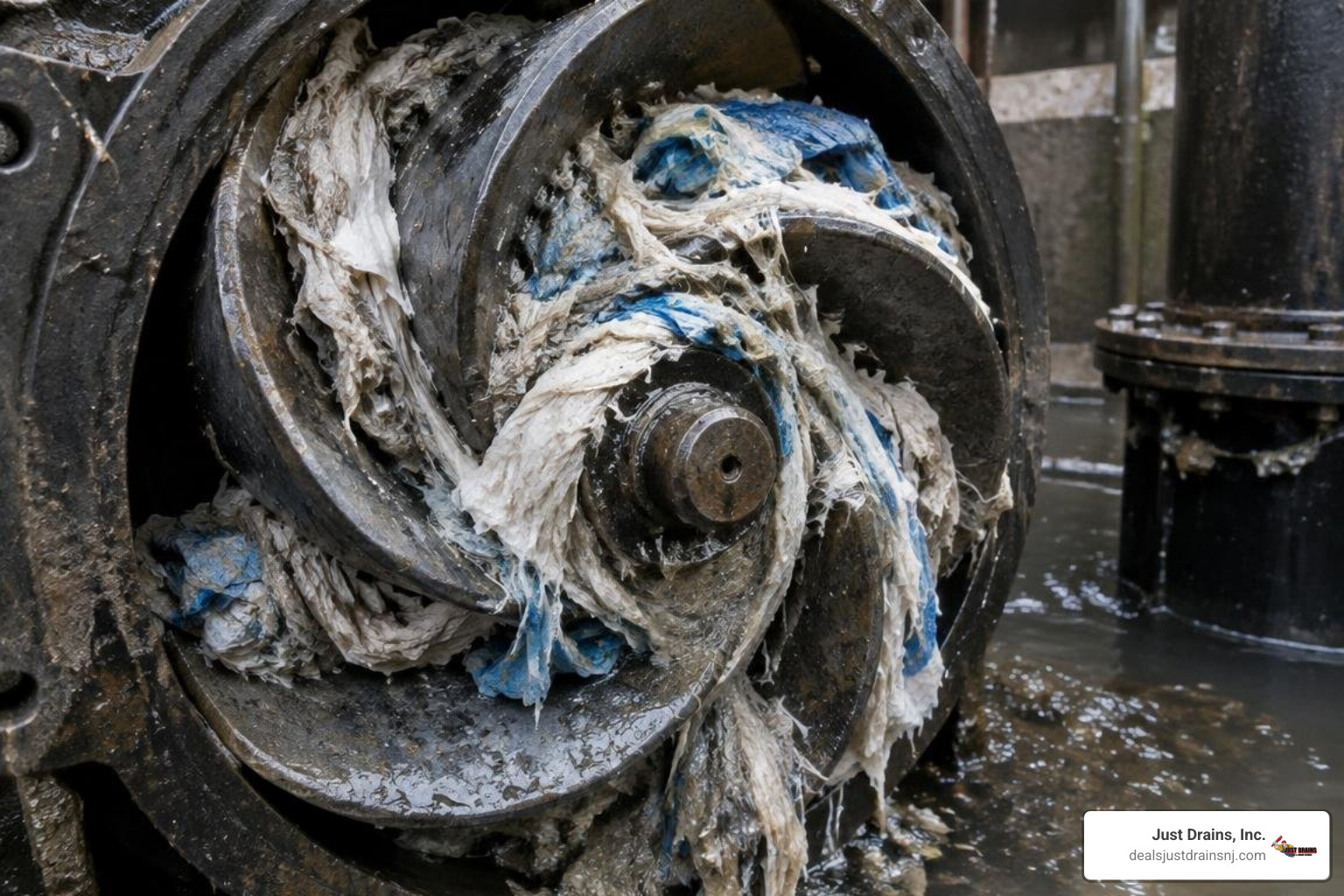
In these low-flow residential pipes, wipes settle flat against pipe walls, catch on rough cast iron joints, or cling to grease deposits long before they ever disintegrate. If a wipe snags in a lateral line, it acts as a net, capturing toilet paper, hair, and solid waste behind it. When wipes repeatedly collect along your drain pipes, you will often find recurring drain clog causes stemming from entangled fabric nests rather than simple paper blockages.
The Fatberg Crisis and Wastewater Treatment Costs
When unfragmented wipes travel beyond private laterals and enter the municipal sewer main, they encounter fats, oils, and grease (FOG) discharged from domestic and commercial kitchens. The cellulose fibers bind with solidified fats, creating massive sewer-choking masses known as fatbergs.
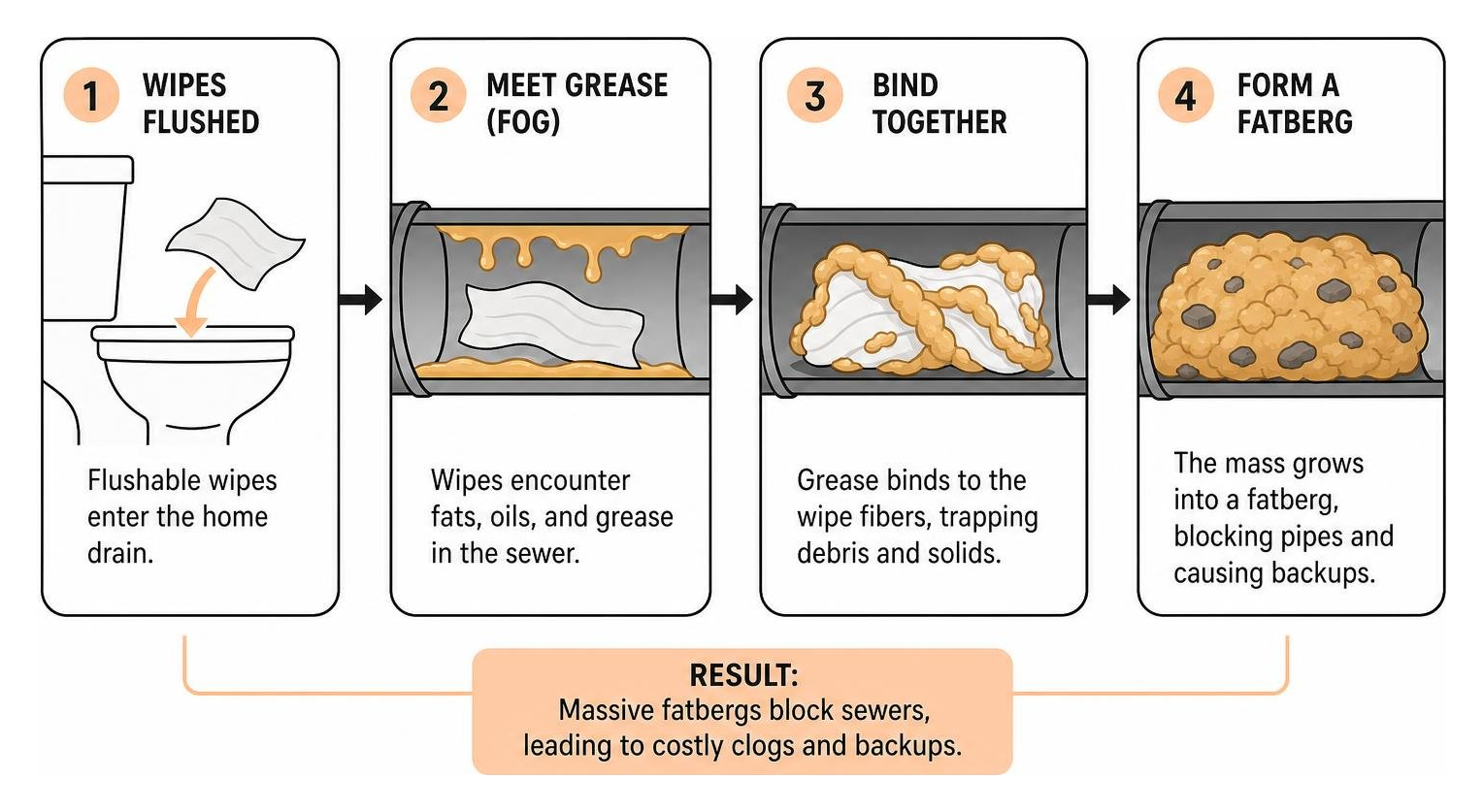
Municipalities bear an enormous financial burden clearing wipe-related blockages:
- Wet wipes account for roughly 93% of the material forming UK sewer blockages.
- Approximately 50% of all sewage backups and pipeline chokes originate from wipe accumulations.
- Environmental cleanups recovered over 23,000 wet wipes from a single stretch of the River Thames foreshore, showing an average density of 201 wipes per square meter.
- Erroneous flushable wipe labeling costs UK taxpayers roughly £100 million annually in emergency clearing costs.
- Wipe pollution generates annual municipal damages exceeding $15 million in Australia and over £23 million in London alone.
When sewer mains choke on accumulated wipes, backpressure forces raw municipal sewage backward into private property. Learning how main line clogs cause lower-level drain backups helps homeowners recognize why basement floor drains and first-floor toilets overflow first when municipal infrastructure fails.
Evaluating Top Flushable and Eco-Friendly Wipes on the Market
If you choose to use personal wipes for bathroom hygiene, it is essential to evaluate product formulations for both material purity and skin safety. The best personal hygiene wipes eliminate drying alcohols, parabens, and synthetic fragrances while relying exclusively on unblended plant fibers.
Third-party certifications provide reliable benchmarks for skin-friendly and plant-derived choices:
- TÜV Austria Water Biodegradable: Verifies that the cloth breaks down in natural aquatic environments without leaving toxic chemical residues.
- COSMOS Natural / EcoCert: Ensures at least 98% to 99% of total ingredients are derived from natural origins without harsh synthetic preservatives.
- FSC-Certified Substrates: Confirms that wood pulp or bamboo material is harvested from sustainably managed forests without clear-cutting virgin growth.
Options such as certified plant-based flushable toilet wipes demonstrate complete avoidance of chlorine bleaching, providing a plastic-free alternative for family bathrooms. Similarly, soothing herbal cleansing wipes incorporate natural extracts specifically balanced for sensitive skin.
Bamboo-Based and Organic Personal Hygiene Wipes
Bamboo has rapidly become the preferred raw material for eco-conscious wipes. As a grass, bamboo regrows to harvestable maturity in just 1 to 2 years, whereas hardwood trees take upwards of 30 years to mature. Cultivating bamboo requires no synthetic pesticides or chemical herbicides, and producing a bamboo fiber roll consumes less than one gallon of water compared to roughly 37 gallons for tree-based pulp.
For travel, camping, or everyday outdoor hygiene, compact eco-friendly personal wipes offer plastic-free, naturally biodegradable cleansing without chemical residues.
Medicated and Skin-Soothing Formulations
For postpartum recovery, hemorrhoid management, or sensitive skin care, medicated wet wipes provide clinical relief that dry toilet paper cannot match.
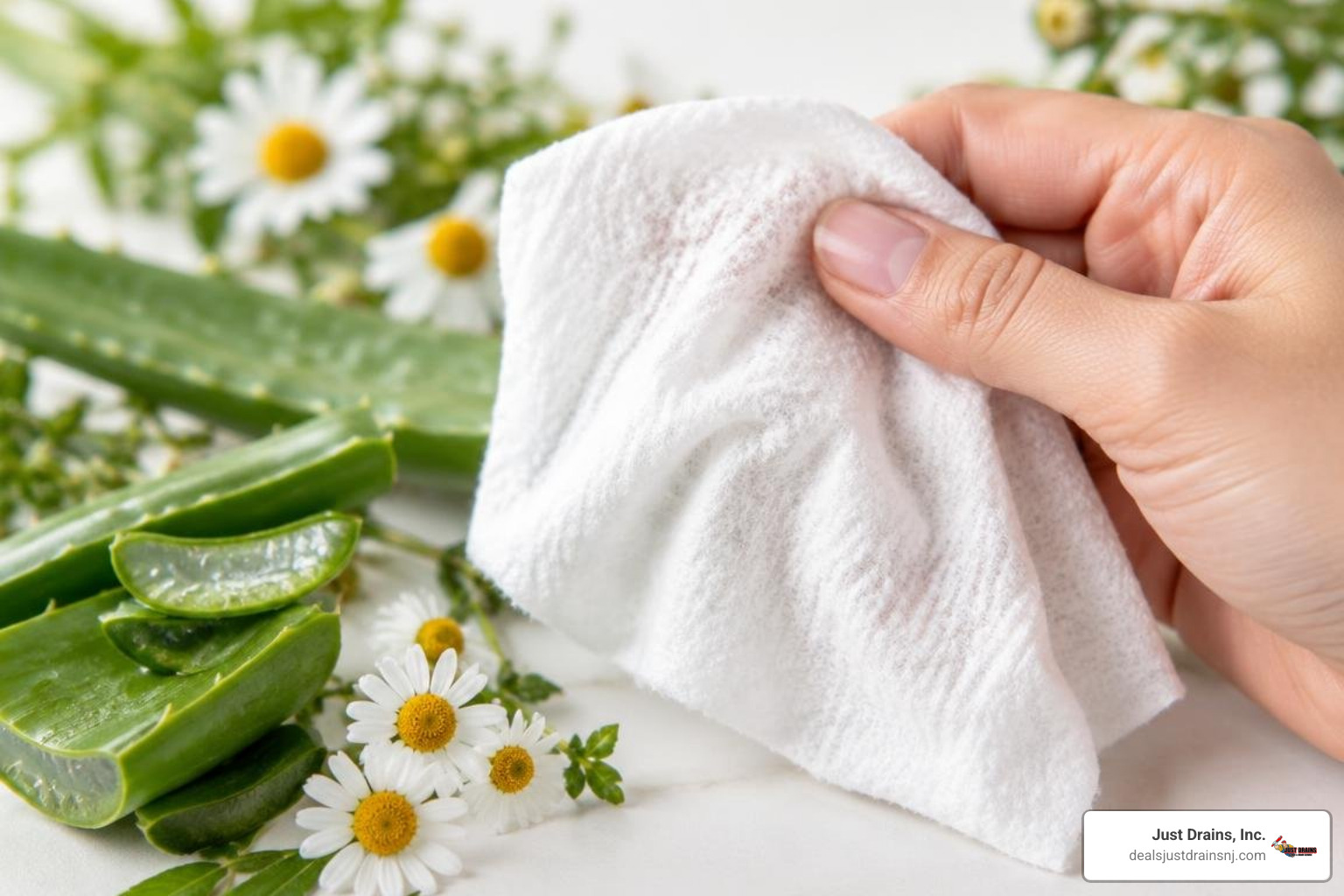
High-grade personal care wipes use targeted botanical infusions:
- Witch Hazel: A gentle, natural astringent that cools inflamed tissue and reduces local swelling.
- Aloe Vera: Provides intense surface hydration and calms compromised dermal layers.
- Chamomile & Calendula: Offer anti-inflammatory, soothing relief without stinging delicate mucous membranes.
When choosing soothing wipes, ensure the product is hypoallergenic and gynecologically approved to prevent allergic contact dermatitis.
Disposal Best Practices: Protecting Your Plumbing and the Environment
Regardless of what marketing claims appear on the product packaging, wastewater treatment professionals agree: keeping all wet wipes out of the drainage network is the single best way to prevent plumbing emergencies.
To maintain a hygienic, clog-free bathroom, implement a dual-bin disposal strategy. Keep a small lidded recycling receptacle for empty toilet paper rolls and packaging, and place a foot-pedal lined waste bin directly beside the toilet for all personal hygiene wipes, cotton pads, and facial tissues.
If you suspect wipes have already compromised your sewer lateral, look for early warnings such as gurgling toilets, slow-draining tubs, or sewage odors. Identifying the warning signs of a clogged main sewer line allows you to intervene before wastewater backs up into your home. Understanding when professional drain cleaning may be needed ensures stubborn wipe-and-grease blockages are completely cleared out rather than just poked through with a temporary consumer snake.
How to Responsibly Compost Biodegradable Toilet Wipes
If your wipes are certified 100% plastic-free (bearing certifications such as TÜV Austria Home Compost), you can safely divert used hygiene wipes away from landfills through home composting—provided they were used only for personal freshening or non-pathogenic cleaning.
Follow these rules for successful home composting:
- Balance Carbon and Nitrogen: Maintain a healthy balance of roughly 60% green matter (food scraps) and 40% brown matter (cellulose wipes, dry leaves, cardboard).
- Control Moisture: Keep the compost pile damp like a wrung-out sponge to foster active bacterial colonies.
- Turn Regularly: Aerate your compost pile every two weeks to introduce oxygen; certified compostable wipes typically break down completely within six months under active microbial conditions.
- Never Compost Fecal Waste for Food Gardens: Wipes containing human fecal matter or pet waste must never be placed into compost destined for vegetable or edible fruit gardens due to dangerous microbial pathogens.
Toilet Paper vs. Wet Wipes vs. Bidets: The Eco Comparison
The conventional paper industry logs over 1,000,000 acres of North American boreal forest every year to meet global demand for virgin pulp toilet tissue. While biodegradable wipes offer a gentle clean, their manufacturing process, individual plastic packaging, and transportation footprint carry a measurable environmental cost.
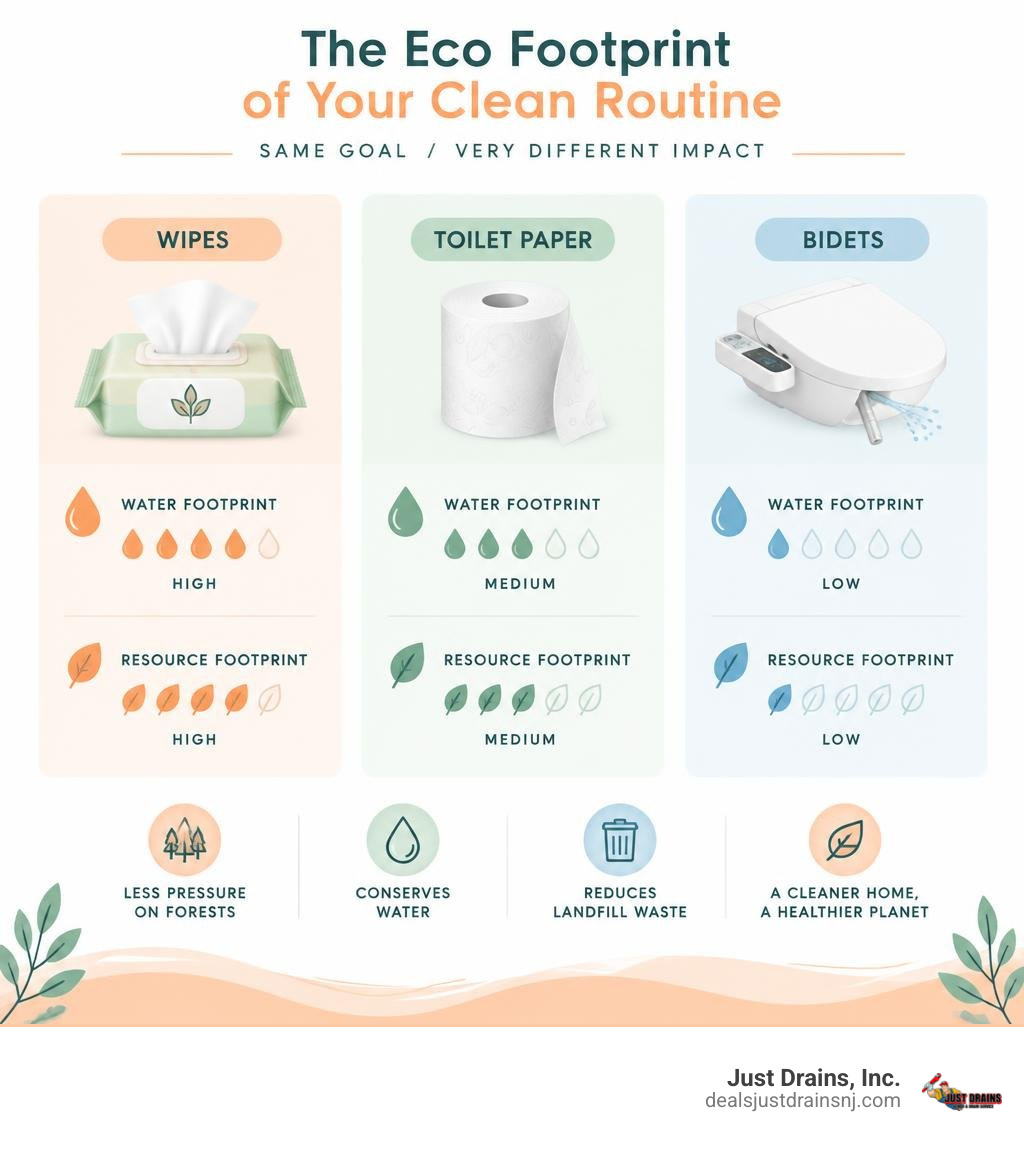
A modern bidet seat or attachment uses less than an eighth of a gallon of water per wash, completely eliminates pipe-snagging fiber risks, and drastically cuts household paper consumption. Pairing a bidet wash with minimal dry toilet paper delivers superior personal cleanliness while keeping your lateral lines completely free of fibrous waste. Realizing the long-term benefits of routine drain cleaning along with adopting flush-safe habits will keep your home’s wastewater piping clean and reliable for decades.
Frequently Asked Questions About Flushable and Eco Wipes
Do biodegradable wipes break down in residential septic tanks?
No, biodegradable wipes do not break down reliably inside residential septic tanks. Septic tanks rely on slow anaerobic digestion, which struggles to decompose thick cellulose fibers and insoluble chemical wet-strength binders. The unfragmented wipes sink into the bottom sludge layer or float among the top scum layer. Over time, accumulated wipes can obstruct the tank baffle, travel into your leach field distribution box, and blind the gravel trenches, resulting in premature drain field failure and expensive emergency pumping.
How long does it take for plant-based wipes to decompose?
In an active, well-aerated home compost pile, certified plant-based wipes take approximately six months to decompose into organic humus. However, inside a wastewater pipe or septic tank without sunlight and mechanical churning, unassisted aquatic degradation can take anywhere from several months to several years. During this prolonged breakdown period, synthetic-blend wipes will shed microfibers and catch incoming debris throughout your plumbing.
Is it ever truly safe to flush flushable wipes down the toilet?
As a universal rule of plumbing, the only items that should ever be flushed down a toilet are the Three Ps: Pee, Poo, and (toilet) Paper. Even if a wipe is certified by industry dispersibility standards, older cast iron pipes with interior rust scale, offset pipe joints, or minor tree root intrusions will instantly snag passing wet wipes. Disposing of wipes in a lined waste bin is the only 100% reliable way to eliminate plumbing blockages.
Conclusion
Personal wet wipes provide soothing, effective cleansing, but their tensile strength and slow dispersion make them a constant threat to your household plumbing and municipal sewers. Even certified biodegradable options are far better off in your bathroom trash bin or home compost pile than inside your drain pipes.
At Just Drains, Inc., located in Howell, NJ, we have spent over 30 years helping homeowners resolve tough sewer and drain emergencies. We provide fast, plumber-style service that arrives in minutes, backed by transparent flat-rate pricing with zero hidden upsells. If wipes or household debris have slowed down your drain lines, read our guide on the truth about whether flushable wipes can clog your sewer line and contact our team for rapid, professional drain-clearing service!