Can Grease Buildup Cause Your Main Sewer Line to Back Up?
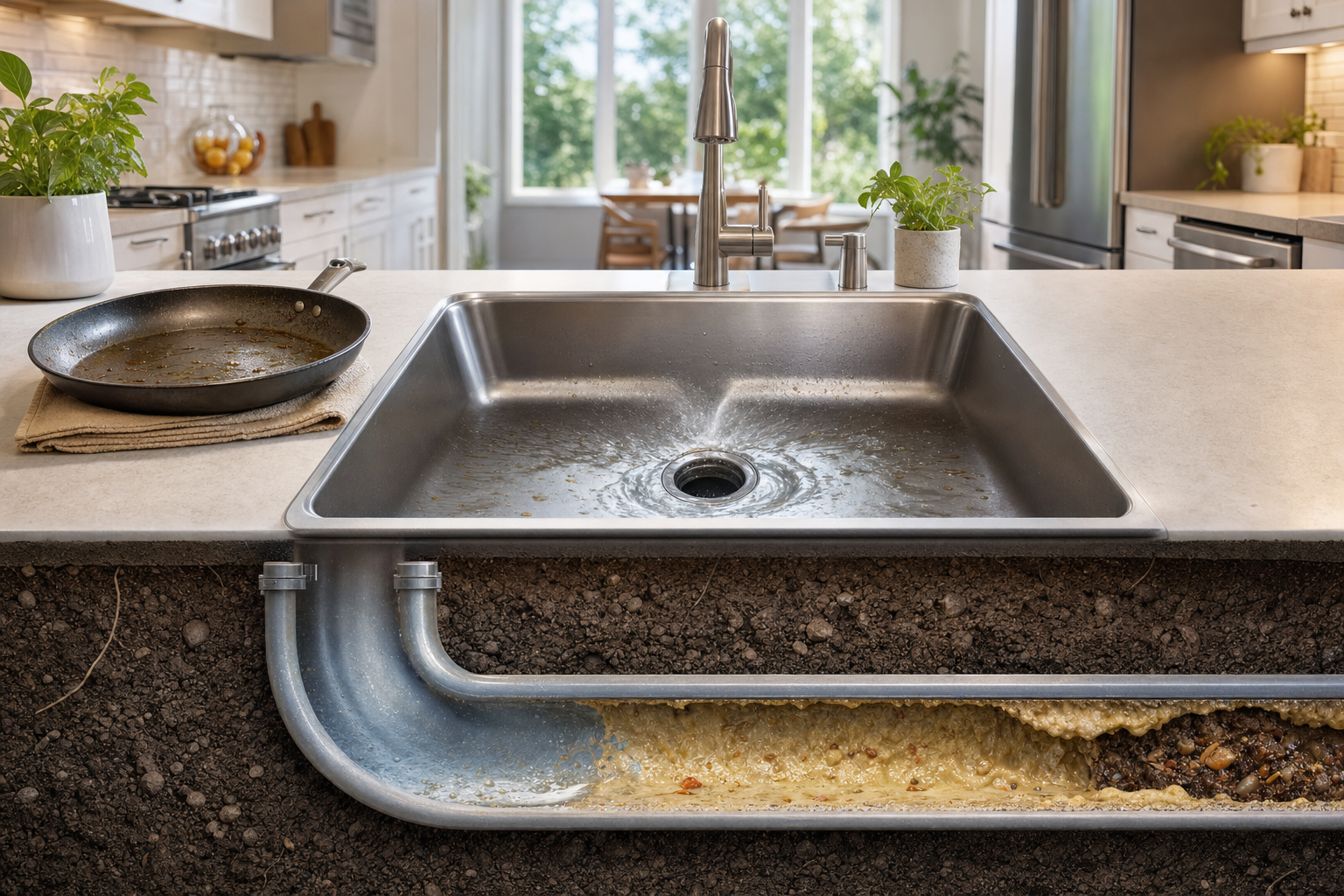
Yes — grease buildup is one of the most common reasons a main sewer line backs up into a home. It does not happen all at once. Grease accumulates slowly over months or years, coating the inside of your sewer pipe until flow slows down, then stops entirely. By the time sewage is backing up through your floor drain or bathtub, the blockage is usually significant.
If you are a homeowner in Central New Jersey or the Jersey Shore area dealing with multiple slow drains, gurgling sounds, or sewage smells, grease buildup in your main sewer line is a real possibility — especially if you have not had your sewer line professionally cleared in a while. This article walks through exactly how grease causes a main line backup, what warning signs look like, what you should and should not try on your own, and when it is time to call for sewer line clearing.
How Grease Moves Through Your Pipes and Creates a Blockage
Understanding what is actually happening inside your sewer line helps explain why grease is such a stubborn problem — and why a plunger or a bottle of drain cleaner will not fix it once the main line is involved.
It Goes Down the Drain as a Liquid
When you rinse a greasy pan, pour bacon drippings into the sink, or wash plates coated in butter, salad dressing, or meat juices, the grease flows down the kitchen drain in liquid form. It looks harmless. It disappears. Most homeowners assume it is gone for good.
But grease does not stay liquid for long once it leaves the warm water of your sink.
It Cools and Sticks to the Pipe Walls
As grease travels through your drain pipes and into the main sewer line underground, the temperature drops. The grease cools, thickens, and begins to stick to the inner walls of the pipe. Think of it like candle wax hardening on the inside of a jar — except the jar is your sewer pipe, and no one can see it happening.
This does not happen after one meal. It happens gradually over dozens or hundreds of uses. Each time grease goes down the drain, a thin new layer coats the pipe wall on top of the old one.
It Traps Everything Else That Passes Through
Here is where the problem accelerates. That sticky grease coating does not just sit there — it catches other material flowing through the pipe. Tiny food particles, soap film, hair, paper debris, and products marketed as “flushable” wipes all adhere to the grease layer inside the pipe. Each piece of trapped debris makes the buildup thicker and the pipe opening narrower.
This is why grease blockages are so much harder to clear than a simple food clog in a kitchen drain. The grease acts as an adhesive, binding together material that would have otherwise flowed through the pipe without a problem.
The Pipe Narrows Until Flow Stops
Over time, the combination of hardened grease and trapped debris reduces the inside diameter of the pipe. Where water and waste once flowed freely, the opening gets smaller and smaller. At first, drains may seem slightly slow. Then you might notice gurgling. Eventually, the pipe narrows to the point where normal household water use overwhelms the remaining space, and wastewater has nowhere to go but back into your home.
That is when a main sewer line backup happens — and it usually affects the lowest fixtures in your house first, like a basement floor drain, a first-floor bathtub, or a ground-level toilet.
What Counts as Grease — It Is More Than Just Cooking Oil
Most homeowners know not to pour a pan full of cooking oil down the drain. But grease enters your pipes in many less obvious ways. In the plumbing industry, the term FOG — short for fats, oils, and grease — covers a wide range of everyday kitchen substances:
- Bacon grease and meat drippings
- Butter and margarine
- Cooking oils (olive, vegetable, coconut)
- Salad dressings and mayonnaise
- Gravies and sauces
- Cheese and cream-based soups
- Fried food residue rinsed off plates
Even small amounts of these substances add up over time. A family that rinses dinner plates every night without wiping them first sends more FOG into the pipes than most people realize. In homes where cooking happens daily — especially with fried or sautéed foods — the buildup happens faster.
Warning Signs That Grease May Be Blocking Your Main Sewer Line
A single slow drain — like a kitchen sink that takes a few extra seconds to empty — is usually a branch-line clog, not a main sewer line problem. But when multiple fixtures are affected at the same time, grease buildup in the main line is a strong possibility.
Here is what to watch for:
- More than one drain slows down at the same time. If the kitchen sink, a bathroom sink, and the shower are all draining slowly, the problem is likely downstream in the shared main sewer line — not in any one fixture.
- Gurgling sounds from a toilet or drain when water runs elsewhere. If flushing a toilet causes gurgling in a bathtub drain, or running the washing machine causes bubbling in a floor drain, air is being pushed through a partially blocked main line.
- Water backs up into lower-level fixtures. Sewage or dirty water appearing in a basement floor drain, a first-floor tub, or the lowest toilet in the house is one of the clearest signs of a main sewer line blockage.
- Foul smell coming from drains, especially in the kitchen. A persistent sewage or rotten odor from your kitchen drain — even after cleaning — can mean decomposing grease and trapped debris are sitting in your sewer line.
- Recurring clogs that come back shortly after clearing. If you plunge or snake a drain and it clogs again within days or weeks, the real obstruction may be further down in the main sewer line, not in the fixture drain itself.
How to Tell the Difference: Single Drain Clog vs. Main Sewer Line Backup
This distinction matters because it changes what you should do next. A clogged kitchen sink is annoying, but it is usually a localized problem. A main sewer line backup affects the entire house and can cause sewage to come up through fixtures you are not even using.
| Single Drain Clog (Branch Line) | Main Sewer Line Backup | |
|---|---|---|
| Which fixtures are affected | One sink, one tub, or one toilet | Multiple fixtures throughout the house |
| Where water backs up | In the same fixture you are using | In the lowest fixtures — basement drain, first-floor tub, or ground-level toilet |
| Gurgling in other fixtures | Usually no | Yes — toilets, tubs, or drains gurgle when other fixtures are used |
| Does plunging fix it | Often, at least temporarily | Rarely — or the problem returns quickly |
| Likely cause | Hair, soap, food buildup near the fixture | Grease, debris, or roots blocking the main line underground |
| What to do | Try a plunger or a small drain snake | Stop running water and call a licensed drain and sewer cleaning professional |
If more than one drain in your home is acting up at the same time — especially if water is backing up into a fixture you are not using — that is a main sewer line problem, not a simple clog.
Why Hot Water and Dish Soap Do Not Solve the Problem
A common piece of advice homeowners hear is to run hot water after pouring grease down the drain, or to flush the drain with hot water and dish soap to “melt” the grease. This may seem to work at the kitchen sink — the grease liquefies briefly and disappears from view. But it does not actually leave your plumbing system.
The hot water cools as it travels through the pipes. By the time it reaches the main sewer line underground, the temperature has dropped enough for the grease to re-solidify. All the hot water does is push the grease further from the sink and deeper into the pipe where it is harder to reach.
Dish soap can break up small amounts of fresh grease near the surface of a drain, but it has no meaningful effect on a grease layer that has been hardening inside a sewer pipe for months or years. Once grease has bonded with debris and formed a solid buildup along the pipe walls, household remedies cannot clear it.
When It Might Not Be Grease
Grease is a leading cause of main sewer line backups, but it is not the only one. Being honest about what else could be happening helps you make a better decision about what to do next.
- Tree roots. Roots from mature trees can infiltrate sewer pipe joints over time, especially in older homes. If your yard has large trees near the sewer line, roots may be part of the problem — sometimes in combination with grease.
- Damaged or collapsed pipe. Older clay or cast-iron sewer pipes can crack, sag, or collapse with age. This is more of a structural issue than a blockage, and it requires different types of repair.
- Non-flushable items. Paper towels, hygiene products, and even many products labeled “flushable” can catch in sewer pipes and create obstructions — especially when grease is already present.
- Heavy rain or municipal backup. In some areas, heavy storms can overwhelm sewer systems and cause temporary backups that have nothing to do with your pipes.
If your sewer line backs up during or right after a heavy rainstorm, or if the problem started suddenly with no kitchen-use connection, grease may not be the primary cause. A licensed drain and sewer cleaning professional can help identify what is actually going on.
What to Do If You Suspect a Grease-Related Sewer Backup
If you are seeing signs of a main sewer line backup — especially multiple slow drains, gurgling, or sewage backing up into a fixture — here is what to do and what to avoid.
What to Do
- Stop running water in the house. Every gallon of water you send down a blocked main line has to go somewhere. If the line is backed up, that water comes back into your home. Turn off washing machines and dishwashers. Minimize sink and toilet use until the line is cleared.
- Check your cleanout, if you know where it is. A cleanout is a capped pipe — usually a white PVC or black ABS cap — that provides access to your main sewer line. It is often located in the basement, along an exterior wall, or in the yard near the house. If the cap is off or sewage is pooling around it, that confirms the main line is blocked. Do not remove the cap yourself if pressure is built up behind it.
- Note which fixtures are affected. This helps the technician who comes out understand where the blockage is. Are all drains slow, or just a few? Is water backing up from a floor drain or tub? Is the kitchen drain the worst one? These details matter.
- Call a licensed drain and sewer cleaning company. Once a main sewer line is involved, this is not a DIY fix. You need a professional who can reach the blockage and clear it from the main line, not just push it around.
What Not to Do
- Do not pour chemical drain cleaner into a backed-up main line. Over-the-counter drain cleaners are designed for slow sink drains, not main sewer line blockages. When used in a backed-up system, they sit in standing water — including potentially in your fixtures — and can damage pipes, create toxic fumes, or cause chemical burns if the water splashes during service.
- Do not continue flushing or running water in an attempt to force the blockage through. This will make the backup worse and can cause sewage to overflow into areas of your home that were not yet affected.
- Do not attempt to open the cleanout cap if wastewater is visibly backed up behind it. The pressure behind a blocked line can cause a sudden release of sewage.
If sewage has already backed up into your home, avoid direct contact with the contaminated water and call for help promptly. Sewage backups involve bacteria and waste that can create health risks if handled without proper precautions.
When to Call for Professional Sewer Line Clearing
Some homeowners wonder whether the problem is really serious enough to justify calling someone. Here is a straightforward way to think about it:
- If a single drain is slow and a plunger fixes it, you probably do not need professional help yet.
- If a single drain keeps clogging again within a few days or weeks, it may be worth having it professionally cleaned to clear a deeper buildup.
- If multiple drains are slow at the same time, or if any water is backing up into a fixture you are not using, the main sewer line is likely involved — and that requires professional sewer line clearing.
There is no benefit to waiting once a main line backup starts. The longer it goes, the more water damage and mess you are likely dealing with.
Just Drains is a licensed drain and sewer cleaning company serving homeowners across Central New Jersey and the Jersey Shore, including Monmouth, Ocean, Mercer, Union, and Morris Counties. We focus specifically on drain cleaning and sewer line clearing — it is what we do, not one item on a long list of plumbing services. We offer fast response service, and drain cleaning starts at $63.
If you are dealing with a backed-up sewer line or a clog that will not stay cleared, call now: (732) 279-2427.
How to Prevent Grease Buildup in Your Sewer Line
Preventing grease buildup is simpler than clearing it — and a few consistent habits in the kitchen make a real difference over time.
- Wipe greasy pans and plates with a paper towel before washing. This one step removes the majority of FOG before it reaches your drain. It takes a few seconds and is the single most effective thing you can do.
- Pour cooled cooking grease into a container and throw it away. A coffee can, a glass jar, or even a sealable bag works. Never pour liquid grease directly into the sink drain — even with hot water running.
- Use a mesh strainer in the kitchen sink drain. A simple strainer catches food particles that would otherwise stick to grease buildup inside the pipes.
- Avoid flushing wipes down the toilet. Even wipes labeled “flushable” do not break down the way toilet paper does. They are one of the most common materials that get trapped in grease buildup inside sewer lines, accelerating a blockage.
For homes with older sewer lines — which are common across Central New Jersey — periodic professional sewer line cleaning can help clear minor grease accumulation before it turns into a backup. Think of it as maintenance rather than emergency repair.
Frequently Asked Questions
How long does it take for grease to build up in pipes?
There is no exact timeline because it depends on how much grease goes down the drain, how often, and the condition and diameter of the sewer pipe. In a household that regularly rinses greasy dishes without wiping them first, noticeable buildup can develop within a year or two. In homes with older, narrower pipes, it can happen faster. The buildup is gradual — most homeowners do not notice it until drains start slowing down or backing up.
Can hot water flush grease out of pipes?
Not effectively. Hot water liquefies grease temporarily near the drain, but the water cools as it travels through the pipe system. By the time it reaches the main sewer line underground, the grease re-solidifies and sticks to the pipe wall. Running hot water after cooking may keep your kitchen sink clear in the short term, but it pushes the grease deeper into the system where it accumulates over time.
How can I remove grease buildup from my sewer line?
Once grease has hardened inside a main sewer line, household methods cannot remove it. Chemical drain cleaners are not designed for main line use and can damage pipes or create safety hazards. For grease-related main line blockages, professional sewer line clearing — where a technician uses specialized equipment to break up and remove the buildup from inside the pipe — is typically the appropriate next step. If you are in Central New Jersey or the Jersey Shore area and need your sewer line evaluated, Just Drains can help — call (732) 279-2427.
What is the difference between a clogged drain and a backed-up sewer line?
A clogged drain is typically a blockage in a single fixture’s branch pipe — one sink, one tub, or one toilet. A sewer line backup occurs when the main pipe responsible for moving all wastewater out of your home and into the municipal sewer or septic system becomes obstructed. The key difference for homeowners: a clogged drain affects one fixture, while a sewer line backup affects multiple fixtures and usually causes water or sewage to come up through the lowest drain in the house.
Will a garbage disposal prevent grease from building up?
No. A garbage disposal grinds solid food into smaller pieces, but it does not remove grease from the water flowing into your pipes. Grease passes right through the disposal in liquid form, enters the drain system, and hardens the same way it would without a disposal. In fact, disposals can make the problem worse by sending more food particles into the pipes — particles that stick to the grease layer and speed up the blockage.
How do I know if my sewer backup is caused by grease or tree roots?
Without a professional inspection, it can be difficult to tell. However, some clues can help. If the problem is worst after heavy kitchen use — cooking large meals, running the dishwasher, rinsing greasy dishes — grease is a likely contributor. If the problem worsens after rain, or if you have mature trees with roots near the sewer line, roots may be involved. In many older homes, the answer is both: roots create a snag point in the pipe, and grease accumulates around it. A licensed drain and sewer cleaning professional can clear the line and give you a better idea of what caused the blockage.
What to Do Next
If your kitchen sink is barely draining, your toilet is gurgling when the washing machine runs, or you have already seen water backing up into a tub or floor drain, waiting does not help. Grease buildup gets worse with continued use, and a partial blockage can become a full backup without much warning.
Just Drains provides licensed drain cleaning and sewer line clearing for homeowners across Central New Jersey and the Jersey Shore — including Monmouth, Ocean, Mercer, Union, and Morris Counties. We specialize in exactly this kind of problem: stubborn clogs and main line blockages that a plunger cannot fix. Drain cleaning starts at $63, and we offer fast response service when you need it most.
Call now: (732) 279-2427