What Conscious Consumers Must Know About Biodegradable Wet Wipes
How to Choose Biodegradable Wet Wipes Without Clogging Your Drains
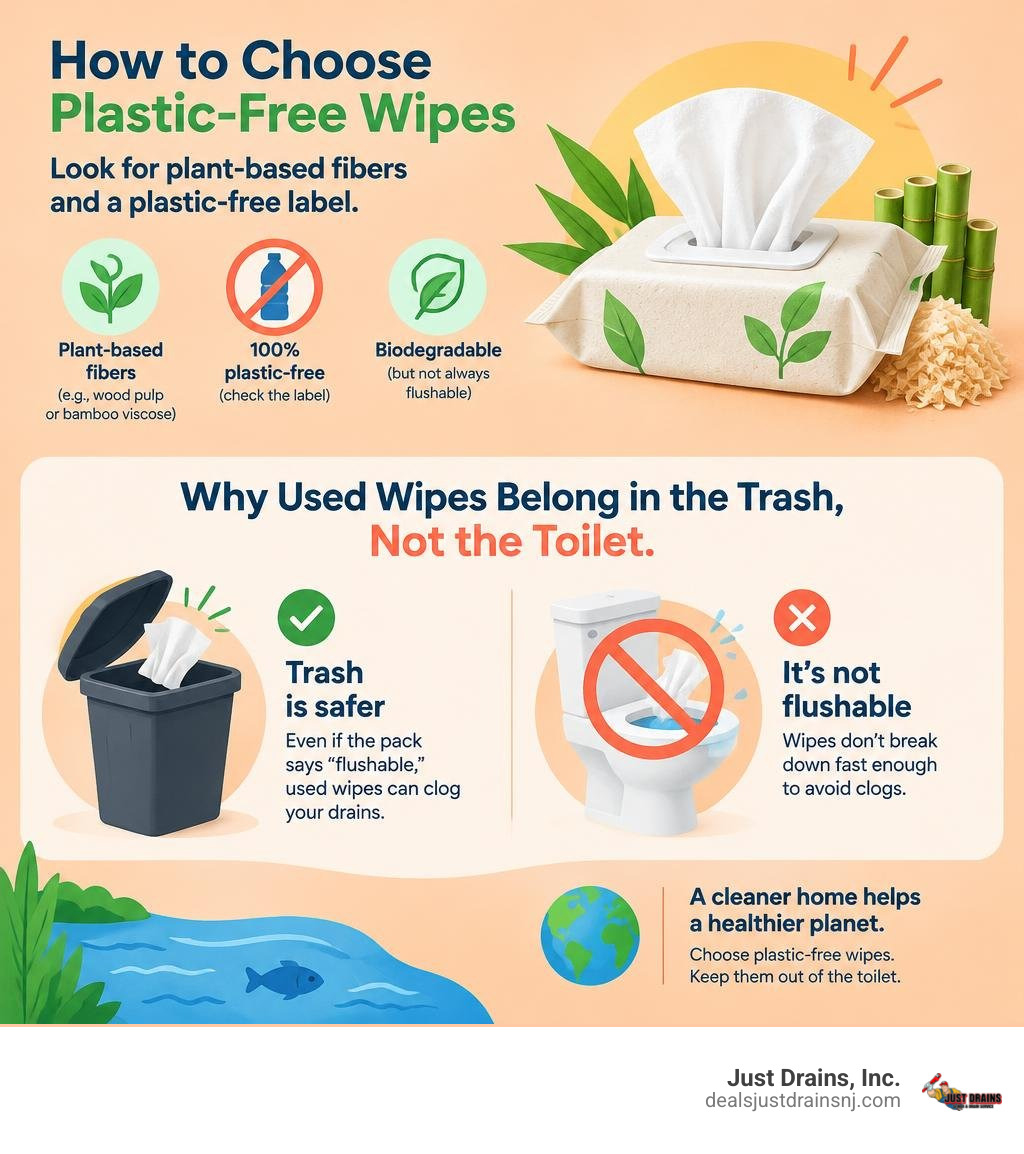
Choose wipes made from plant-based fibers, such as wood pulp or bamboo viscose, and check that the full wipe is plastic-free. But don’t treat biodegradable as a promise that it’s safe to flush. Biodegradation can take weeks or months; a wipe needs to break apart much faster to avoid snagging in a pipe. The safest choice for your home’s drains is to put used wipes in the trash, even when the pack says “flushable.”
That choice matters beyond your bathroom. Plastic fibers from conventional wipes can reach waterways, while wipes that stay intact can add to sewer clogs. This guide will help you spot useful material and testing claims without mistaking a green label for proof.
I’m Judy Weissberg. My 29 years leading home-service and facilities teams shape how I assess biodegradable wet wipes: the environmental claim matters, but so does what happens in a homeowner’s drain.
The Hidden Environmental Cost of Conventional Wet Wipes
The global convenience of pre-moistened wipes has created an invisible ecological crisis. Valued at roughly $30 billion globally and projected to reach $48.47 billion by 2030, the market consumes approximately 1.7 million tons of nonwoven fabric annually. Yet, beneath their soft exterior, up to 80% of conventional wipes are manufactured using synthetic polymers, primarily polyester (polyethylene terephthalate, or PET) and polypropylene (PP).
When these synthetic sheets are flushed or sent to landfills, they resist natural degradation. Unlike traditional tissue paper made from unbound natural cellulose, conventional wipes rely on hydroentanglement—a manufacturing technique that entangles synthetic fibers using high-pressure water jets to ensure high wet strength. In your home, this indestructible strength means that when a wipe snags on root intrusions or uneven pipe joints, it stays intact. Understanding how a clogged main sewer line threatens home plumbing reveals how quickly these tangled masses can cause extensive structural backups.
The Microplastic Footprint and Aquatic Contamination
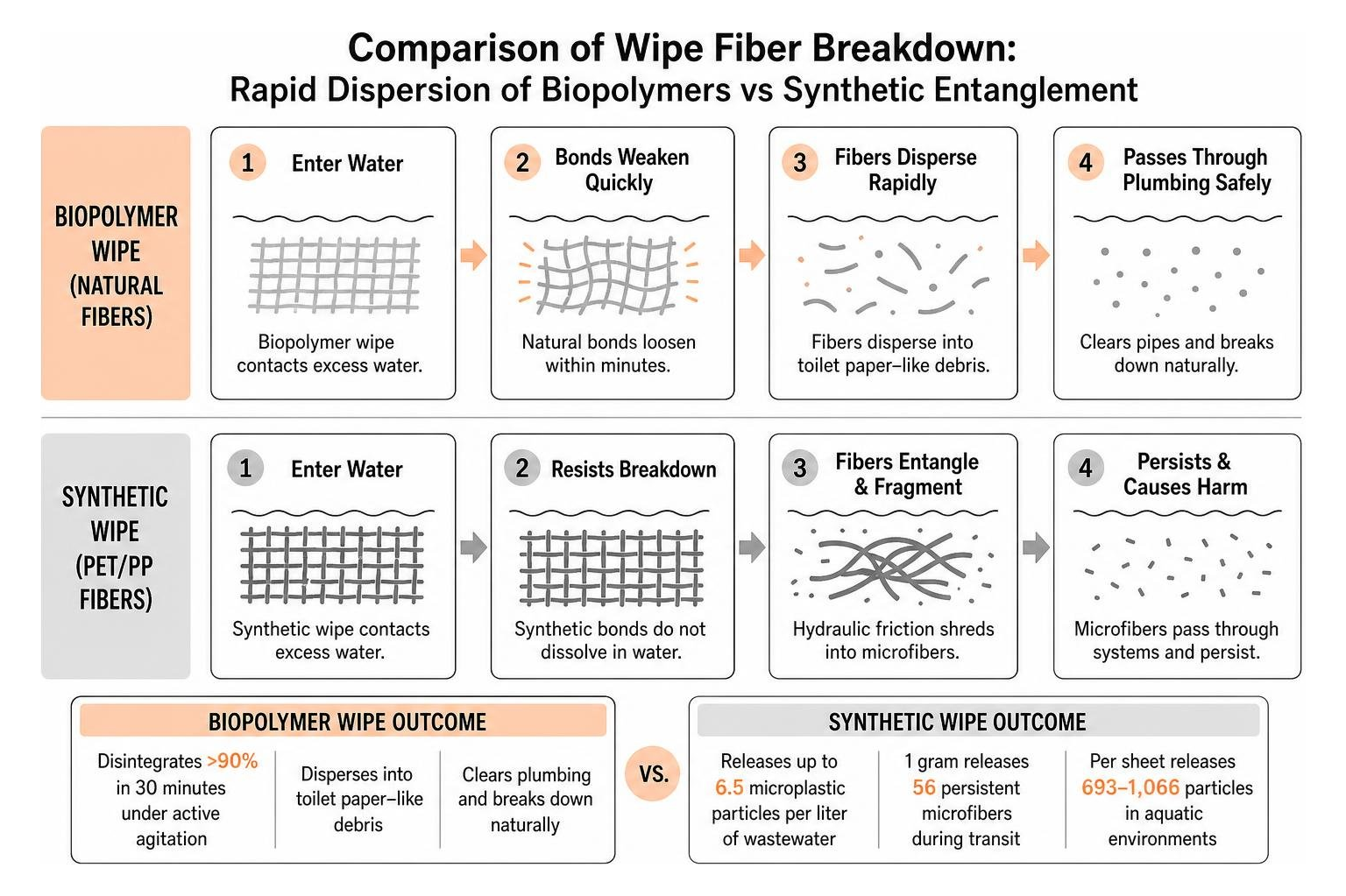
When non-biodegradable synthetic wipes enter municipal systems, mechanical friction and hydraulic turbulence shred them into microscopic fragments rather than breaking them down organically. Synthetic wet wipes made of polyester release up to 6.5 microplastic particles per liter into untreated wastewater, compared to polypropylene fibers, which release around 0.03 microplastic particles per liter.
These synthetic fibers escape standard primary wastewater filtration, settling into aquatic habitats:
- Microfiber Shedding per Gram: On average, 1 gram of wipe fabric releases 56 persistent microfibers during transit.
- Per-Sheet Aquatic Release: A single synthetic wipe sheet sheds between 693 and 1,066 microplastic particles when exposed to an aquatic environment.
- Simulated Domestic Washing: Agitation during simulated washing releases 106 to 180 particles per sheet.
- Mass Loss: Microfiber release from personal care and household cleaning wipes accounts for 26 to 27 milligrams of mass loss per gram of wipe.
Sewer Infrastructure Burden and Fatberg Formation
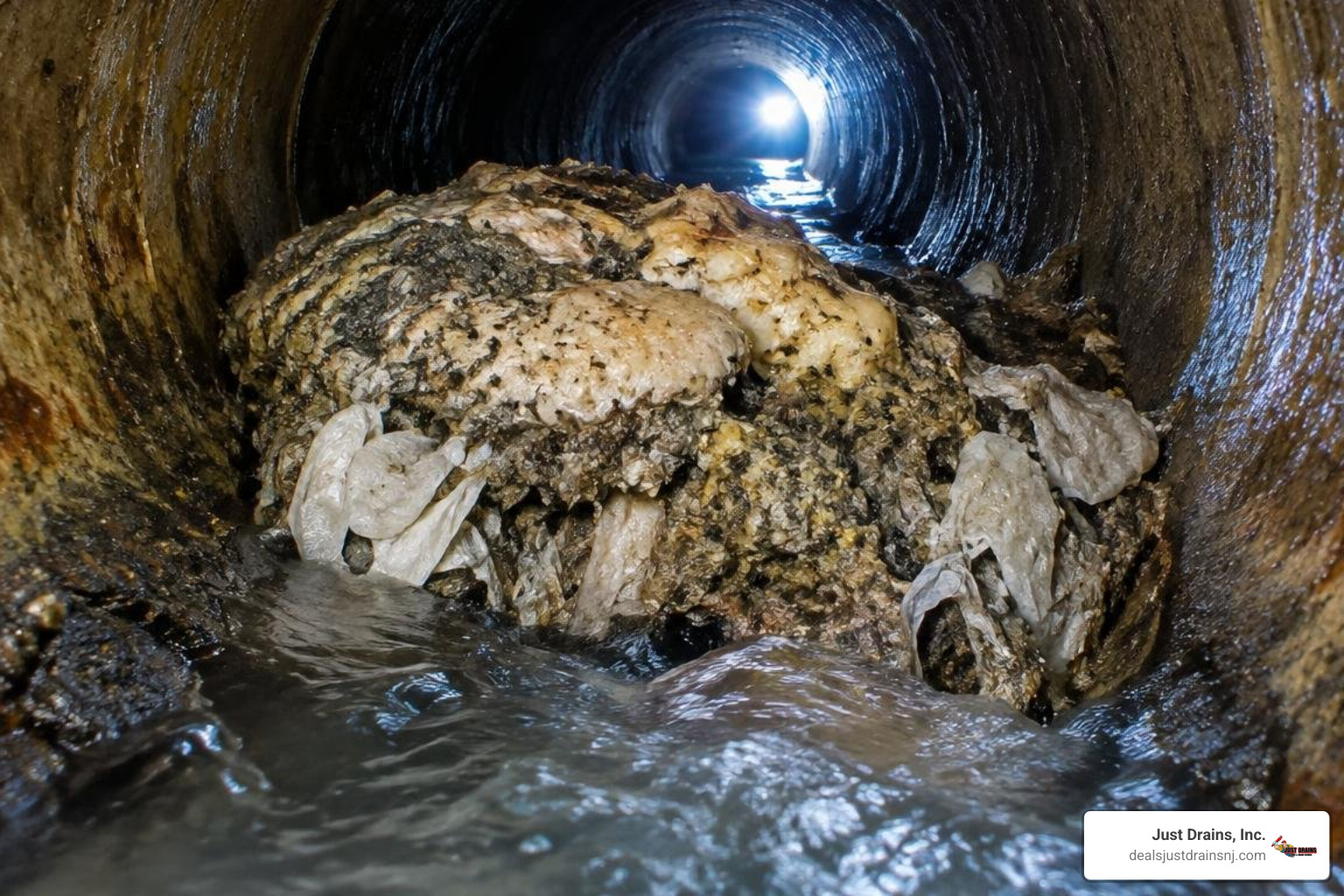
Once synthetic nonwovens clear a residential lateral pipe, they encounter municipal sewer mains. Here, indestructible synthetic fibers intertwine with coagulated fats, oils, and grease (FOG) poured down domestic sinks, forming monolithic masses known as “fatbergs.”
Cities worldwide spend immense municipal budgets battling these blockages. London and New York each allocate $18 million to $19 million annually to clear fatbergs, while across the United States, municipal sewer utilities spend an estimated $1 billion per year resolving wipe-induced blockages. When drains begin to gurgle or empty slowly across multiple fixtures, identifying main sewer line clogs early helps prevent raw wastewater from backing up into homes.
The Science and Material Composition of Biodegradable Wet Wipes
True sustainability in wet wipe design requires materials that deliver durable tensile strength during personal use while disintegrating rapidly upon contact with excess water. Modern eco-conscious formulations replace synthetic plastics with renewable botanical sources such as wood pulp cellulose, bamboo viscose, and lyocell. For instance, specialized formulations like plastic-free body wipes demonstrate that natural fibers can provide superior skin hygiene without relying on synthetic polymer reinforcement.
| Metric / Property | Conventional Synthetic Wipes | Standard Market “Flushable” Wipes | Advanced Biopolymer-Gelled Wipes |
|---|---|---|---|
| Primary Material | Polyester (PET) & Polypropylene (PP) | Wood pulp blended with low-melt synthetic binders | Multi-ply cellulose infused with reversible biopolymer gels |
| Disintegration Rate | Negligible (persists for decades) | Fails to fully disintegrate in standard sewer flows | Disperses into toilet paper debris within minutes |
| Microplastic Generation | Severe (up to 6.5 particles/L wastewater) | Moderate (up to 50% contain synthetic PET/PP blends) | Zero (100% bio-derived natural fibers) |
| Tensile Wet Strength | High (>120 N/m width) | Moderate (60–90 N/m width) | High during use (≥100 N/m width), drops in excess water |
| Soil Degradation | PP loses only 5% weight after 90 days | Incomplete degradation over extended periods | 89.4% wood pulp weight loss after 120 days |
Why Traditional Wipes Fail While Biodegradable Wet Wipes Disintegrate
Standard nonwoven fabrics utilize spunbond bonding or synthetic chemical resins to bond fibers together. These synthetic resin adhesives do not dissolve in water. Consequently, when flushed, traditional wipes easily withstand the hydraulic shear of domestic plumbing.
In an independent evaluation testing 23 commercial wipes marketed as flushable, none fully disintegrated under standard municipal sewer flow conditions. In contrast, truly biodegradable wipes rely on natural fiber bonding, such as a blend of 20% lyocell and 80% wood pulp, which can disintegrate by over 90% in just 30 minutes under active agitation.
How Biopolymers Advance Biodegradable Wet Wipes
The latest material breakthrough involves reversible biopolyelectrolyte self-assembly. By infusing standard multi-ply cellulose layers with natural marine biopolymer gels—such as sodium alginate (derived from brown seaweed) or κ-carrageenan (derived from red seaweeds)—materials scientists have engineered wipes with a dynamic chemical architecture.
These wipes maintain a robust tensile strength of at least 100 N/m of width during personal use due to ionic cross-linking with trace multivalent salts (such as calcium ions). However, when discarded into an excess volume of water, the ionic equilibrium shifts. The cross-linked polymer network dissociates, allowing the sheet to shed its strength and revert into delicate toilet paper debris within minutes. Innovations such as plant-based flushable wipe technology leverage these natural cellulose structures to achieve rapid aquatic breakdown without compromising cleaning efficacy.
Flushability Standards, Municipal Wastewater, and Treatment Safety
To verify whether a wipe safely disperses before causing sewer obstructions, the nonwoven industry and municipal bodies rely on rigorous hydrodynamic simulations, most notably the PAS3 Slosh Box test alongside INDA/EDANA flushability guidelines. In these laboratory evaluations, wipes are placed in oscillating water-filled boxes that simulate the mechanical agitation of municipal gravity sewers.
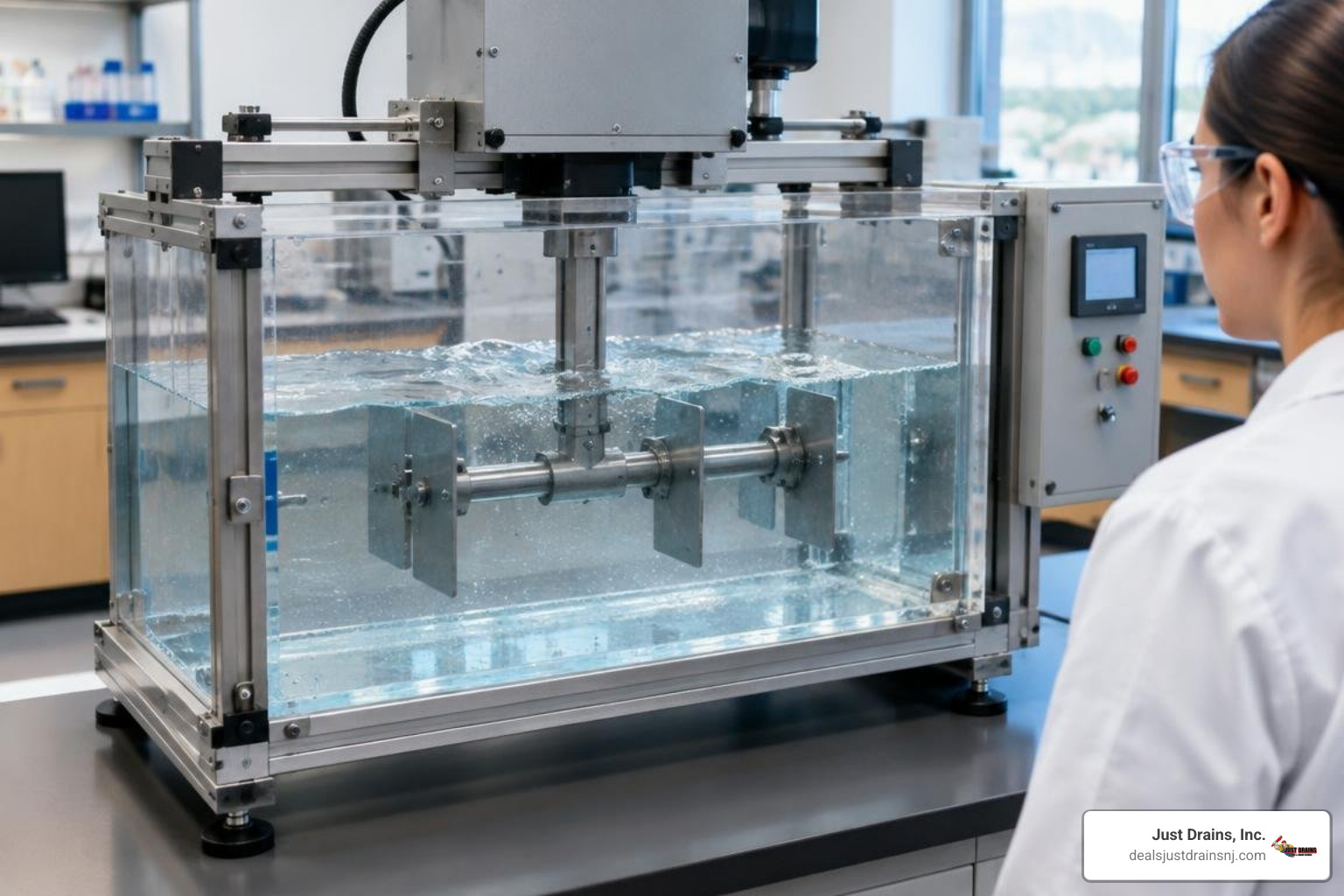
When wipes fail these hydrodynamic tests, they accumulate in residential drain bends. If your plumbing system suffers from recurring backups, diagnosing recurrent household drain clogs often highlights how non-dispersible nonwovens catch on minor internal scale and pipe misalignments.
Simulated Sewer Dispersal vs Real-World Plumbing Risks
While laboratory slosh boxes provide standardized mechanical movement, residential plumbing contains physical pinch points. A typical home sewer lateral features directional changes, rough internal casting on older cast-iron lines, and low-flow fixtures designed to conserve water.
When a nonwoven sheet fails to disintegrate immediately, it risks lodging in low-gradient horizontal runs or P-traps. Understanding why sewage backs up into lowest fixtures illustrates how an obstruction in a main lateral forces wastewater backward into basement floor drains and ground-floor shower basins first.
Wastewater Treatment Bioreactor Impact and Environmental Safety
For wipes that successfully reach municipal wastewater treatment plants, their chemical breakdown products must not interfere with secondary biological purification. Municipal treatment plants rely on activated sludge bioreactors containing aerobic microorganisms that metabolize dissolved organic waste.
Scientific evaluations measuring Chemical Oxygen Demand (COD) removal rates and the Sludge Volume Index (SVI) have confirmed that biopolymer degradation products (such as dissolved alginates and carrageenans) are non-toxic. At realistic municipal wastewater concentrations, these natural polysaccharides are digested by active sludge without disrupting microbial settling or effluent discharge quality. Furthermore, pure cellulose from wood pulp achieves 89.4% weight loss after 120 days in aerobic soil, compared to polypropylene, which loses only 5% of its weight after 90 days of soil burial.
Global Regulations and Market Scaling Challenges
As infrastructure costs and microplastic concerns mount, regulatory bodies worldwide are enacting strict legislative mandates targeting nonwoven hygiene products.
Legislative Mandates: California AB 818, UK Bans, and EU Directives
- California Assembly Bill 818 (AB 818): Mandates prominent “Do Not Flush” labeling and consumer education programs on all non-flushable, single-use wet wipes sold across the state.
- United Kingdom Plastic Wipe Bans: The UK has advanced national legislation prohibiting the sale of wet wipes containing synthetic plastic fibers to safeguard waterways and protect public wastewater networks.
- EU Single-Use Plastics Directive (SUPD): Requires mandatory expanded packaging markings indicating the presence of plastics, the associated environmental damage of sewer disposal, and Extended Producer Responsibility (EPR) contributions from nonwoven manufacturers.
Manufacturing Bottlenecks and Future Technological Innovations
While laboratory designs demonstrate high performance, scaling biopolymer-gelled cellulose wipes presents manufacturing challenges. Maintaining consistent moisture stability throughout an 18-month commercial shelf life without prematurely softening the biopolymer matrix requires precise ionic tuning.
Additionally, biopolymer raw materials cost more than commodity petroleum resins (PET/PP). Overcoming these bottlenecks requires optimizing high-speed production machinery to apply biopolymer cross-linkers uniformly to fast-moving cellulose webs without sacrificing production throughput.
Consumer Guide: How to Select and Dispose of Sustainable Wipes
Navigating the personal care aisle requires understanding the difference between certified sustainable materials and greenwashed claims. Implementing preventative home drain maintenance strategies starts with making conscious purchasing decisions and managing waste disposal properly.
Interpreting Eco-Certifications and Ingredient Labels
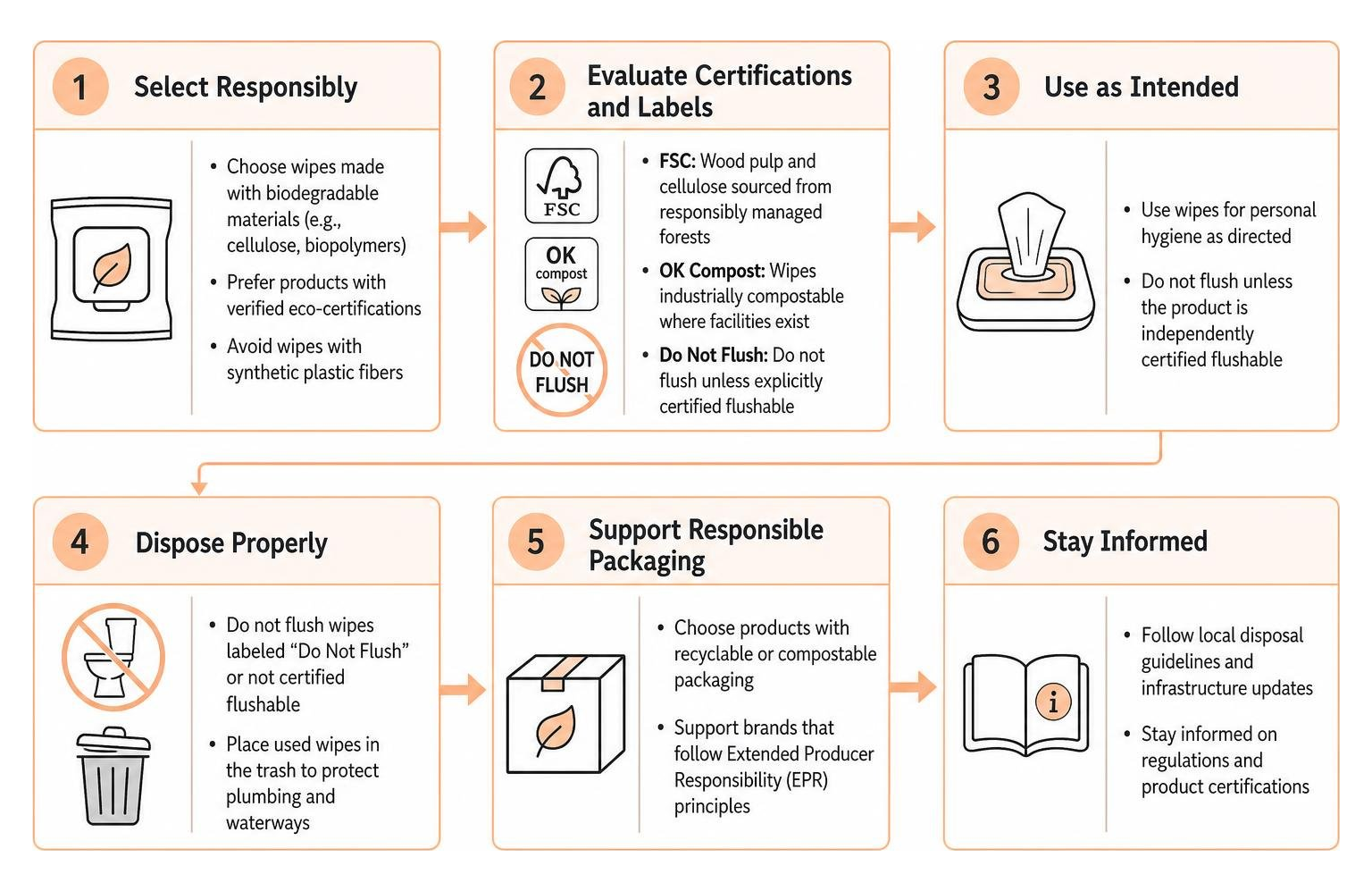
When selecting eco-friendly personal wipes, verify independent third-party certifications rather than relying solely on front-of-package marketing slogans:
- Forest Stewardship Council (FSC): Confirms that wood pulp and cellulose are harvested from responsibly managed forests.
- OEKO-TEX Standard 100: Validates that the fabric is free of harmful chemical finishes and pesticide residues.
- EN 13432 & ASTM D6400: Rigorous testing standards certifying industrial compostability and complete biological breakdown without toxic residue.
- Clean Ingredient Formulation: Look for botanical extracts (such as aloe vera and chamomile) and avoid harsh quaternary ammonium compounds (“quats”), artificial fragrances, and synthetic parabens that can alter natural skin microbiome balance.
Best Disposal Practices: Composting, Trash, and Plumbing Care
Even certified compostable and plant-based wipes must be disposed of through appropriate waste streams:
- Trash Bin (Default Method): The absolute safest destination for all single-use wipes, including those labeled biodegradable, is the solid waste trash bin.
- Industrial Composting: Certified plant-based wipes (free from human waste or synthetic antimicrobial disinfectants) can be directed to municipal green-waste processing where local regulations permit.
- Home Composting: Only unsoiled, 100% natural cellulose or bamboo wipes without chemical additives should enter residential backyard compost piles.
If an accidental buildup of non-dispersible wipes causes a localized blockage, knowing when drain clogs require professional tools ensures that home plumbing lines are safely cleared without caustic chemicals damaging internal pipe walls.
Frequently Asked Questions About Flushable and Eco Wipes
Are biodegradable wet wipes safe to flush down residential toilets?
No, most biodegradable wet wipes should not be flushed down residential toilets. While a wipe may be chemically biodegradable over several months, residential sewer pipes require materials that disperse within minutes. Unless a wipe is explicitly engineered with water-reversible biopolymer technology that breaks down immediately under light agitation, it can snag on pipe rough spots, root intrusions, or low-flow bends, leading to residential plumbing clogs.
How long do truly biodegradable wipes take to break down?
In active aerobic soil conditions, pure cellulose wood pulp breaks down substantially, showing up to 89.4% weight loss within 120 days. Under industrial composting conditions (with high humidity and elevated temperatures), certified plant-based fibers like bamboo viscose degrade within 4 to 12 weeks. In contrast, synthetic wipes made of polypropylene lose only 5% of their mass after 90 days in the soil and can persist in landfills for decades.
What is the difference between compostable, plastic-free, and flushable wet wipes?
- Plastic-Free: Indicates the nonwoven fabric is made entirely from natural plant fibers (such as wood pulp, lyocell, or cotton) without petroleum-derived synthetic polymers like polyester or polypropylene.
- Compostable: Certified (via standards like EN 13432) to break down biologically into non-toxic organic matter under controlled microbial conditions within a specific timeframe.
- Flushable: Designed to lose mechanical tensile strength rapidly under hydrodynamic water movement, dispersing into small pieces that can pass through plumbing pipes without snagging. A wipe can be 100% plastic-free and compostable without being flushable.
Conclusion
Transitioning to sustainably sourced, plant-based nonwovens is a critical step in halting microplastic accumulation in our global waterways and reducing municipal fatbergs. However, true environmental responsibility requires conscious consumer habits. The simple practice of placing all single-use wipes into the trash bin—regardless of packaging claims—preserves both natural ecosystems and home plumbing lines.
Understanding whether flushable wipes can clog your sewer line is key to protecting your property from unexpected backups. If you experience slow drains, gurgling toilets, or sewer line blockages, our team at Just Drains, Inc. is ready to help. Based in Howell, NJ, we provide prompt, professional residential and commercial drain cleaning backed by over 30 years of hands-on expertise and straightforward flat-rate pricing.