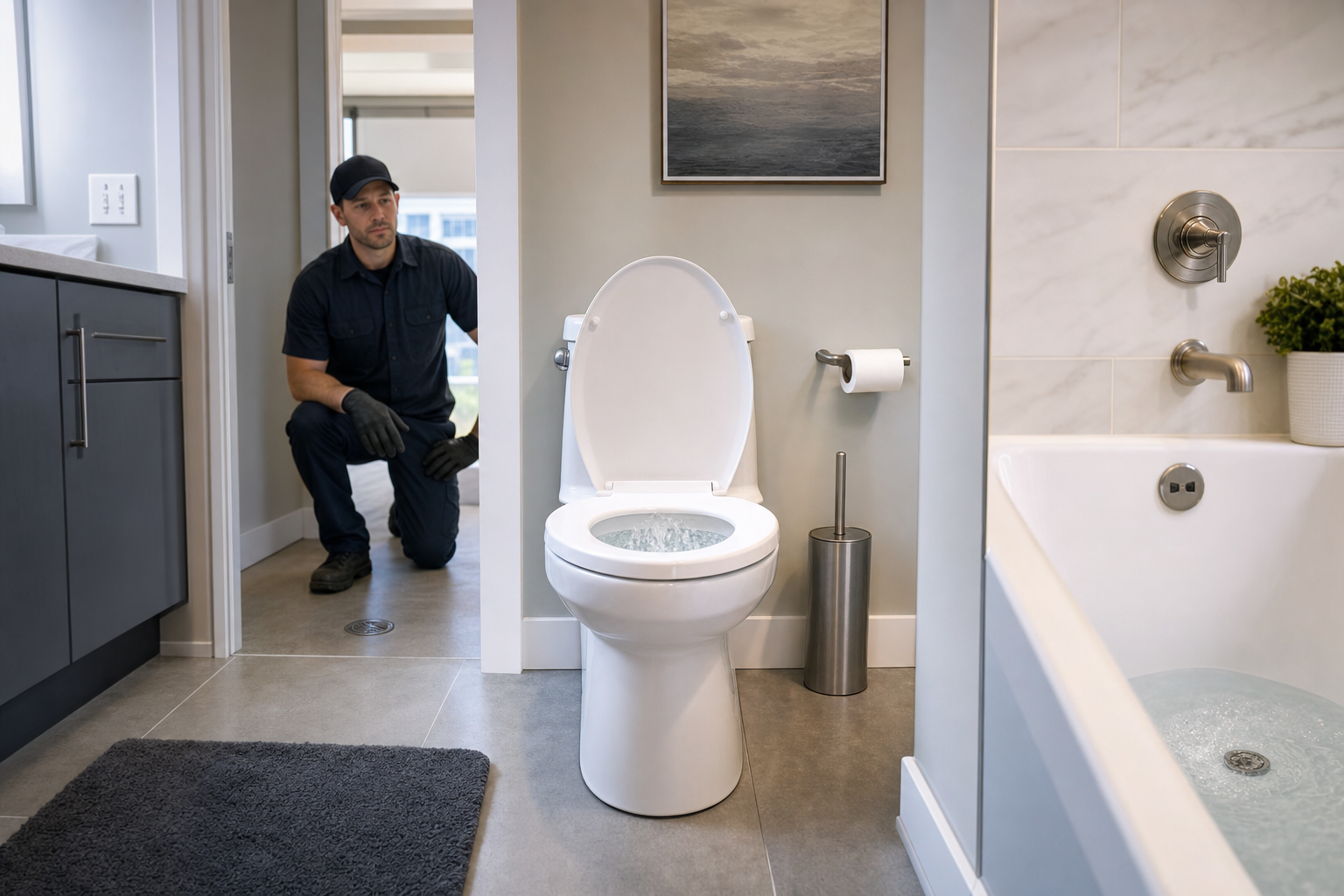
How to Tell Whether a Clog Is in One Fixture or the Main Sewer Line
If only one drain in your home is slow or backed up and everything else works normally, the clog is almost certainly in that fixture’s drain. If multiple fixtures are slow, gurgling, or backing up at the same time, the blockage is likely in your main sewer line — the single pipe that carries all wastewater out of your house.
That distinction matters because a fixture-level clog is usually something you can attempt to clear yourself, while a main sewer line blockage requires professional sewer line clearing before the problem gets worse. Here is how to figure out which situation you are dealing with, what to do about it, and when it is time to call for help.
Why the Number of Affected Fixtures Is the Key Question
Every drain in your home — every sink, toilet, tub, and shower — connects to a single main sewer line that runs out to the municipal sewer. Think of it like branches feeding into a tree trunk. A clog in one branch only affects that branch. A clog in the trunk affects everything upstream of it.
That is why the first and most important question is: how many fixtures are having problems?
- One fixture slow or clogged, everything else drains fine — the blockage is almost certainly local to that fixture’s drain pipe.
- Two or more fixtures acting up, especially in different parts of the house — the blockage is likely in the main sewer line, and it can get worse quickly.
If you are not sure yet, the next section walks you through a simple test you can do right now.
A 3-Step Test You Can Do Right Now
You do not need any tools for this. You just need to run water at a few fixtures and pay attention to what happens.
Step 1: Check Every Drain in the House
Walk through your home and test each fixture one at a time. Turn on the kitchen sink. Turn on the bathroom sink. Run the bathtub or shower for a few seconds. Flush each toilet.
As you go, note which drains are slow or backed up and which ones drain normally. If only one fixture is giving you trouble and everything else works fine, you are likely looking at a local clog in that fixture’s drain.
Step 2: Flush the Toilet and Watch Another Fixture
Go to the bathroom closest to the problem. Flush the toilet, then immediately look at the tub or shower drain in the same room. Watch for about 15 seconds.
If water bubbles up in the tub drain, or you hear a gurgling sound coming from it, that means the clog is downstream of both the toilet and the tub — somewhere further along the line. This cross-fixture reaction is one of the most reliable signs that the problem has moved beyond a single fixture.
You can also try this with other combinations. Run the washing machine and watch whether a nearby sink or toilet reacts. If running water at one fixture causes a visible backup or gurgling at a different fixture, the blockage is in a shared section of pipe.
Step 3: Check the Lowest Drain in Your Home
If you have a basement floor drain, a first-floor shower, or a laundry drain at the lowest level of the house, check it. Run water from an upper floor and see whether anything backs up downstairs.
When the main sewer line is blocked, wastewater has nowhere to go. It follows gravity and pushes back up through the lowest available opening. If you see standing water or sewage at the lowest drain in your home without anyone having used that fixture, that is a strong signal the main sewer line is blocked.
What Your Results Mean
- Only one fixture is slow, no cross-fixture reactions — most likely a fixture-level clog.
- Two fixtures in the same bathroom are both slow, rest of the house is fine — could be a branch-line clog (more on this below).
- Multiple fixtures affected, cross-fixture reactions, lowest drain backing up — likely a main sewer line blockage.
What a Fixture-Level Clog Looks and Acts Like
A clog in a single fixture is the most common drain problem homeowners face, and it is usually the least urgent.
Typical signs:
- One sink, tub, shower, or toilet drains slowly or will not drain at all
- Every other drain in the house works normally
- No gurgling from other fixtures when you use the affected one
- A plunger often improves the situation, at least temporarily
Common causes: Hair and soap buildup in bathroom drains. Grease and food debris in kitchen sinks. Too much toilet paper or something that should not have been flushed.
What you can try safely: A standard plunger is the right first tool. For a bathroom sink or tub, lifting off the drain cover and clearing away any hair or soap buildup you can see near the opening is a good place to start. If a plunger clears the clog and water flows normally again, the problem was local.
When to stop and call: If the clog keeps coming back after clearing it, or if a plunger has no effect at all, there may be a deeper buildup in the drain pipe that basic tools cannot reach. A licensed drain cleaning professional can clear the line properly. Just Drains offers drain cleaning starting at $63 — call us to discuss the scope of your situation before any work begins.
What a Main Sewer Line Clog Looks and Acts Like
A blockage in the main sewer line is more serious and more urgent. It affects the entire house because every drain shares that one exit pipe.
Typical signs:
- Multiple fixtures draining slowly or backing up. If both bathrooms and the kitchen are having trouble, the common point is the main line.
- Cross-fixture reactions. You flush the toilet and water rises in the tub. You run the washing machine and the toilet gurgles. These reactions happen because wastewater is hitting a blockage and pushing back through the nearest available opening.
- The toilet is often the first and most dramatic indicator. Toilets connect to the main line through the widest pipe in the house. When the main line backs up, the toilet usually shows symptoms first — slow flushing, bubbling, or sewage rising in the bowl.
- Gurgling sounds from drains you are not using. When the main line is partially blocked, air gets trapped in the pipes. As water moves toward the blockage, that trapped air is forced upward through the water held in your drain traps, producing the gurgling sound you hear.
- Sewage smell. Every drain in a properly functioning system includes a curved section of pipe — commonly called a P-trap — that retains a small amount of water, which acts as a seal against sewer gas. When a main-line blockage interrupts normal flow, that water seal can fail, allowing sewer gas to enter the living space.
- Water or sewage at the lowest drain. A basement floor drain, a ground-level shower, or a laundry drain at the lowest point in the house is usually where backup appears first, because gravity pulls the blocked wastewater downward to the lowest exit.
Common causes: Tree roots growing into the sewer line, grease buildup over time, or accumulated debris that has narrowed the pipe. In many Central New Jersey homes, older clay or cast iron sewer lines are especially vulnerable to root intrusion and internal deterioration.
The In-Between Case: Branch-Line Clogs
Not every multi-fixture problem is a main sewer line issue. Sometimes two fixtures share a short section of pipe called a branch line before it connects to the main line.
For example, if your bathroom sink and bathtub are both slow but the kitchen sink and every other fixture drain normally, the clog may be in the branch line that serves just that one bathroom. The fixtures share a wall and often share a short pipe before it joins the larger system.
This is worth knowing because it changes what kind of clearing is needed. A branch-line clog does not carry the same urgency as a main sewer line blockage, but it still usually needs a professional drain cleaning — a plunger at one fixture will not reach the shared section of pipe.
What to Do Based on Your Results
If It Looks Like a Fixture Clog
- Try a plunger. For sinks and tubs, make sure there is enough water to cover the plunger cup and create a seal.
- For bathroom drains, check for visible hair or debris near the drain opening and remove it.
- If plunging works and the drain flows freely again, monitor it over the next few days.
- If the clog returns, or if the plunger has no effect, the buildup is likely deeper in the pipe. This is the point where a professional drain cleaning makes sense. Just Drains offers drain cleaning starting at $63 — call us to talk through your situation before any work begins.
A note on chemical drain cleaners: Store-bought chemical drain cleaners may seem like an easy solution, but they often do not fully clear a clog. They can also cause damage to older pipes, especially with repeated use. If a plunger did not work, a chemical product is unlikely to solve the problem either — and can make a professional cleaning more complicated. When in doubt, a licensed drain cleaning professional is the safer path.
If It Looks Like a Main Sewer Line Clog
- Stop running water in the house. Every gallon you add to the system has nowhere to go and will back up through the lowest drain. This includes flushing toilets, running sinks, and using the washing machine or dishwasher.
- Do not plunge aggressively at one fixture. If the blockage is in the main line, plunging a single fixture will not help and may push sewage out of another drain.
- Avoid contact with any backed-up water. Sewage backup is a health concern. Keep children and pets away from affected areas.
- Call a licensed drain and sewer cleaning company. A main sewer line blockage is not a DIY situation. The line needs to be professionally cleared to restore flow.
If your test results point to the main line, this is exactly the type of problem Just Drains handles every day. We provide sewer cleaning and sewer line clearing for homeowners across Central New Jersey and the Jersey Shore. We work to respond fast and get the line flowing again so your household can get back to normal.
Call Just Drains now: (732) 279-2427
What to Expect When You Call Just Drains
If you have never called a drain and sewer cleaning company before, it is natural to feel uncertain about the process. Here is what a typical call to Just Drains looks like:
- You call (732) 279-2427 and describe what is happening — which drains are affected, what you have noticed, and how urgent the situation feels.
- A licensed technician is dispatched to your home. Just Drains serves Monmouth, Mercer, Union, Morris, and Ocean Counties, and we work to respond fast.
- The technician assesses the situation, identifies where the blockage is, and clears the line using professional drain or sewer cleaning methods.
- Drain cleaning starts at $63. You will know the scope of the work before anything begins.
No pressure, no runaround. Just a licensed professional who handles drain and sewer clogs and can get your home back to working order.
When a Recurring Clog May Signal a Bigger Problem
If the same fixture clogs again and again even after clearing, or if you are getting your main sewer line cleared multiple times a year, there may be an underlying issue in the pipe itself — such as root intrusion, heavy grease accumulation, or pipe deterioration. Repeated clogs in the same spot are worth mentioning when you call, because the pattern can help the technician understand what is happening in the line.
Just Drains focuses on drain cleaning and sewer line clearing, which is usually the first step in resolving any clog. If the technician believes the situation involves something beyond cleaning, they will let you know so you can make an informed decision about next steps.
Quick Comparison: Fixture Clog vs. Main Sewer Line Clog
| Fixture Clog | Main Sewer Line Clog | |
|---|---|---|
| How many fixtures affected | One | Multiple, often throughout the house |
| Cross-fixture reactions | None | Flushing one fixture causes backup or gurgling at another |
| Plunger helps | Usually, at least temporarily | Rarely or not at all |
| Sewage smell | Uncommon | Common, especially near floor drains |
| Lowest drain in the house | Not affected | Often the first place backup appears |
| Urgency | Low to moderate | High — stop using water and call a professional |
| Typical service needed | Drain cleaning | Sewer cleaning / sewer line clearing |
Frequently Asked Questions
How do I know if my main sewer line is clogged?
The clearest sign is that multiple fixtures in your home are draining slowly or backing up at the same time. If flushing the toilet causes water to rise in the bathtub, or if you see standing water at your lowest drain without having used it, the blockage is likely in the main sewer line. Stop running water and call a licensed drain and sewer cleaning company.
Can I clear a main sewer line clog myself?
In most cases, no. The main sewer line is buried and runs from your home out to the municipal sewer connection. Clearing it requires professional equipment that can reach deep into the pipe. Plunging or using chemical drain cleaners at an individual fixture will not resolve a main-line blockage and can make the situation worse by forcing more water into a system that cannot drain.
What causes main sewer line clogs?
The most common causes are tree roots growing into the pipe, grease buildup that narrows the line over time, and accumulated debris such as flushable wipes, sanitary products, or sediment. In many New Jersey homes with older sewer lines, root intrusion is especially common because mature trees send roots toward the moisture in sewer pipes.
Why does my toilet gurgle when I run the washing machine?
Gurgling happens when air gets trapped in the drain pipes. When the washing machine pushes a large volume of water into the drain system and that water hits a partial blockage, the displaced air forces its way up through the water sitting in your toilet’s trap. That escaping air creates the gurgling sound. It often means there is a partial blockage somewhere downstream that both fixtures share — possibly in the main sewer line.
What is a sewer cleanout and where do I find it?
A sewer cleanout is a capped pipe that provides direct access to the main sewer line. It is usually located outside the house near the foundation, or in a basement or utility area. It looks like a short pipe sticking up from the ground with a round cap on top. If you remove the cap and see standing water or sewage inside, that confirms the main sewer line is blocked. If you are not sure where yours is, a drain technician can help you locate it.
Could it be a vent problem instead of a sewer line clog?
Sometimes. Every drain system includes vent pipes that run up through the roof to allow air into the system and prevent siphoning of the water in your traps. If a vent is blocked — by leaves, a bird nest, or ice in winter — it can cause slow draining and gurgling that looks similar to a sewer clog. The key difference is that a vent problem usually does not cause sewage backup or cross-fixture water flow. If drains are slow and gurgling but nothing is actually backing up, a blocked vent may be the cause. A licensed professional can help you determine which issue you are dealing with.
Should I use chemical drain cleaner before calling a professional?
Chemical drain cleaners are generally not recommended. They often do not fully clear a clog, and repeated use can damage older pipes. If you suspect a main sewer line problem, do not pour chemicals down the drain — they will not reach the blockage, and they add caustic material to water that may back up into your home. If a plunger has not worked, a professional drain cleaning is the safer and more effective next step.
Need Help Right Now?
If your test results suggest a main sewer line problem — or if a single stubborn clog will not clear — Just Drains is here to help. We are a licensed drain and sewer cleaning company serving homeowners across Central New Jersey and the Jersey Shore, including Monmouth, Mercer, Union, Morris, and Ocean Counties.
- Drain cleaning starting at $63
- Fast response
- Licensed, local, and focused on exactly this type of work