Unclogging a Washer Drain Backing Up into Your Sink Made Simple
What to Do When Your Washer Backs Up into the Sink
Stop the washer and do not run another load. If the sink fills when the washer drains, the two fixtures may share a drain with a partial clog. Let the water recede, then check the sink’s P-trap and the washer’s drain hose for visible blockages or kinks. If both look clear, the clog may be farther down the shared pipe. Persistent backups, gurgling, or leaks are signs to call a drain professional rather than keep testing with more water.
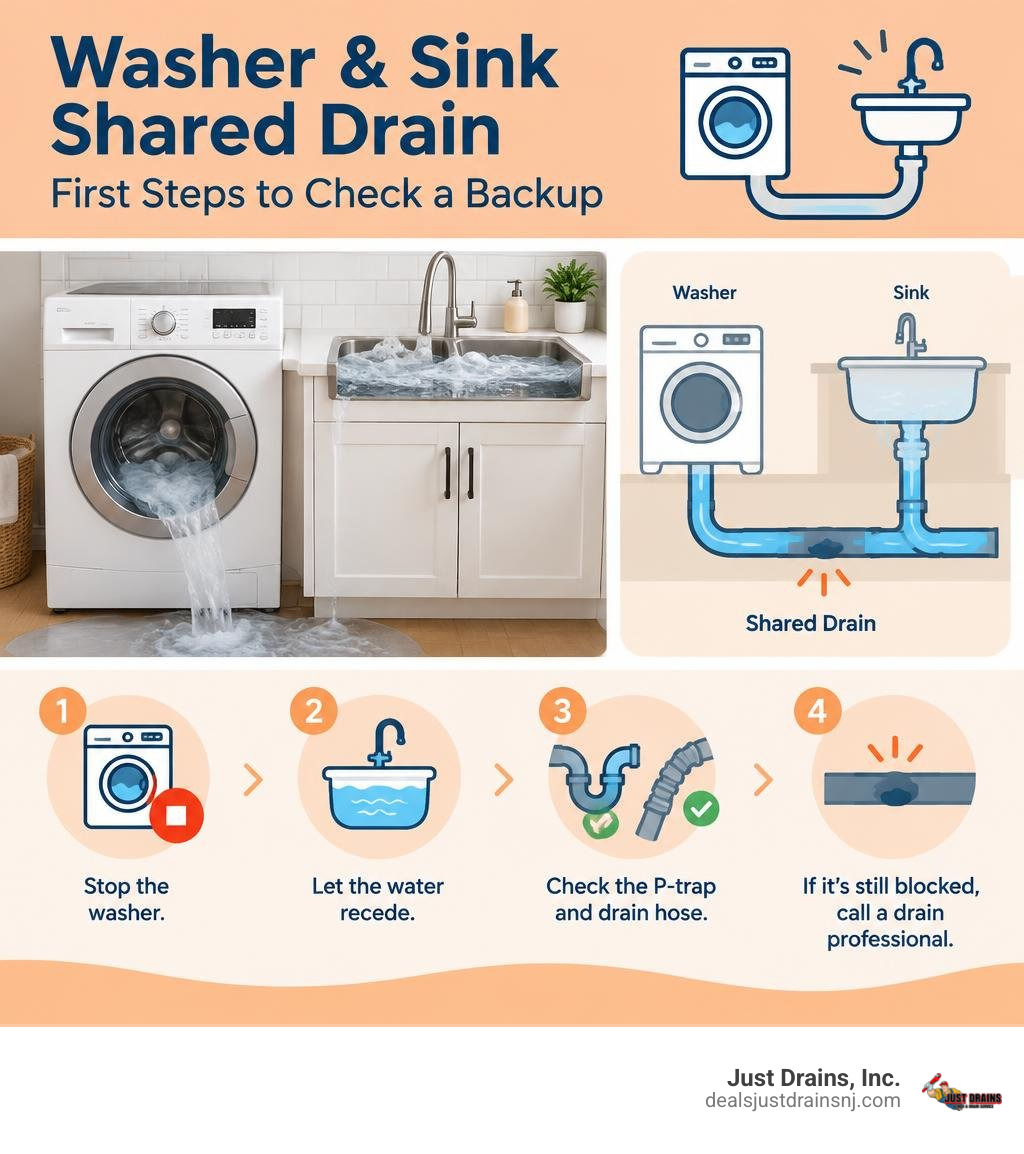
Watching sudsy, gray laundry water bubble up into your clean kitchen sink is enough to ruin anyone’s afternoon. It looks bad, smells worse, and brings household chores to an immediate halt. Fortunately, dealing with a washer backing up into sink drains is one of the most common dilemmas we see across residential homes. Understanding how these fixtures interact helps you troubleshoot the issue safely, protect your pipes, and restore proper drainage.
Why Is Your Washer Backing Up into Sink Plumbing?
To understand why this happens, look at how modern homes route wastewater. In many kitchen and laundry room layouts, the washing machine standpipe and the kitchen sink feed into the exact same branch line behind the wall. Under normal conditions, both drains share this line without incident. Problems arise because a washing machine moves water far differently than an ordinary sink.
When you run a kitchen faucet, water leaves the basin purely through gravity at a modest rate of 1.5 to 2.2 gallons per minute. By contrast, a modern washing machine uses a powerful internal pump to discharge anywhere from 15 to 25 gallons of water per minute. A typical wash cycle discharges 30 to 40 gallons over just a few minutes.
If there is any friction or narrowing inside that shared pipe, the massive surge of pressurized water cannot escape down the line fast enough. Water seeks the path of least resistance—which means shooting upward out of your sink drain or garbage disposal. Addressing this dynamic starts with understanding laundry standpipe overflow causes and how forced discharge impacts downstream pipes.
| Metric / Drainage Feature | Kitchen Sink Gravity Drain | Washing Machine Pumped Discharge |
|---|---|---|
| Typical Flow Rate | 1.5 – 2.2 Gallons / Minute | 15 – 25 Gallons / Minute |
| Drainage Force | Pure Gravity | High-Pressure Mechanical Pump |
| Discharge Volume / Cycle | Variable (Low to Moderate) | 30 – 40 Gallons per Load |
| Standard Pipe Requirement | 1.5-inch Drain Line | 2-inch Drain Line (IRC Code) |
| Common Flow Obstacles | Food scraps, cooking grease | Lint, heavy soap scum, synthetic fibers |
Why a Washer Backing Up into Sink Plumbing Happens Even When Sinks Drain Fine
Homeowners often ask: “If the main branch line is clogged, why doesn’t my sink back up when I run the faucet?”
The answer lies in how partial clogs behave. When cooking grease, hardened soap curd, and fabric lint slowly coat the interior walls of a drain line, they reduce its usable diameter. A 2-inch pipe might become restricted to only 1 inch of clear passage.
When you turn on the kitchen faucet, the flow rate is slow enough that the narrowed pipe still drains the water without issue. But when the washing machine pumps dozens of gallons into the line in seconds, the restricted opening creates a bottleneck. The pipe quickly fills, creates backpressure, and pushes dirty water into your sink. This symptom often mirrors diagnosing sinks that slow down after draining initially, where the trap drains instantly until the pipe downstream runs out of storage volume.
Undersized Drain Lines and Standpipe Trap Depth Requirements
In older homes, laundry lines were frequently plumbed using 1.5-inch galvanized steel or PVC pipes. Modern high-efficiency and top-loading washing machines pump water far harder and faster than vintage appliances from decades past. A 1.5-inch pipe is fundamentally undersized for modern washer flow rates, creating recurring overflow risks.
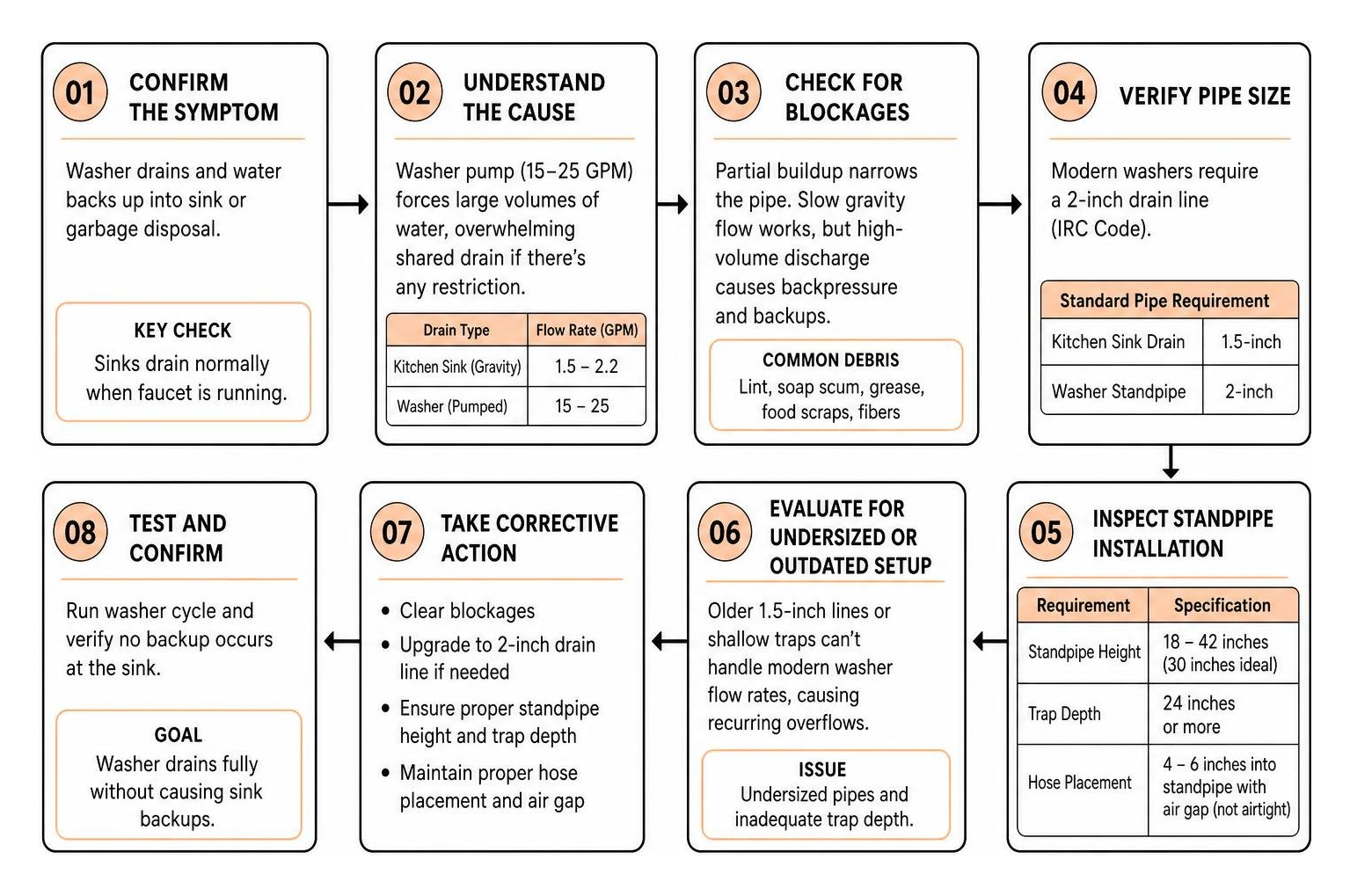
Plumbing codes, including the International Residential Code (IRC), require a 2-inch drain pipe for washing machine standpipes. The physical dimensions of the standpipe and P-trap also matter:
- Standpipe Height: Must measure between 18 and 42 inches above the trap weir (with 30 inches being ideal to prevent siphoning).
- Trap Depth: A trap depth of 24 inches or more is recommended for modern, hard-pumping machines, rather than older 18-inch shallow configurations.
- Hose Placement: The washer discharge hose should extend no more than 4 to 6 inches into the standpipe and must maintain a clear air gap rather than being taped airtight.
These standpipe height, trap depth, and hose placement specifications are the dimensions our technicians check when correcting a recurring backup at its source.
How to Tell if the Issue Is a Pipe Clog, Venting Problem, or Pipe Pitch
When troubleshooting a washer backing up into sink lines, the issue generally stems from one of three areas: a physical obstruction, improper pipe pitch, or a blocked plumbing vent stack.
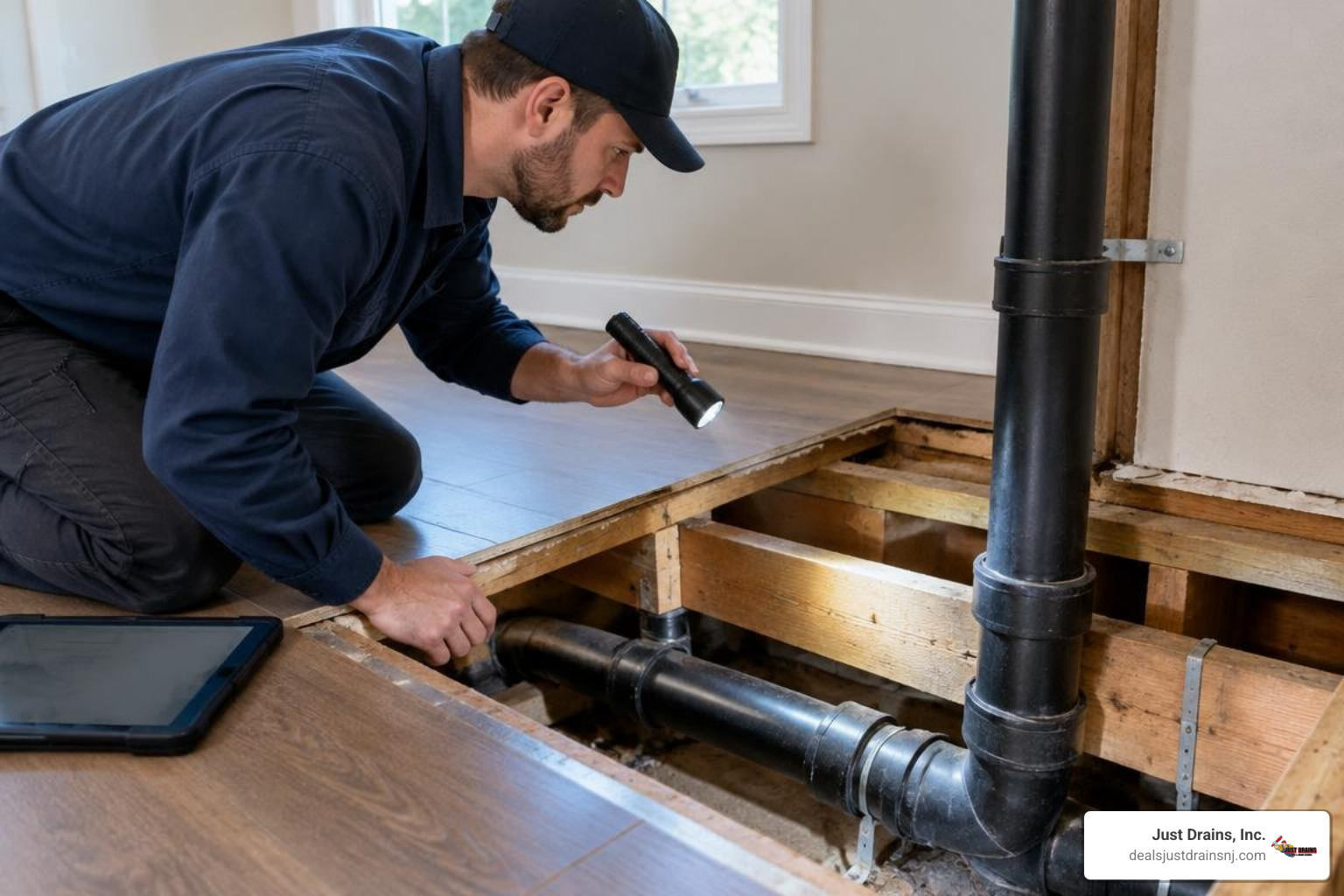
Pipe pitch is critical for proper drainage. Standard plumbing code requires horizontal drain runs to have a downward slope of at least 1/4-inch per foot toward the sewer main. If a pipe was installed flat, has settled over time, or bows upward in the middle, water decelerates. Standing pools form inside the pipe, trapping debris and encouraging grease accumulation. Learn how grease buildup causes serious drain line backups to see how poor pitch accelerates pipe clogs.
Diagnosing Blocked Plumbing Vents vs. Drain Line Clogs
Every residential drainage system relies on a network of vent pipes extending through the roof. Plumbing vents introduce air behind moving wastewater, equalizing pressure so water flows smoothly—much like removing your finger from the top of a drinking straw.
If the roof vent stack becomes blocked by leaves, bird nests, ice, or internal rust scale, the rushing water creates a vacuum (negative pressure). This airlock slows drainage down and sucks water out of nearby P-traps, causing gurgling sounds in the sink or dishwasher.
To tell the difference:
- Physical Clog: Water backs up quietly or overflows rapidly without bubbling sounds in other fixtures.
- Blocked Vent: Drains make sucking, wheezing, or rhythmic bubbling noises as they empty. Understanding why fixture drains gurgle during heavy discharge will help you confirm whether trapped air is the culprit.
Shared Kitchen Disposals and Appliance Connection Errors
If your laundry drain routes near your kitchen sink, check how auxiliary appliances connect underneath the counter. Dishwashers and sink disposals tie directly into the primary drainage path. If grease or fibrous food clogs the disposal chamber, or if a newly installed garbage disposal still has its plastic knockout plug intact, water cannot route past the P-trap. If your backup happens alongside dishwasher cycles, this shared-line connection point is often where the restriction begins, and it is worth having the drainage path inspected.
Step-by-Step Solutions to Clear the Drain and Restore Proper Flow
When dealing with a washer backing up into sink drains, methodical troubleshooting lets you isolate the blockage without damaging your plumbing.

Before taking pipes apart, evaluate the severity of the problem. Weighing DIY drain clearing versus professional service ensures you do not inadvertently push a tough clog deeper into the system.
Step-by-Step DIY Fixes for a Washer Backing Up into Sink Fixtures
- Isolate and Inspect the P-Trap: Place a bucket beneath the kitchen sink P-trap. Loosen the slip nuts by hand or with channel locks. Remove the curved trap bend and clear any trapped food matter, hair, or congealed grease.
- Apply an Enzymatic Cleaner: Avoid caustic store-bought chemicals that burn metal and warp PVC. Instead, treat the line with an enzymatic drain cleaner (such as Cessflow or a commercial bacterial treatment). These biological formulas use natural bacteria to break down organic slime, lint fibers, and grease over 8 to 12 hours for about $50, compared to $200+ for professional service calls.
- Manually Snake the Shared Branch Line: If the P-trap is clear, feed a 25-foot manual hand snake or drum auger directly into the wall drain pipe. Rotate the cable clockwise as you advance it through the elbows. When you encounter resistance, rotate firmly to snag lint clumps or break through grease dams, then withdraw the cable and clean off the debris.
- Flush with Controlled Hot Water: Once cleared, reinstall the P-trap and run hot tap water for 3 to 5 minutes to flush away dislodged waste before testing the washing machine.
Long-Term Habits to Prevent Soap Scum and Grease Accumulation:
- Install a Standpipe Lint Trap: Attach an inexpensive mesh lint snare or nylon trap to the end of the washer discharge hose to keep laundry fibers out of your plumbing.
- Never Pour Cooking Fats Down the Sink: Let cooking oils solidify in a can and discard them in the trash.
- Switch to Liquid Detergents: Powdered laundry detergents contain undissolved fillers that bind with lint to create dense pipe obstructions.
- Run a Monthly Hot Maintenance Flush: Run an empty hot water cycle with two cups of distilled white vinegar through the washer to strip out accumulated soap film.
When to Call a Drain Professional for Pipe Resloping or Main Line Blockages
If snaking 25 feet into the wall yields no results, or if wastewater backs up into your basement or ground-floor fixtures simultaneously, the blockage is likely in the main building drain or sewer lateral. Check our guide on identifying single-fixture clogs versus main sewer line blockages to spot these wider warning signs.
A licensed drain specialist uses high-resolution sewer cameras to inspect the inside of your pipes, locate structural sags, and deploy heavy motorized augers or high-pressure hydro-jetters that restore the full internal diameter of your lines.
Frequently Asked Questions About Washer Drain Backups
Can a blocked vent pipe cause water to back up into the sink?
Yes. A blocked vent stack creates negative air pressure inside the drainage system. When the washer discharges high volumes of wastewater, the lack of incoming air causes an airlock. The water cannot fall smoothly down the vertical stack, forcing it backward into the nearest low-lying basin—frequently your kitchen or utility sink.
Why does the sink only fill with water during the washer’s spin cycle?
Washing machines do not drain continuously; they retain water during agitation and use a high-powered pump to evacuate 30 to 40 gallons during the drain and spin cycles. The sudden, high-velocity rush of water overwhelms partially restricted pipes that manage normal faucet drainage without issue.
Are chemical drain cleaners safe for clearing washer backup clogs?
No. Harsh liquid drain openers containing sulfuric acid or concentrated lye generate high heat through chemical reactions. This heat can warp thin PVC pipes, soften glued joints, and corrode older cast-iron or galvanized lines. If the chemical fails to clear the clog, your sink remains filled with caustic, hazardous water that makes manual snaking dangerous. Stick to enzymatic cleaners or mechanical cable snaking instead.
Conclusion
A washer backing up into sink drains is a clear sign that your plumbing system is struggling with high discharge volume, partial line restrictions, or venting complications. Addressing the issue early protects your home from sudden overflows, drywall damage, and costly structural repairs.
When DIY snaking and maintenance flushes aren’t enough to solve the problem, our team at Just Drains, Inc. is ready to help. Based in Howell, NJ, we bring over 30 years of specialized drain-cleaning experience directly to your doorstep. We arrive quickly, pinpoint the root cause of your backup, and provide transparent, upfront flat-rate pricing with zero surprise upsells.
If your washer is creating drainage problems across other rooms in your home, learn why washing machine cycles cause water to back up into other household fixtures and how our expert drain services can restore your plumbing today.