Why Soap Scum Keeps Clogging Your Shower Drain and How to Stop It
Yes — soap scum is one of the most common reasons a shower or tub drain keeps clogging, even after you clear it. It rarely works alone, though. Soap scum forms a sticky residue inside your pipes that traps hair, dead skin, and body oils, creating a buildup that grows thicker every time you shower. That is why the clog comes back days or weeks after you thought you fixed it.
If you have pulled hair out of your drain more than once this month and the water is still pooling around your feet, soap scum buildup is likely the reason your efforts are not lasting. This article explains what is actually happening inside your pipes, how to slow it down at home, and how to recognize the point where a licensed drain cleaning professional can clear what home methods cannot reach.
What Soap Scum Actually Is Inside Your Pipes
Most people think of soap scum as the white, chalky film on shower walls and glass doors. That is the visible version. The more damaging version is the layer forming inside your drain pipes where you cannot see it.
Soap scum forms when the fatty acids in soap — especially bar soap — react with calcium and magnesium minerals dissolved in your water. The result is an insoluble, sticky film called calcium stearate or magnesium stearate. Unlike regular soap, this residue does not rinse away with water. It sticks to the inside walls of your pipes and hardens over time.
The harder your water, the faster this happens. Much of Central New Jersey has moderately hard to hard water, which means homeowners across Monmouth, Ocean, Mercer, and surrounding counties may notice soap scum buildup in their drains sooner and more severely than they expect.
The key point: soap scum inside your pipes is not the same problem as soap scum on your shower wall. Surface scum wipes off. Pipe-level scum coats the interior of the drain line, narrows the opening, and creates the conditions for clogs to form again and again.
How Soap Scum Causes Drain Clogs
Soap scum does not usually block a drain all by itself. It causes clogs through a three-part process that gets worse over time.
It Coats and Narrows Your Pipes
Every shower sends soap residue down the drain. When that residue meets hard water minerals, it forms a thin layer on the pipe walls. One shower adds almost nothing. But hundreds of showers over months or years build a coating that measurably narrows the inside diameter of your drain line. Water that once flowed freely now passes through a tighter space, and the drain starts to slow down before you ever see a full clog.
It Traps Hair, Skin, and Oils
The sticky residue inside the pipe acts as a trap. Hair that would otherwise wash through gets caught on the scum-coated surface. Dead skin cells, body oils, and conditioner residue stick to the same layer. Each shower adds more material to the growing mass. This is why you can pull a clump of hair from the drain cover and still have a slow drain — the real buildup is further down, attached to the pipe wall where you cannot reach it with your fingers.
It Accumulates in the P-Trap
Every shower and tub drain has a curved section of pipe called a P-trap — the U-shaped bend that sits below the drain opening and holds a small amount of water to block sewer gases. Because of its shape, the P-trap is where soap scum, hair, and debris settle and accumulate most heavily. Buildup in the P-trap is the most common location for recurring shower and tub clogs, and it is also one of the hardest spots to fully clear with basic home tools.
Why the Clog Keeps Coming Back
This is the part that frustrates most homeowners. You clear the drain, the water flows again, and a week later it is slow or stopped up all over again. Here is why.
When you use a basic plastic drain snake or pull hair from the drain cover, you are removing the loose debris sitting on top of the buildup. You are not removing the soap scum coating on the pipe walls. That coating is still there, still sticky, and still catching new hair and debris from every shower.
A home drain snake punches a narrow channel through the middle of a clog. Water flows through that channel, and it feels like the problem is solved. But the scum lining the full circumference of the pipe remains. Within days, new debris catches on the residue and the narrow channel closes again.
This is also why liquid chemical drain cleaners often do not solve soap scum problems. Most over-the-counter drain cleaners are designed to dissolve organic material like hair. They are less effective against the mineral component of soap scum — the calcium and magnesium deposits that make the residue hard and adhesive. You may get temporary improvement, but the underlying layer stays.
In short: soap mixes with minerals to form a sticky residue. The residue narrows your pipe and catches debris. Clearing the debris does not remove the residue. So the clog returns.
How to Tell If Soap Scum Is Your Problem
Not every shower clog is a soap scum issue. Here is a simple way to figure out what you are dealing with.
Pull off the drain cover and look at what you find:
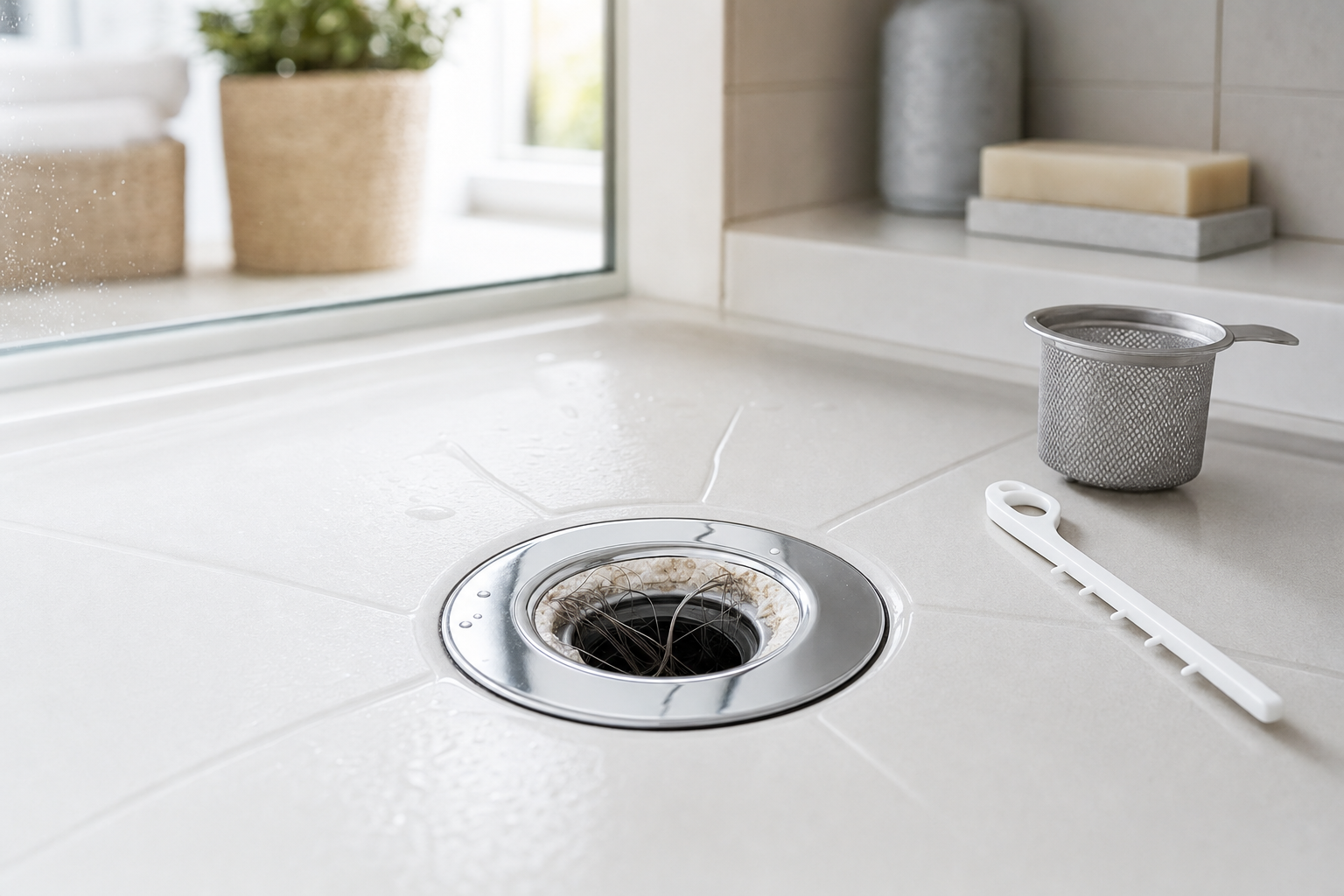
- A clump of hair with white or gray waxy residue: This is the classic soap scum clog. The hair is tangled together by a sticky, sometimes chalky coating. This is the most common combination in shower and tub drains.
- A dark, matted ball of hair with no visible residue: This is a hair-dominant clog. It may respond better to simple removal, but if it keeps coming back, soap scum further down the pipe may still be trapping new hair.
- A slimy, dark, foul-smelling film: This is biofilm — a bacterial growth that often develops on top of soap scum buildup deeper in the pipe. If you notice a musty or unpleasant smell from the drain even when it is not fully clogged, biofilm on top of scum buildup is a likely cause.
- The drain is slow but you do not see any visible debris near the surface: The buildup is likely deeper in the pipe or concentrated in the P-trap, beyond what you can see or reach from the drain opening.
If you are finding the waxy residue, or if the clog keeps returning no matter what you pull out, soap scum is almost certainly part of the problem.
Does the Type of Soap You Use Matter?
Yes, and this is one of the most practical things you can change.
Bar soap contains higher concentrations of the fatty acids (like sodium tallowate and sodium palmate) that react with hard water minerals to produce soap scum. Traditional bar soaps are the biggest contributors to pipe-level scum buildup.
Liquid body wash and shower gel are typically formulated with synthetic detergents (often called syndets) rather than traditional soap. These detergents do not react with hard water minerals in the same way, so they produce significantly less scum residue inside your pipes.
Switching from bar soap to liquid body wash will not clear existing buildup, but it can meaningfully slow the rate of new scum formation. If your household goes through multiple bars of soap per month and your shower drain clogs regularly, this one change can make a noticeable difference over time.
How to Clear and Prevent Soap Scum Buildup at Home
These steps are listed from most impactful to least. Not all of them are equal — the first two matter most for a drain that is already slow.
- Remove the drain cover and pull out visible debris. Use a plastic drain snake (the thin, barbed strips available at any hardware store) and insert it into the drain opening. Pull out whatever it catches. Do this once a month even if the drain seems fine.
- Flush with hot water for two to three minutes. After clearing visible debris, run the hottest water your tap produces directly down the drain. Hot water softens soap scum residue and helps wash loosened material further down the line. Important: do not pour boiling water directly into the drain if you have PVC pipes, which are common in many New Jersey homes. Boiling water can soften or warp PVC joints over time. Hot tap water is sufficient and safer.
- Use a baking soda and vinegar treatment monthly. Pour about half a cup of baking soda into the drain, followed by half a cup of white vinegar. Let it sit for fifteen to twenty minutes, then flush with hot tap water. This can help loosen mild surface-level buildup, though it is not strong enough to clear established scum that has hardened on pipe walls. Think of it as maintenance, not a fix for a serious clog.
- Install a drain strainer or hair catcher. A simple mesh strainer over the drain opening catches hair before it enters the pipe and gets trapped by scum buildup. Clean the strainer after every shower. This is one of the cheapest and most effective prevention tools available.
- Consider switching from bar soap to liquid body wash. As explained above, this reduces the raw material that forms scum in the first place. It will not solve an existing problem, but it slows future accumulation.
These steps genuinely help with mild buildup and ongoing prevention. But if your drain has been slowly getting worse over months, or if it re-clogs within a few days of clearing, the buildup is likely deeper and thicker than what home methods can fully remove.
When Home Methods Are Not Enough
There is a clear point where home clearing stops working and professional drain cleaning becomes the practical next step. Here is how to recognize it:
- The drain re-clogs within a week or two of clearing it. This means the soap scum coating inside the pipe is catching new debris faster than you can remove it. The underlying layer needs to be cleaned, not just the loose material on top.
- The drain has been gradually slowing for months. A progressively slower drain usually means the pipe has narrowed from accumulated buildup. Hot water and baking soda are not going to restore the full pipe diameter at that point.
- You have cleaned the drain cover area and there is nothing visible, but the drain is still slow. The problem is deeper — likely in the P-trap or further down the drain line where home tools cannot reach effectively.
- More than one drain in the bathroom is slow or backing up. When multiple fixtures are affected, the issue may be further down the shared drain line or closer to the main sewer connection, not just in the shower P-trap.
- You notice an unpleasant smell from the drain even after cleaning. Odor usually means biofilm or organic buildup deeper in the line that flushing and surface cleaning will not address.
Professional drain cleaning works differently from a home snake. Instead of punching a narrow hole through the middle of a clog, a professional-grade drain snake clears buildup from the full inside diameter of the pipe, including the soap scum residue, the trapped debris, and the accumulation sitting in the P-trap and beyond. That is why professional cleaning lasts longer — it removes the layer that keeps causing the clog to return, not just the loose material sitting on top of it.
If your shower or tub drain has been giving you trouble and home efforts are not holding, Just Drains can help. We are a licensed drain cleaning company serving homeowners across Central New Jersey and the Jersey Shore, including Monmouth, Mercer, Union, Morris, and Ocean Counties. Drain cleaning starts at $63, and we work to get to your home fast — with a 60-minute service goal — so you are not waiting around with a backed-up drain.
Call Now: (732) 279-2427
Frequently Asked Questions
What dissolves soap scum inside a shower drain?
Hot water helps soften it. A baking soda and vinegar treatment can loosen mild buildup on the surface. However, hardened soap scum that has bonded with hard water minerals inside the pipe is difficult to dissolve with household products alone. Most over-the-counter drain cleaners target hair and organic matter but are less effective against the mineral component of soap scum. For established buildup, professional drain cleaning is typically needed to physically clear the residue from the pipe walls.
Is bar soap worse for drains than liquid soap?
Yes. Bar soap contains higher levels of traditional fatty acids that react with calcium and magnesium in hard water to form soap scum. Liquid body washes and shower gels are usually made with synthetic detergents that do not produce the same mineral-based residue. Switching to liquid soap will not fix an existing clog, but it can reduce the rate of new buildup going forward.
Can I pour boiling water down the drain to clear soap scum?
Hot tap water can help soften mild soap scum buildup and is generally safe for most drain systems. However, pouring boiling water directly into a drain with PVC pipes — which are common in many homes — can soften or damage pipe joints over time. Use the hottest water from your tap rather than boiling a kettle, and flush for two to three minutes to get the most benefit.
How often should I clean my shower drain to prevent clogs?
Remove hair and visible debris from the drain cover after every shower if possible, or at least weekly. Use a plastic drain snake to clear just below the opening once a month. A monthly hot water flush and an occasional baking soda and vinegar treatment help slow buildup between deeper cleanings. If your home has hard water and your household uses bar soap, monthly maintenance is especially important.
Why does my shower drain keep clogging even after I clean it?
Because clearing the loose debris does not remove the soap scum residue coating the inside of the pipe. That residue is what traps new hair and debris after every shower. A home snake or drain tool typically opens a narrow path through the buildup, but the sticky layer on the pipe walls remains. Within days, new material catches on the residue and the drain slows again. Breaking this cycle usually requires clearing the full buildup from the pipe, which is what professional drain cleaning is designed to do.
When should I call a professional for a clogged shower drain?
Consider calling a professional drain cleaner if the clog comes back within a week or two of clearing it, if the drain has been gradually slowing over several months, if you cannot see or reach any blockage from the drain opening, or if more than one drain in the home is slow or backing up at the same time. These are signs that the buildup is deeper than home tools can effectively clear. A licensed drain cleaning company like Just Drains can clear the full pipe and address the accumulated residue causing the recurring problem. Call (732) 279-2427 to get started.