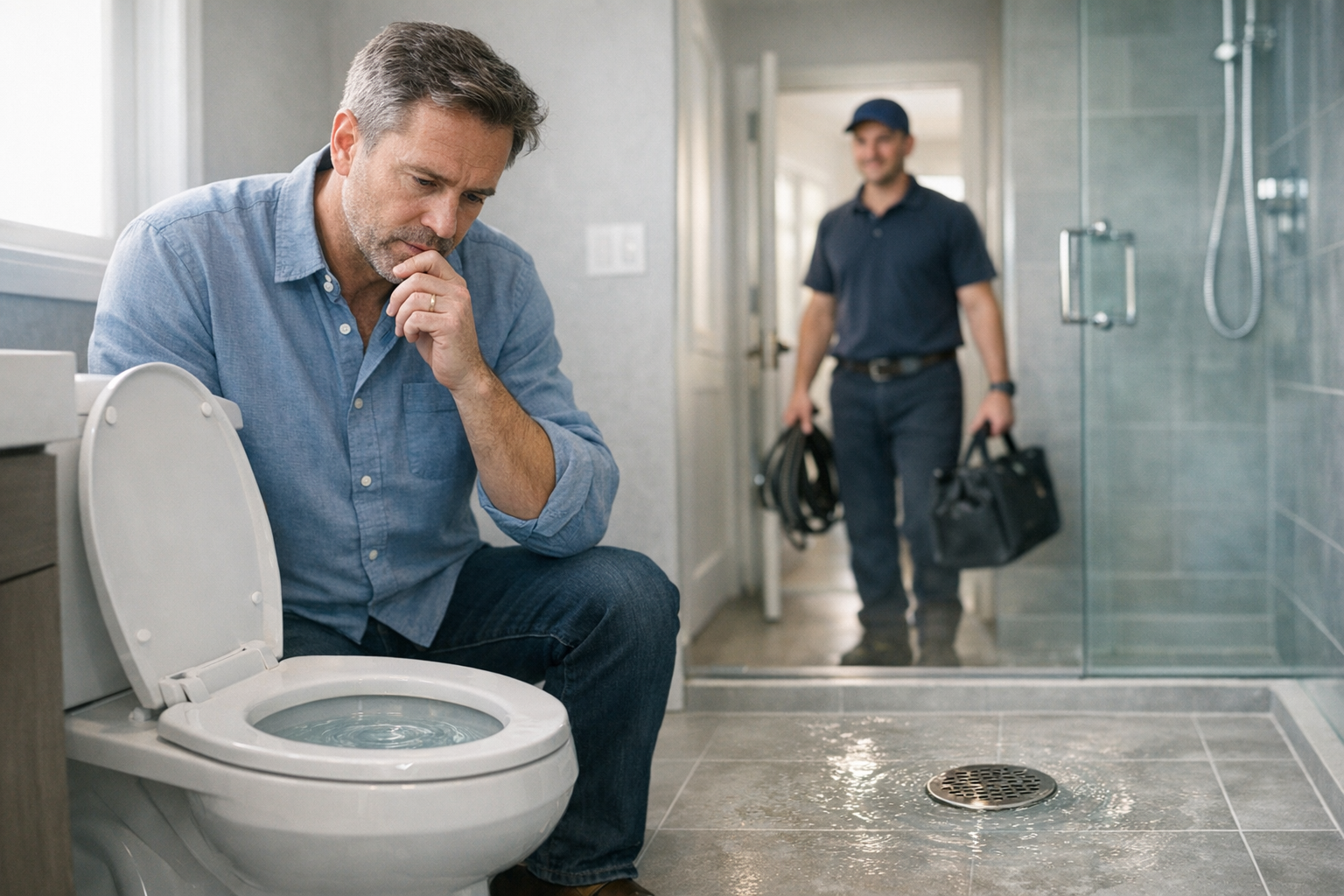
Is Your Drain Problem an Emergency? How to Tell and What to Do Right Now
Not every plumbing issue is an emergency, but some drain problems can turn serious fast if you wait too long to act. The key is knowing how to read what your drains, toilets, and pipes are telling you so you can match your response to how urgent the situation actually is. If water is backing up, sewage is coming into your home, or multiple drains have stopped working at once, those are signs you need professional help now, not next week.
This guide will help you figure out whether your situation needs immediate attention, whether it needs a same-day call, or whether you can safely keep an eye on it. We wrote this from the perspective of what we see every day at Just Drains: homeowners dealing with clogged drains, sewer backups, and mainline blockages who need clear answers fast.
The Difference Between an Inconvenience and an Emergency
A slow bathroom sink is annoying. Sewage rising through your shower drain is an emergency. The distinction matters because how you respond in the first few minutes can determine whether you are dealing with a simple cleanup or a much bigger problem.
Most drain-related emergencies share a few traits:
- Water or waste is actively entering your living space and you cannot stop it
- Multiple fixtures in your home are affected at the same time
- There is a strong sewage smell that appeared suddenly
- A toilet, sink, or floor drain is pushing water or waste back up instead of draining
If any of those describe what you are seeing right now, skip ahead to the immediate action steps section below, then call a licensed drain-cleaning professional. At Just Drains, we offer drain cleaning starting at $63 and aim to reach you in 60 minutes, so you do not have to sit with the problem longer than necessary.
Signs That Need Immediate Action
These situations mean something has already gone wrong and waiting will make it worse. If you recognize any of these in your home, act now.
Sewage Backing Up into Your Home
What you will notice: Dark, foul-smelling water coming up through a shower drain, bathtub, basement floor drain, or toilet. The water may contain visible waste. The smell is unmistakable and can fill a room quickly.
Why this is serious: Sewage backup means wastewater that should be leaving your home has nowhere to go. It often indicates a blockage in your main sewer line. This is not just a plumbing problem. Sewage carries bacteria and contaminants that pose a real health concern, especially for children, older adults, and pets. Avoid direct contact with the water.
What to do:
- Stop using all water in the house immediately. Do not flush toilets, run sinks, or start the washing machine.
- Keep family members and pets away from the affected area.
- Open windows if the smell is strong.
- Call a licensed drain-cleaning company right away. A sewage backup typically means the main sewer line needs professional clearing.
This is one of the most common emergencies Just Drains handles. A mainline sewer clog can cause waste to back up into the lowest drains in your home, and no amount of plunging will fix a mainline blockage. If you are dealing with sewage backup, call now for fast drain-cleaning help.
Toilet Overflowing and Will Not Stop
What you will notice: Water rising to the rim and spilling onto the floor, even after you stop flushing. The toilet may gurgle or bubble before or during the overflow.
Why this is serious: An overflowing toilet that does not respond to a plunger can mean the clog is deeper than the toilet itself. If the water contains waste, you are dealing with a sanitation issue in addition to water damage. Floors, baseboards, and subflooring can absorb water quickly.
What to do:
- Remove the tank lid and push the flapper valve down to stop water from entering the bowl.
- Turn the water supply valve behind the toilet clockwise to shut it off.
- Do not flush again.
- If a plunger does not resolve it within a few attempts, the clog is likely beyond what you can reach yourself. Call a drain-cleaning professional.
A clogged toilet that will not clear with a plunger is one of the most stressful situations homeowners call Just Drains about. It often means the blockage is further down the line, and a licensed professional with the right equipment can clear it safely and efficiently.
Water Gushing or Spraying from a Pipe, Wall, or Ceiling
What you will notice: Water actively spraying from a pipe joint, pooling rapidly on the floor, or dripping steadily through a ceiling. This can happen suddenly with no warning.
Why this is serious: Uncontrolled water flow can damage drywall, flooring, and electrical systems within minutes. The longer it flows, the more extensive the damage becomes.
What to do:
- Locate your main water shut-off valve and turn it off. This stops all water flow into the house.
- If you cannot find the shut-off valve, look near the water meter, typically in the basement, crawl space, or on an exterior wall near the street.
- Move furniture and belongings away from the water if you can do so safely.
- Call a plumber. This type of issue typically requires a general plumber rather than a drain specialist, since the problem involves supply-side pipes rather than drains.
A note about scope: Just Drains specializes in drain cleaning, meaning clogs, backups, and sewer line blockages. A burst supply pipe is a different type of emergency that usually requires a general plumber. We mention it here because homeowners need to know the difference, and being honest about what falls inside and outside our scope is part of giving you genuinely useful guidance.
The Smell of Gas in Your Home
What you will notice: A strong rotten-egg smell that is not coming from a drain. Natural gas is odorless, but utility companies add a sulfur-like smell so leaks are detectable.
Why this is serious: Gas leaks can be dangerous. This is not a plumbing issue or a drain issue.
What to do:
- Do not turn on lights, appliances, or anything electrical.
- Leave the house immediately.
- Call your gas utility company or 911 from outside the home.
This is not something a drain-cleaning company handles, but we include it because homeowners sometimes confuse sewer gas with natural gas. If the smell is coming specifically from a drain, that is different and may point to a drain-related issue we can help with. If you are unsure whether the smell is sewer gas or natural gas, treat it as a gas leak and get out first.
Warning Signs That Need Professional Attention Soon
These situations are not immediate emergencies, but they are your home telling you something is developing. If you ignore these, they often escalate into the emergency category above.
Multiple Drains Slowing Down or Clogging at the Same Time
What you will notice: The kitchen sink drains slowly, the downstairs toilet seems sluggish, and the bathtub takes longer than usual to empty. These symptoms appear around the same time, even though the fixtures are in different parts of the house.
Why this matters: When more than one drain is affected at once, the clog is probably not in any individual fixture. It is likely in your main sewer line, the single pipe that carries all wastewater out of your home. A main sewer line blockage affects every drain connected to it, which is why you see the problem in multiple places simultaneously.
This is one of the most important things a homeowner can learn to recognize. One drain running slow on its own is typically a contained clog that a plunger may be able to address. When several drains throughout the house back up around the same time, that pattern almost always points to a mainline sewer clog requiring professional clearing before it escalates into a full sewage backup.
What to do: Reduce water use in the home and call a licensed drain-cleaning company. The sooner a mainline clog is addressed, the less likely it is to turn into a sewage backup situation.
This is exactly the kind of problem Just Drains is built to handle. Mainline sewer clogs are our core specialty. If you are noticing multiple drains slowing down at once, call now and we can help identify and clear the blockage.
Gurgling Sounds Coming from Drains You Are Not Using
What you will notice: You flush the upstairs toilet and hear bubbling or gurgling from the downstairs shower drain. Or you run the kitchen sink and the nearby bathroom toilet gurgles.
Why this matters: Gurgling happens when air is trapped in the drain system, usually because a blockage is forcing air through the water in another fixture’s trap. This is often an early signal of a developing main sewer line issue. The drains are connected, and when one fixture affects another, it means something downstream is restricting flow.
What to do: Do not ignore this. Gurgling across fixtures is a warning that conditions are building toward a more serious blockage. Call a drain-cleaning professional to inspect before the problem worsens.
Sewage Smell Rising from Drains
What you will notice: A sour, rotten, or sewage-like odor coming from a sink drain, shower drain, or floor drain. The odor may be intermittent or intensify gradually over time.
Why this matters: Sewer gas carries hydrogen sulfide, which is responsible for that unmistakable foul odor. Properly functioning drains rely on a water-filled trap inside the pipe to keep sewer gas from rising into your living space. When that smell reaches you, it can mean the trap has gone dry, a vent pipe is partially obstructed, or a developing sewer line clog is pushing gas back up toward your fixtures.
What to do: For a single drain you have not used in a while, try running water for 30 seconds to refill the trap. If the smell returns or is coming from drains you use regularly, that often points to a deeper blockage. A licensed drain-cleaning company can determine whether the issue is in the line and clear it.
Bad drain smells are one of the most common reasons homeowners call Just Drains. The smell is unpleasant, can fill a room, and often signals a clog that is getting worse. If running water does not fix the odor, call now for help.
Sudden Drop in Water Pressure Across the House
What you will notice: Water comes out of multiple faucets at a trickle instead of its normal flow. This is different from one faucet having low pressure, which may just be a clogged aerator.
Why this matters: A sudden pressure drop affecting the whole house could indicate a major leak in a supply line, a municipal water issue, or in some cases, a problem where drain backups are creating cross-system pressure issues. It can also indicate a frozen or partially blocked supply pipe in colder months.
What to do: Check with a neighbor to see if they are also experiencing low pressure, which would indicate a municipal issue. If it is only your home, check for visible leaks and call a plumber. This is typically a supply-side issue rather than a drain issue, but it is worth including here because a sudden pressure drop is not normal and should not be ignored.
How a Small Drain Problem Becomes a Big Emergency
One of the most useful things we can share from handling drain emergencies regularly is how the progression typically works. Understanding this pattern helps you catch problems earlier.
Here is what we commonly see:
- Stage 1: One drain slows down. A sink takes a little longer to empty. A shower has a small amount of standing water. Most homeowners notice this but assume it will resolve on its own.
- Stage 2: The slow drain gets worse or a second fixture starts acting up. The clog has not gone away. It may be growing. If a second drain is now sluggish, the blockage may be moving further down the line toward the main sewer connection.
- Stage 3: Drains start making noise. Gurgling, bubbling, or air pushing through water in traps. This means the blockage is now affecting airflow through the entire drain system.
- Stage 4: A drain backs up completely. Water or waste stops going down and starts coming back up. If it is happening in the lowest drain in the house, such as a basement floor drain or first-floor toilet, a mainline sewer clog is very likely.
- Stage 5: Sewage backup. Wastewater has nowhere to go and enters the home through the lowest open drain. This is a health concern, a cleanup issue, and often an expensive problem that could have been avoided at Stage 2 or 3.
The point is not to alarm you. It is to show that the earlier you address a drain issue, the simpler the fix typically is. A professional drain cleaning at Stage 1 or 2 is fast and straightforward. By Stage 5, you are dealing with contamination, cleanup, and potentially damaged flooring or walls.
At Just Drains, we offer drain cleaning starting at $63 because we believe getting fast help should not feel like a financial burden. If you are seeing Stage 1 or Stage 2 symptoms, calling now can help you avoid the later stages entirely.
Quick Reference: Is This an Emergency?
| What You Are Seeing | Severity Level | What to Do |
|---|---|---|
| Sewage coming up through drains | Emergency — act now | Stop all water use, keep family away, call a drain-cleaning professional immediately |
| Toilet overflowing and will not stop | Emergency — act now | Shut off toilet supply valve, do not flush again, call for help |
| Water gushing from pipes or ceiling | Emergency — act now | Shut off main water valve, call a plumber |
| Gas smell (not from a drain) | Emergency — leave the house | Evacuate, call gas company or 911 from outside |
| Multiple drains clogging at the same time | Urgent — call today | Reduce water use, call a drain-cleaning professional before it escalates |
| Gurgling sounds from drains in other rooms | Urgent — call today | Stop heavy water use, schedule a drain-cleaning visit |
| Sewage smell from drains | Urgent — call soon | Run water in unused drains; if smell persists, call a professional |
| One slow drain | Monitor — watch closely | Try a plunger; if it returns or worsens, call before it spreads |
| Water stains on walls or ceiling | Monitor — investigate | Check for leaks above the stain, call a plumber if you find one |
| Unexplained spike in water bill | Monitor — investigate | Check for running toilets or hidden leaks, call a plumber if needed |
What to Do While You Wait for Help
If you have identified an emergency or urgent drain situation and have called for help, here is what to do and what to avoid while you wait.
Do These Things
- Stop using water in the house. Every flush, every sink use, every appliance that drains water can make a backup worse.
- Know where your main water shut-off valve is. In most homes, it is in the basement, crawl space, utility closet, or on an exterior wall near where the water line enters the house. It is usually a round wheel valve or a lever-style handle. Turn it clockwise or perpendicular to the pipe to shut it off. If you have never found yours, take a minute to locate it now, even before you have an emergency.
- Take photos. If there is visible damage, water on the floor, or backup in fixtures, photograph it. This can be helpful for insurance purposes later.
- Keep the area ventilated. Open windows if sewage odor is present.
Do Not Do These Things
- Do not pour chemical drain cleaners down a backed-up drain. If the line is fully blocked, the chemical sits in the pipe and can damage it. If there is standing sewage water, adding chemicals creates a more hazardous situation. Chemical cleaners are not effective on main sewer line blockages.
- Do not keep flushing a clogged toilet hoping it will clear. Each flush adds more water to an already blocked system and increases the chance of overflow.
- Do not plunge a drain that is backing up sewage. Plunging can push contaminated water back and splash it. If the blockage is in the main line, a plunger will not reach it anyway.
- Do not attempt to open cleanout pipes yourself unless you know what you are doing. Main line cleanouts are under pressure when blocked, and opening one can release sewage suddenly.
When to Call a Drain Specialist vs. a General Plumber vs. 911
Not every plumbing emergency is the same kind of problem, and knowing who to call can save you time and frustration.
| Your Situation | Who to Call |
|---|---|
| Clogged drain, clogged toilet, clogged sink, sewer backup, mainline clog, sewage smell from drains, multiple drains not working | A drain-cleaning specialist like Just Drains |
| Burst water supply pipe, water heater failure, leaking supply lines, low water pressure from supply side | A general plumber |
| Gas smell, flooding that creates electrical hazard, sewage contamination in a large area of the home | 911 or your gas utility company first, then a professional |
Just Drains is a licensed drain-cleaning company. We handle clogged drains, clogged toilets, clogged sinks, backed-up sewer lines, and mainline sewer clogs. These are the drain-related emergencies and warning signs covered throughout this guide. If your problem involves drains not working, waste backing up, or persistent drain odors, that is exactly what we do.
We are straightforward about what we do and do not handle because we want you to get the right help as fast as possible, whether that is us or someone else.
Frequently Asked Questions
What counts as a plumbing emergency versus a regular problem?
A plumbing emergency is any situation where water or sewage is actively entering your home and you cannot stop it, where multiple fixtures have stopped working at the same time, or where there is an immediate health or safety concern like a gas smell. A single slow drain is usually a regular problem. Multiple slow drains, sewage backup, or an overflowing toilet that will not stop are emergencies that need fast professional attention.
Can a clogged drain turn into an emergency?
Yes. A single clogged drain may seem minor, but if the clog is in your main sewer line, it can progress to a full sewage backup. Early indicators that the situation is worsening include several drains backing up at once, bubbling or gurgling noises from fixtures you are not actively running, and foul odors rising from drain openings. If you notice any of these, calling a drain-cleaning professional sooner rather than later can help prevent a backup.
Where is my main water shut-off valve?
In most homes, the main water shut-off valve is located in the basement, crawl space, or on an exterior wall near where the water supply line enters the house. It may also be near the water meter. It typically looks like a round wheel or a lever handle. Turning it clockwise or perpendicular to the pipe stops water flow to the entire house. Locating this valve before an emergency is one of the most practical things a homeowner can do.
What should I do first in a plumbing emergency?
Stop using water immediately. If the problem is a supply-side issue like a burst pipe, shut off your main water valve. If the problem is a drain backup, stop flushing toilets and running sinks. Keep family and pets away from standing water, especially if it contains sewage. Then call a professional. For drain-related emergencies, a licensed drain-cleaning company like Just Drains can help. For supply-side pipe issues, call a general plumber.
Is a slow drain something I should worry about?
A single slow drain is usually a localized clog and may respond to a plunger. However, if the slow drain keeps coming back after you clear it, or if a second or third fixture starts draining slowly around the same time, that pattern often points to a deeper blockage, possibly in the main sewer line. Repeated or spreading slow drains are worth a professional call before they turn into something bigger.
When should I call a professional instead of using a plunger?
A plunger is a reasonable first step for a single clogged toilet or sink. Call a professional when the plunger does not work after several attempts, when the clog returns within a day or two, when multiple fixtures are clogged or slow at the same time, when there is sewage backup or a strong sewage odor, or when the toilet overflows even after you stop flushing. These situations typically indicate a clog that is too deep or too large for a plunger to reach.
What to Do Next
If you have read through this guide and recognized any of the emergency or warning signs in your own home, the most important thing is to act before the situation gets worse. Drain problems that start small can escalate quickly, and the earlier you get professional help, the simpler the fix usually is.
Just Drains is a licensed drain-cleaning company that helps homeowners deal with clogged drains, clogged toilets, clogged sinks, sewer backups, and mainline sewer clogs. We offer drain cleaning starting at $63 and aim to reach you in 60 minutes so you can get back to normal without the stress of waiting or worrying about the cost.
If your drains are not working the way they should, call now and let us help.