8 Signs Your Kitchen Sink Needs Immediate Attention (and How Urgent Each One Really Is)
If your kitchen sink is draining slowly, backing up, or giving off an unpleasant smell, you are not imagining things. Standing water that will not go down, sewage odors, and water pooling under the cabinet are signs that something is wrong with your drain — and the most serious ones need same-day attention from a licensed drain-cleaning professional.
Not every kitchen sink issue is an emergency, though. Some problems demand a call right away, while others allow a short window to monitor and schedule help. This guide walks through the most common warning signs, explains what is likely happening inside your pipes, and helps you figure out exactly how urgent your situation is — so you can stop guessing and take the right next step.
Signs That Need Immediate Professional Attention
These are the situations where waiting another day or two can make the problem significantly worse. If you recognize any of the following, it is time to call a licensed drain-cleaning company now rather than trying another round of plunging or pouring something down the drain.
Standing Water That Will Not Drain at All
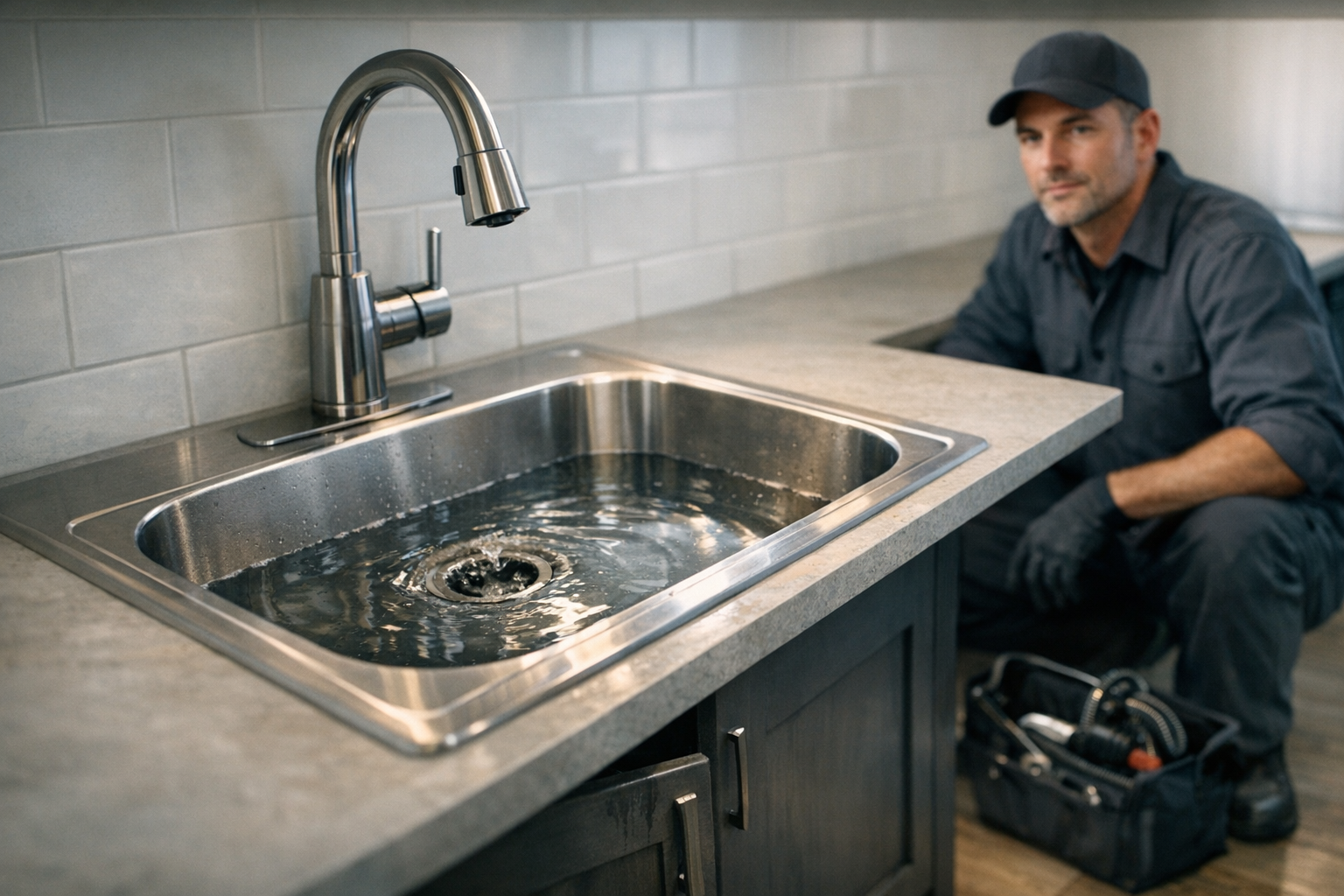
You filled the sink to wash dishes, pulled the stopper, and the water just sits there. Or you ran the faucet and watched the basin fill up with nowhere for the water to go. A completely stopped kitchen drain usually means a solid blockage — often a thick buildup of grease, food debris, or a combination of both — has sealed off the pipe somewhere between your sink and the main drain line.
Why this is urgent: Standing water in a kitchen sink is not just inconvenient. It makes your kitchen unusable, attracts bacteria quickly, and can start producing a noticeable smell within hours. The longer the blockage sits, the more compressed it becomes, and the harder it is to clear without professional equipment. A plunger may move water around, but if the clog does not break free after a few firm attempts, the obstruction is deeper than surface level.
This is one of the most common reasons homeowners call Just Drains. A licensed drain-cleaning technician can reach the blockage that your plunger cannot and clear the line so water flows freely again.
Sewage or Wastewater Backing Up Through the Drain
If dirty water is pushing back up into your kitchen sink — especially water you did not put there — you are dealing with a backup. This sometimes happens when you run the dishwasher and dark, foul-smelling water rises into the sink basin. In more serious cases, you may notice wastewater appearing in the sink when a toilet is flushed or another fixture drains elsewhere in the house.
Why this is urgent: Backflow means water has nowhere to go downstream. Whether the obstruction sits in the branch line serving your kitchen or has developed into a mainline sewer clog that disrupts several fixtures simultaneously, the result is the same. Wastewater backing up into your sink is unsanitary and can cause real damage to your cabinets, flooring, and anything stored under the sink.
If you see wastewater coming back up, stop running water in the house and call for help. Do not attempt to fix a backup with chemical drain products — they can sit on top of the clog without reaching it and may damage older pipes. A professional drain-cleaning service can identify where the blockage is and clear it safely.
Moisture or Water Stains Under the Sink Cabinet
Open the cabinet below your kitchen sink. If you see puddles, damp spots on the cabinet floor, warped or soft wood, or water stains on the back wall, there may be an active or recent leak in the area. Sometimes you will notice this because the items you store under the sink are wet, or because a musty smell has developed in that area.
Why this matters: Moisture under the kitchen sink can come from drain connections, the P-trap (the curved pipe section that holds water to block sewer gas), or supply lines feeding your faucet. Left unaddressed, even a slow drip can cause mold growth inside the cabinet and soften the subfloor beneath it.
What to do: Note whether the moisture appears or worsens when water is actively draining versus when the faucet is simply running. If the issue appears linked to draining — for example, water drips from the drain pipe or P-trap when the sink empties — a licensed drain-cleaning professional can inspect the drain assembly. If the moisture appears connected to the supply lines or the faucet itself, contact a licensed plumber, as supply-side repairs fall outside drain-cleaning services.
Persistent Sewage Smell That Will Not Go Away
A brief, mild odor after running the garbage disposal is normal. A persistent sewage smell that lingers even after you have cleaned the sink, run water, and checked for visible debris is not. This kind of smell — often described as rotten eggs or raw sewage — typically signals a problem below the drain opening.
What is likely happening: The most common cause is a dry or damaged P-trap. This curved section of pipe beneath your sink retains a small standing reservoir of water that acts as a barrier against sewer gas entering your kitchen. When the trap dries out from infrequent use, develops a crack, or was installed incorrectly, that barrier fails and sewer gas rises into the room. Another possibility is a partial clog deeper in the line where trapped food debris is decomposing and releasing odor back through the drain.
Why this matters: Sewer gas is not just unpleasant — it contains compounds like hydrogen sulfide and methane that can cause headaches, nausea, and irritation with prolonged exposure. If running water for 30 seconds does not restore the seal and eliminate the smell, the problem is beyond a dry trap. Call a licensed drain-cleaning company to inspect the line.
Signs That Mean You Should Call Soon — Within a Day or Two
These signs are not emergencies in the same way that standing water or sewage backup are, but they are clear warnings that a problem is developing. Acting within a day or two can often prevent a partial clog from becoming a full blockage.
Water Draining Noticeably Slower Than Usual
You used to fill a pot, dump it in the sink, and watch the water disappear in seconds. Now it takes noticeably longer — maybe 30 seconds, maybe a full minute. The sink still drains, but something has clearly changed.
What is likely happening: Kitchen sink drains slow down gradually as grease, soap residue, and small food particles coat the inside of the pipe. Unlike bathroom clogs, which are often caused by hair, kitchen drain buildup is usually a sticky layer of fats and oils that hardens over time and narrows the pipe opening. Each time you wash dishes or rinse a greasy pan, another thin layer is added.
What you can try first: Run very hot (not boiling) water for 30 seconds to soften any grease near the drain opening. If you have a garbage disposal, run it with cold water to clear any food sitting in the chamber. If the drain speed does not improve, or if it improves briefly and then slows again within a few days, the buildup is further down the line and a professional cleaning is the practical next step.
Gurgling or Bubbling Sounds Coming From the Drain
You hear a gurgling noise when water drains from the sink, or you notice small bubbles rising through standing water. Some homeowners describe it as a repetitive glug sound that was not there before.
What is likely happening: Gurgling usually means air is being displaced in the pipe because water cannot flow freely past a partial obstruction. In plumbing terms, this often points to a partial clog in the drain line or a venting issue. Drain systems rely on vent pipes to introduce air so that water moves through smoothly and without resistance. When a vent becomes partially obstructed or the drain pipe starts to narrow, trapped air has to escape somewhere — and that produces the gurgling sound you hear.
Why it matters: Gurgling is an early-stage signal. It rarely means you need help in the next hour, but it consistently means the drain is heading toward a full clog or backup if nothing changes. Addressing it now is simpler and less costly than waiting until water stops moving entirely.
Recurring Clogs That Keep Coming Back
You plunged the sink last week. It drained fine for a few days. Now it is slow again, or fully clogged again. If you have cleared the same drain two or more times in a short period, the actual blockage is not where you think it is.
What is likely happening: A plunger or basic drain snake can break through or push past a clog near the drain opening, but if the real buildup is further down the pipe — in a horizontal section, at a junction, or deeper toward the main drain line — surface-level clearing only provides temporary relief. The underlying obstruction is still there, and debris accumulates against it again quickly.
Why this is a sign to call a professional: Recurring clogs are one of the clearest indicators that DIY tools are not reaching the actual problem. A licensed drain-cleaning technician uses equipment designed to reach deeper into the line and remove the full obstruction, not just punch a temporary hole through it. If your kitchen sink keeps clogging despite repeated attempts to clear it, professional drain cleaning can break the cycle.
Signs That Suggest a Bigger Problem May Be Developing
These signs may not feel urgent right now, but they often indicate that something is changing in your plumbing system. Monitoring them and scheduling a call sooner rather than later can save significant hassle.
A Sudden Drop in Water Pressure at the Kitchen Faucet
If water pressure at your kitchen faucet drops noticeably — especially if it was fine recently and other faucets in the house seem normal — the issue may be localized to your kitchen. Sometimes this is as simple as a clogged aerator (the small screen at the tip of the faucet), which you can unscrew and rinse. Other times, reduced flow can indicate buildup in the supply line or a developing issue with the pipes feeding your sink.
What to check: Unscrew the aerator at the faucet tip and rinse it under water. If flow improves with the aerator removed, that was the issue. If pressure remains low with the aerator removed, the problem may be upstream. A licensed plumber can assess supply-side pressure issues; if you suspect buildup in the drain side is contributing, a drain-cleaning professional can evaluate that separately.
Fruit Flies or Drain Flies Appearing Near the Sink
Small flies clustering around your kitchen sink drain — especially tiny moth-like flies — are a sign that organic matter is decomposing inside the pipe. Drain flies breed in the slimy buildup that coats the inside of a drain pipe, particularly where food debris and grease have accumulated. Their presence means there is enough buildup to sustain a breeding cycle, which also means the pipe is likely narrowing.
Cleaning the drain opening and running hot water may reduce flies temporarily, but if they return within a few days, the buildup extends further into the line than surface cleaning can reach. Professional drain cleaning can clear the buildup that is sustaining the problem.
Visible Rust, Cracks, or Corrosion on Exposed Pipes
If you can see rust forming around the drain opening, discoloration on exposed pipes under the cabinet, or hairline cracks in the P-trap, these are signs of material degradation. In older homes, metal drain pipes corrode over time, and the interior of the pipe may be significantly more restricted than the exterior suggests.
What to watch for: Brown or orange staining around the drain flange, visible green oxidation on copper fittings, flaking metal on exposed pipes, or dampness around pipe joints that appears even when the sink is not actively draining. Signs of corrosion or cracking on pipe fittings should be assessed by a licensed plumber before a failing fitting creates a larger problem. If you notice these signs alongside slow drainage, a drain-cleaning professional can address the drain side while a plumber evaluates the pipe condition.
Is It Just Your Kitchen Sink, or Is It Your Main Drain Line?
This is one of the most important questions to answer when your kitchen sink is acting up, because it changes what kind of help you need and how urgent the situation is.
If only your kitchen sink is affected — draining slowly, backing up, or smelling — the problem is most likely in the branch drain line that connects your kitchen sink to the rest of the system. It may involve a grease clog, accumulated food debris, or buildup inside the P-trap or the horizontal run of pipe leading toward the main stack.
If multiple fixtures are affected at the same time — for example, the kitchen sink backs up while the washing machine empties, or you hear the toilet gurgle every time the kitchen sink drains — the problem may be centered in your main sewer line. A mainline clog affects the entire drainage system, not just one fixture, and it is more urgent because it can lead to wastewater backing up through the lowest drains in the house.
| What You Notice | Likely Location | Urgency |
|---|---|---|
| Only kitchen sink drains slowly or backs up | Kitchen branch line or P-trap | Call soon — within a day or two |
| Kitchen sink backs up when dishwasher runs | Shared drain line or disposal connection | Call soon — schedule this week |
| Multiple drains back up or gurgle at the same time | Main sewer line | Call now — this can escalate quickly |
| Sewage smell from multiple drains, not just kitchen | Main sewer line or vent issue | Call now |
Just Drains handles both kitchen drain clogs and mainline sewer clogs. If you are not sure which one you are dealing with, a licensed technician can assess the situation and determine where the blockage is.
What to Check Before You Call a Professional
Before picking up the phone, there are a few quick things you can check yourself. These are safe, simple steps that occasionally resolve the issue — and if they do not, they help you describe the problem more clearly when you do call.
- Run the garbage disposal. If your kitchen sink has a disposal unit, turn it on and run cold water for 15 to 20 seconds. Sometimes food debris is sitting in the disposal chamber and blocking the drain opening. If the disposal hums but does not spin, it may be jammed — press the reset button on the bottom of the unit. If it does not respond after that, leave it and let the technician assess it.
- Check the aerator. If the issue is low water pressure rather than drainage, unscrew the aerator from the faucet tip and rinse away any sediment or buildup. Reattach it and test the flow.
- Look under the cabinet. Open the doors below the sink and check for puddles, dampness, dripping, or water stains. If you see active dripping, place a bucket underneath and note where the drip is coming from — this information is useful for the technician.
- Try a plunger (for drainage issues). Use a flat-bottomed cup plunger (not a flange plunger, which is designed for toilets). Add a couple of inches of water to the sink basin, set the plunger squarely over the drain opening, and work it up and down with firm, steady strokes. If water starts moving, the clog may have been near the surface.
- Test other fixtures. Flush a toilet, run the bathroom sink, and observe whether other drains are also slow or backing up. If they are, the issue is likely in the main line, not just the kitchen.
When to stop and call: If the plunger does not clear the drain after several firm attempts, if water backs up from another fixture while you are testing, or if you smell sewage at any point, it is time to call a licensed drain-cleaning professional. Continuing to force water through a blocked system can push the problem further or cause a backup in another part of the house.
A note about chemical drain cleaners: Many store-bought chemical drain products promise to dissolve clogs, but they can damage older pipes, create hazardous fumes, and often fail to reach blockages that are more than a few inches past the drain opening. If a plunger and hot water do not clear the clog, professional drain cleaning is a safer and more effective option.
What Professional Drain Cleaning Actually Looks Like
If you have never called a drain-cleaning company before, you may be wondering what actually happens. The process is more straightforward than many homeowners expect.
A licensed drain-cleaning technician arrives with professional-grade equipment designed to reach deeper into your drain line than any household tool. The technician identifies the most effective access point, clears the blockage, and confirms that water is flowing freely before finishing the job. In most cases, the work is completed during a single visit.
At Just Drains, drain cleaning starts at $63, and the team works to reach you with service in 60 minutes. Just Drains is a licensed drain-cleaning company that focuses specifically on clearing clogged drains, backed-up sewer lines, clogged sinks, clogged toilets, and mainline sewer clogs. That focus means you are getting help from a team that handles these exact problems every day.
If your kitchen sink is showing any of the urgent signs described in this article — standing water, backups, or a persistent sewage smell — the fastest way to get it resolved is to call a drain-cleaning professional who can get to you quickly and clear the line.
Frequently Asked Questions
When is a clogged kitchen sink an emergency?
A kitchen sink clog becomes urgent when water will not drain at all, when wastewater is backing up through the drain, or when you smell sewage. These situations can worsen quickly and typically need same-day attention from a licensed drain-cleaning professional. A slow drain that still empties, on the other hand, should be addressed soon but usually does not require an immediate call.
What causes a kitchen sink to smell like sewage?
The most common cause is a dry or damaged P-trap — the curved pipe section under your sink that maintains a small water reservoir to keep sewer gas out of your kitchen. When that seal is lost due to drying out, cracking, or a poor installation, sewer gas is free to rise through the drain. A partial clog with decomposing food debris can also produce a persistent foul odor. Running water for 30 seconds may restore the P-trap seal. If the smell continues, the issue is deeper and needs professional inspection.
Can I use chemical drain cleaners on my kitchen sink?
Chemical drain cleaners are generally not recommended for kitchen sink clogs. They may fail to reach blockages beyond the first few inches of pipe, and harsh chemicals can corrode older metal pipes or damage PVC joints over time. If a plunger and hot water do not clear the clog, professional drain cleaning is a safer and more effective option.
How do I know if the problem is in my kitchen sink or my main sewer line?
If only the kitchen sink is draining slowly or backing up, the clog is most likely in the branch line that serves your kitchen. If multiple drains in the house are acting up at the same time — toilets gurgling when the sink drains, water backing up in the bathtub, or slow drainage throughout the house — the problem is likely in the main sewer line. A mainline clog is more urgent and should be addressed by a licensed drain-cleaning professional as soon as possible.
How quickly can I get help for a clogged kitchen sink?
Just Drains works to provide service in 60 minutes. If your kitchen sink is fully clogged, backing up, or producing a sewage smell, calling a local drain-cleaning company that can respond quickly is the fastest path to getting your kitchen back to normal.
Your Kitchen Sink Is Telling You Something — Here Is What to Do Next
If your kitchen sink is draining slowly, refusing to drain, producing strange sounds, or smelling like something is wrong — trust what you are seeing. These are real signs of a real problem, and most of them do not improve on their own.
For minor slowdowns, the quick checks above may help. But if you are dealing with standing water, recurring clogs, or sewage backup, the most practical step is to call a licensed drain-cleaning company that can get to you quickly and clear the line without guesswork.
Just Drains is a licensed drain-cleaning company that specializes in exactly these situations — clogged kitchen sinks, backed-up sewer lines, clogged toilets, and mainline sewer clogs. Drain cleaning starts at $63, and the team works to reach you with service in 60 minutes.
Call Just Drains now to get your kitchen sink draining again.