Drain Cleaning for Victorian Homes in Ocean Grove: What Homeowners Should Know
Victorian homes in Ocean Grove sit on drain systems that are fundamentally different from modern plumbing. If your home was built in the late 1800s or early 1900s, you likely have cast iron, galvanized steel, or clay pipes beneath your floors and yard — materials that behave differently under stress, age differently, and respond differently to cleaning methods. That matters every time a drain slows down or a toilet backs up.
This guide covers what makes your drains different, what warning signs to watch for, which cleaning approaches are safe for older pipes, and what questions to ask before anyone touches your plumbing. If you are dealing with a backup right now and need fast help, Just Drains serves Ocean Grove and Monmouth County homeowners with drain cleaning starting at $63. Call now: (732) 279-2427.
Why Victorian Home Drains in Ocean Grove Are Different
What Your Pipes Are Actually Made Of
Most Victorian-era homes in Ocean Grove were built with one or more of these pipe materials:
- Cast iron — Heavy, durable when new, but after a century of use it corrodes from the inside out. Interior walls develop thick scale and rough buildup that catches grease, soap, and debris. In advanced stages, the pipe wall thins and can crack under pressure.
- Galvanized steel — Common for smaller branch lines running to individual sinks, tubs, and showers. Galvanized pipes narrow over time as mineral deposits build up inside, which is often why a single fixture drains slower each year even though nothing seems obviously wrong.
- Clay tile — Frequently used for the sewer lateral, the pipe running from your home to the public sewer main. Clay pipes are assembled in short sections connected with mortar joints. Over decades, those joints loosen, shift, and become entry points for tree roots.
Many Ocean Grove homes have all three materials in the same system, sometimes joined by newer PVC sections added during past renovations. These connection points between old and new materials are common trouble spots.
Tight Lots and Dense Layout
Ocean Grove’s grid was designed in the 1860s and 1870s with homes packed closely together on narrow lots. That compact layout means sewer laterals are short, access points can be hard to reach, and tree roots from neighboring properties can affect your lines just as easily as roots from your own yard. A mature street tree planted between the sidewalk and curb may send roots directly through your lateral’s clay joints.
Decades of Additions and Modifications
Very few Victorian homes in Ocean Grove still have their original plumbing layout untouched. Over 100-plus years, bathrooms were added, kitchens were moved, basements were converted, and each renovation likely introduced new pipe connections. The result is often a patchwork system where different materials, pipe diameters, and connection methods meet — and where one section may be in solid condition while another is near the end of its useful life.
Warning Signs That Something Is Wrong
One Slow Drain vs. Multiple Fixtures
This distinction matters more than most homeowners realize, and it can save you time and money before you call anyone.
- One slow fixture — a single sink, tub, or shower that drains slowly — usually points to a clog in that fixture’s branch drain. This is the most common and typically the simplest type of clog to clear.
- Multiple slow fixtures, or a toilet that backs up when you run the washing machine — this often means the blockage is further down the line, possibly in the main drain or sewer lateral. In an older home, this is the scenario that needs professional attention quickly.
If you flush a toilet upstairs and water comes up in a basement drain or bathtub downstairs, the blockage is almost certainly in the main line, not in any single fixture.
Gurgling, Odors, and Basement Dampness
Gurgling sounds from drains when another fixture is in use usually mean air is being trapped or displaced in the line, which can indicate a partial blockage or a venting problem.
Sewage odors inside the home, especially in the basement, could indicate a dried-out trap, a cracked pipe, or a backup forming in the main line. In older homes, the wax seal under a toilet can also deteriorate and allow sewer gas to escape.
Persistent dampness near basement floor drains or along foundation walls may be a sign that a below-grade pipe is leaking or that water is not draining properly through the lateral.
When Clogs Keep Coming Back
A clog that returns every few weeks or months is usually a symptom, not the problem itself. In Victorian homes, recurring clogs often point to one of these underlying issues:
- Heavy internal scale in a cast iron line that catches debris even after cleaning
- Tree roots re-entering a clay lateral through compromised joints
- A bellied pipe — a section where the pipe has sagged due to ground settlement, creating a low point where waste collects
- A partial collapse or misalignment at a joint between old and new pipe sections
Clearing the clog each time provides temporary relief, but if the same drain backs up repeatedly, the pipe itself may need further evaluation.
What Works — and What Doesn’t — for Old Pipes
Why Chemical Drain Cleaners Are Especially Risky
Chemical drain cleaners are a poor choice for any home, but they are particularly harmful in Victorian-era plumbing. Here is why:
Most store-bought chemical drain cleaners use caustic or oxidizing chemicals that generate heat as they dissolve organic material. In a PVC system, the pipe can typically handle that. In a cast iron pipe that already has thinning walls and internal corrosion, the chemical reaction accelerates the deterioration. In galvanized pipes, the chemicals attack the zinc coating and expose the steel underneath to faster rusting. In clay pipes, the chemicals themselves may not damage the clay, but they do nothing about root intrusion or joint failure — the two most common problems in clay laterals.
The practical result: chemical cleaners may temporarily open a passage through the clog, but they can weaken the pipe in the process, making future problems worse and more expensive.
Snaking: Often the Right Starting Point
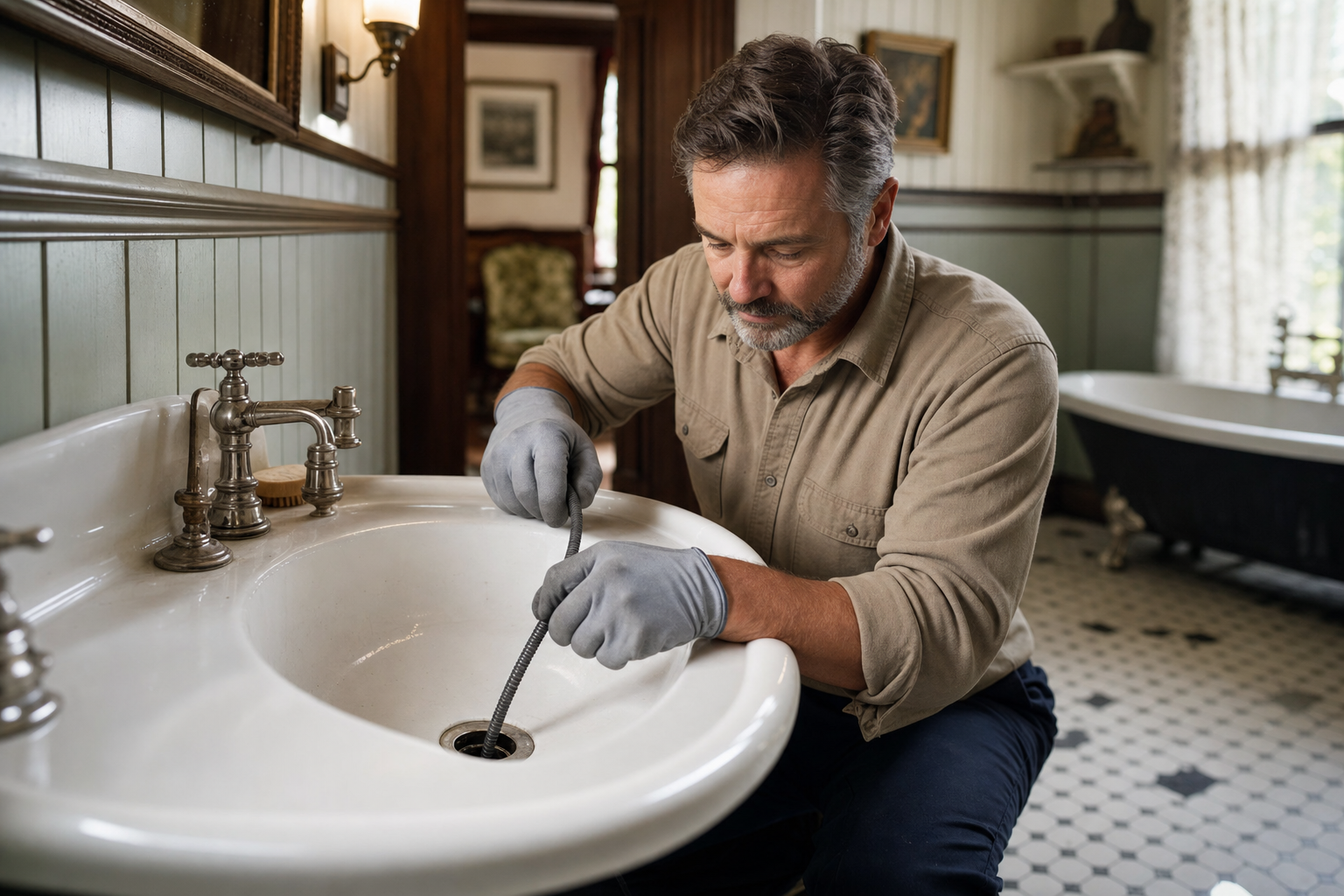
Mechanical snaking (also called drain augering) uses a flexible cable to physically break through or pull out a blockage. For most routine clogs in older homes — a kitchen sink clogged with grease, a bathroom drain blocked by hair and soap buildup, or a toilet stoppage — snaking is effective, relatively gentle on pipes, and does not involve chemicals or high pressure.
For branch drain clogs and many main line blockages, snaking is typically the safest and most practical first step in a home with aged infrastructure. This is the core method used in standard drain cleaning and sewer line clearing.
A Note on Cleaning Methods and Older Pipes
Not every drain cleaning method is appropriate for every pipe. More aggressive cleaning approaches can be effective for removing heavy buildup but require careful consideration in older systems. A cast iron pipe with significant corrosion or a clay lateral with loose joints may not hold up well under certain methods. Before any work is performed in an older home, a qualified professional should assess the pipe’s condition and choose an approach suited to its age and material.
Is It Your Problem or the Town’s?
This is one of the most common questions Ocean Grove homeowners ask during a backup, and the answer depends on where the blockage is located.
- Your responsibility: The drains inside your home and the sewer lateral — the pipe running from your house to the connection point at the public sewer main in the street.
- The town’s responsibility: The public sewer main itself. Ocean Grove’s sanitary sewer system is managed by the Ocean Grove Sewerage Authority (OGSA), which maintains the public mains and has been systematically upgrading sections of the sewer infrastructure over time.
If you experience a sewage backup, OGSA recommends contacting their Public Works office first to check whether the issue is in the public main. If the main is clear, the problem is in your lateral or your interior drains — and that is when you need a licensed drain and sewer cleaning professional.
Knowing this distinction before a backup happens can save you time and help you direct your call to the right place.
Preventive Maintenance for Victorian-Era Drains
Older drain systems benefit from regular attention more than modern ones. A few practical habits can reduce the frequency of emergency clogs:
- Know where your cleanout is. A cleanout is an access point, usually a capped pipe, that allows a drain professional to reach your main line directly. In older homes, cleanouts are sometimes buried under landscaping, hidden behind basement walls, or missing entirely. Locating yours before you have an emergency makes service faster.
- Use drain strainers in kitchen sinks, bathroom sinks, and showers. Hair and food debris are the most common branch drain clog sources, and a simple strainer stops most of it.
- Avoid pouring grease or cooking oil down the kitchen drain. In a narrowed galvanized or scaled cast iron line, grease solidifies faster and builds up more aggressively than in a smooth modern pipe.
- Be cautious with starchy foods and coffee grounds. Both create sticky buildup that clings to rough interior pipe walls.
- Consider periodic professional drain cleaning. In a home with century-old pipes, proactive cleaning every year or two can clear developing buildup before it becomes a full blockage — especially if your home sees heavy use during summer months when Ocean Grove’s seasonal population increases.
What to Ask Before You Approve Any Drain Work
When a drain professional arrives at your Victorian home, a few straightforward questions can help you understand the situation and feel confident about the work:
- Where is the blockage — in a branch drain or the main line? This determines the scope and approach.
- What pipe material are you working with? The answer should inform the cleaning method.
- Is the pipe in good enough condition for the method you are recommending? A trustworthy company will tell you if a pipe looks fragile.
- Could cleaning cause damage to an already weakened section? Honest companies acknowledge this possibility rather than ignoring it.
- If this problem comes back, what would you investigate next? This tells you whether the company is thinking past the immediate job.
You do not need to become a plumbing expert. But these questions help you identify a company that understands older homes versus one that treats every clog the same way.
When to Call a Licensed Drain Cleaning Professional
Some drain issues are worth trying a plunger on. Others need professional help right away. Call a licensed drain and sewer cleaning company if:
- A plunger does not clear the blockage after a reasonable attempt
- Multiple drains are slow or backing up at the same time
- You notice sewage odor inside the home
- Water or waste is coming up through a floor drain or bathtub
- The same drain clogs repeatedly despite clearing it
- You see standing water near the sewer cleanout outside
In a Victorian home with aging pipes, waiting too long on a main line issue can turn a manageable clog into a messy, stressful backup that affects the entire house.
Just Drains is a licensed drain and sewer cleaning company serving Ocean Grove and homeowners throughout Monmouth County. We specialize in getting drains unclogged fast — with drain cleaning starting at $63 and service in 60 minutes. If your Victorian home’s drains are giving you trouble, we are happy to take a look.
Call now: (732) 279-2427
Frequently Asked Questions
Are store-bought chemical drain cleaners safe for old cast iron pipes?
No. Products like these rely on caustic or oxidizing agents that produce heat and corrosive reactions, which can speed up the breakdown of already-compromised cast iron and galvanized pipe walls. For homes with older plumbing, mechanical methods such as snaking are a safer and more reliable choice.
How often should drains be cleaned in a Victorian home?
It depends on the age and condition of your pipes, how many people use the home, and whether you have trees near the sewer lateral. As a general guideline, professional drain cleaning every one to two years can help prevent buildup from becoming a full blockage — especially in homes with heavy seasonal use.
Can drain cleaning damage old pipes?
It can if the wrong method is used or if the pipe is already severely deteriorated. That is why the cleaning method should match the pipe’s material and condition. A careful approach with mechanical snaking is generally safe for most older drain systems.
What causes recurring drain clogs in old houses?
The most common causes are internal corrosion and scale buildup in cast iron pipes, tree root intrusion through clay pipe joints, bellied or sagging pipe sections, and misaligned connections from past renovations. Clearing the clog helps temporarily, but recurring problems usually indicate an underlying pipe issue.
Is a sewer backup my responsibility or the town’s?
In Ocean Grove, the Ocean Grove Sewerage Authority (OGSA) maintains the public sewer mains. Your responsibility includes the drains inside your home and the sewer lateral connecting your home to the public main. OGSA recommends contacting Public Works during a backup to check whether the issue is in the public main before calling a private drain cleaning company.
How do I find the cleanout in my old house?
Look for a capped pipe, usually three to four inches in diameter, near a foundation wall in the basement, in the front or side yard near the house, or near where the sewer lateral exits the home. In older homes, cleanouts are sometimes buried under soil or landscaping. Locating yours before an emergency saves valuable time during a service call.