How to Maintain Your Drains and Prevent Clogs: A Room-by-Room Guide for Homeowners
The best way to prevent drain clogs is consistent, low-effort maintenance — not emergency fixes. Most clogs don’t happen all at once. They form gradually over weeks or months as grease, hair, soap scum, and food debris accumulate inside your pipes. A simple routine can stop that accumulation before it ever turns into a backed-up sink, a toilet that won’t flush, or sewage pushing up through a floor drain.
This guide covers what causes clogs in each area of your home, what to do weekly and monthly to keep your drains flowing, what common mistakes to avoid, and how to recognize when a problem has moved past the DIY stage. If you follow these steps and your drains are still giving you trouble, that’s usually a sign something deeper is going on — and that’s when calling a licensed drain-cleaning company like Just Drains can save you time, stress, and a much bigger mess.
Why Drains Clog and Why It’s Almost Always Preventable
A clog rarely appears out of nowhere. What actually happens inside your pipes is a gradual narrowing. Grease coats the inside walls of a kitchen drain pipe a little more each time you wash a pan. Hair wraps around the drain stopper in your shower and collects soap residue until water can barely pass through. A thin layer of buildup called biofilm — the slimy coating you sometimes feel inside a drain opening — traps debris and grows thicker over time.
Think of it this way: a tablespoon of cooking grease washed down the kitchen sink every night doesn’t seem like much. But over six months, that grease cools, hardens, and can narrow a two-inch pipe enough to make your sink drain noticeably slower. Once the opening is small enough, even a small piece of food or a clump of soap scum can seal it shut completely.
The most common clog-causing materials are:
- FOG (fats, oils, and grease) — the leading cause of kitchen drain clogs
- Hair — especially in shower, tub, and bathroom sink drains
- Soap scum — bar soap residue bonds with minerals in water and sticks to pipe walls
- Food particles — including items garbage disposals struggle with, like rice, pasta, and fibrous vegetables
- Non-flushable items — wipes labeled “flushable,” cotton balls, feminine products, and paper towels
The good news is that because clogs develop gradually, staying on top of regular maintenance lets you catch the problem long before your drain stops working entirely.
Kitchen Drain Maintenance
Kitchen drains deal with more grease and food debris than any other drain in your home. Most kitchen clogs start with FOG buildup — and the fix is changing a few small daily habits.
How to Handle Grease and Cooking Oil
The single most effective thing you can do for your kitchen drain is keep grease out of it. That doesn’t just mean avoiding pouring a pan of bacon grease directly into the sink (though definitely don’t do that). It means managing the smaller amounts of grease that go down the drain every time you cook.
Here’s what works:
- Wipe pans with a paper towel before washing them. This removes most of the grease before it ever reaches the drain.
- Pour used cooking oil into a jar or container — an old coffee can or glass jar works fine. Let it cool first, then toss it in the trash when it’s full.
- Scrape plates into the trash before rinsing them. Even small amounts of butter, salad dressing, or sauce add up over time.
These are small changes, but they eliminate the single biggest source of kitchen drain buildup.
What Your Garbage Disposal Can and Can’t Handle
A garbage disposal is designed for small, soft food scraps — not as a replacement for the trash can. These items commonly cause problems:
- Coffee grounds — they seem harmless going down, but they pack together inside pipes like wet sand
- Eggshells — the membrane can wrap around the disposal blades, and the shell fragments stick to grease buildup
- Pasta, rice, and bread — these expand with water and create sticky blockages
- Fibrous vegetables — celery, asparagus, corn husks, and artichokes can wrap around disposal components
- Potato peels — they create a starchy paste that’s difficult for water to push through
When you do use your disposal, run cold water before, during, and for about 15 seconds after grinding. Cold water keeps any residual grease solid so it gets chopped up rather than coating the pipe walls.
The Weekly Hot Water Flush
Once a week, run very hot tap water through your kitchen sink for about 30 seconds after your last dish-washing session for the day. This helps soften and move any grease that’s starting to collect on the pipe walls.
An important note about pipe material: If your home has PVC (plastic) pipes, do not pour boiling water directly from a kettle down the drain. PVC pipe joints are connected with adhesive that can soften or loosen at very high temperatures. Hot tap water is fine. Boiling water from a pot or kettle can potentially damage PVC connections over time. If your home has older metal pipes, boiling water is generally not a concern — but hot tap water is still effective enough for routine maintenance.
Using Drain Strainers
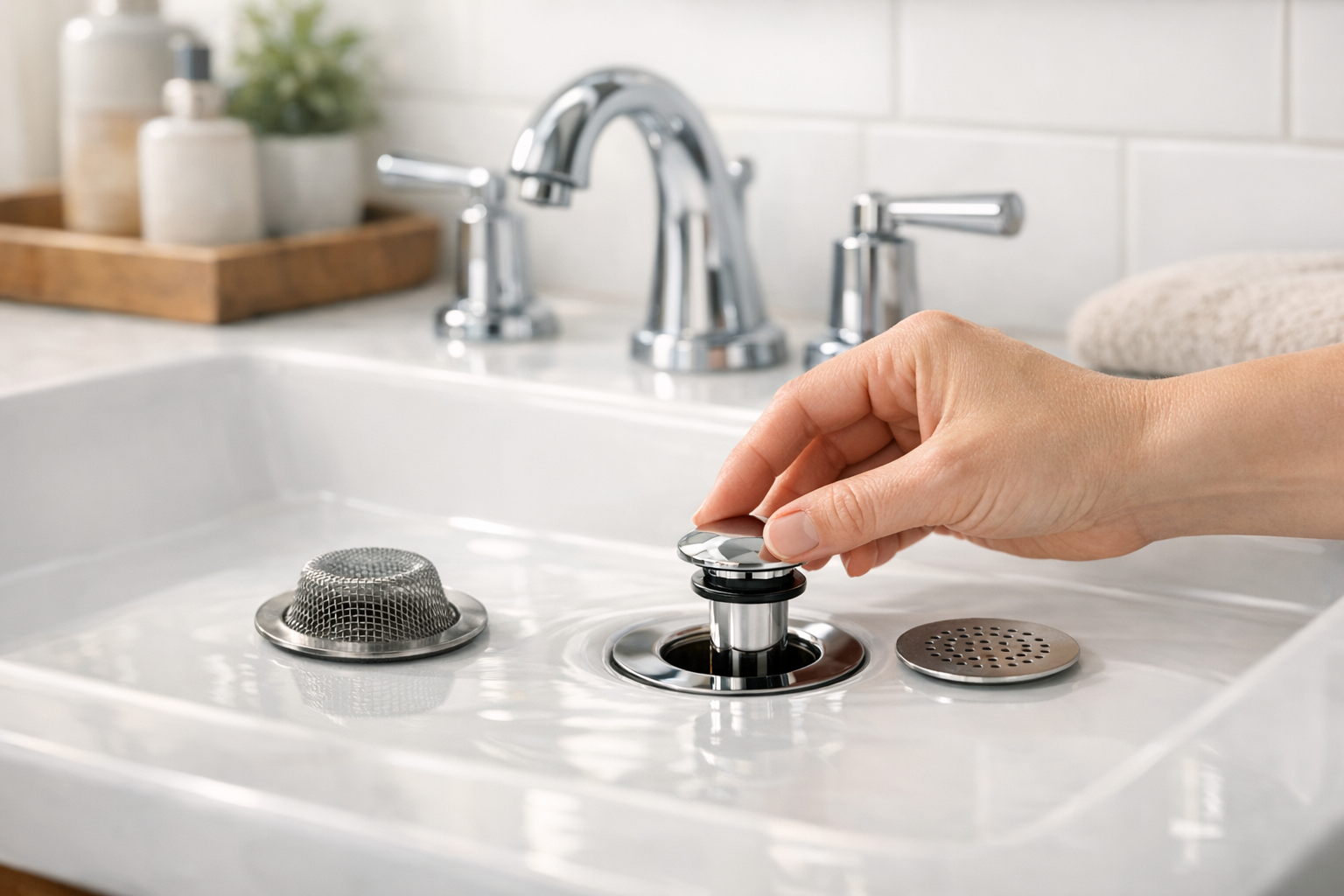
A simple mesh drain strainer over your kitchen sink opening catches food particles before they enter the pipe. They cost a few dollars at any hardware store, and cleaning them takes about five seconds — just dump the collected debris into the trash after each use. This is one of the easiest and most effective prevention tools available.
Bathroom Drain Maintenance
Bathroom drains — showers, tubs, and sinks — deal primarily with hair and soap scum. These two materials combine to form some of the most stubborn household clogs. Hair functions like a net inside the drain, trapping soap residue, skin cells, and other debris until water can barely get through.
Hair Catchers Are Non-Negotiable
A mesh or silicone hair catcher placed over your shower or tub drain is the single most effective tool for preventing bathroom clogs. They’re inexpensive, easy to clean, and they stop hair from entering the pipe in the first place.
Clean the hair catcher after every shower. It takes a few seconds and prevents far more problems than any drain-cleaning method can fix after the fact.
One practical tip: brushing your hair before you shower removes loose strands that would otherwise end up in the drain. It doesn’t eliminate the problem entirely, but it noticeably reduces how much hair goes down the drain.
Cleaning the Pop-Up Stopper and Overflow Hole
The pop-up stopper is the small plug mechanism in most bathroom sinks and some tubs. Hair and soap residue collect on and around it, and it’s often the first place a slow drain begins.
To clean it:
- Pull the stopper straight up or twist and lift it out (most pop-up stoppers remove without tools).
- Remove any hair and debris wrapped around the base.
- Wipe it clean with a paper towel or old cloth.
- Replace it and test the drain.
Do this once a month. It takes less than a minute and is one of the most overlooked pieces of drain maintenance.
While you’re at it, check the overflow hole — the small opening near the top of your sink or tub. Biofilm and debris collect there too, and it can contribute to drain odors. A small brush or pipe cleaner run through the opening once a month keeps it clear.
The Baking Soda and Vinegar Method — What It Actually Does
You’ll see this recommended everywhere, and it does have a place in drain maintenance — but it’s important to be honest about what it can and can’t do.
What it’s good for: light, routine maintenance. The fizzing reaction helps loosen mild biofilm, deodorize the drain, and flush away surface-level residue. It works well as a monthly freshening treatment for drains that are already flowing normally.
What it won’t do: clear an actual clog. If your drain is already slow, baking soda and vinegar won’t push through a packed hair clump or a grease blockage. It simply doesn’t produce enough force or chemical action to break down a real obstruction.
For monthly maintenance:
- Pour about half a cup of baking soda into the drain.
- Follow with about half a cup of white vinegar.
- Let the mixture fizz for 15 to 20 minutes.
- Flush with hot tap water for 30 seconds.
Use this as a maintenance step — not a rescue plan. If your drain is already draining slowly, this method is unlikely to fix it, and the problem is usually further down the line than surface-level maintenance can reach.
Toilet Maintenance
Toilets are often left out of drain maintenance guides, but they’re one of the most common sources of household clogs — and one of the most stressful. A clogged toilet can cause sewage backup into your bathroom, creating mess, smell, and an urgent need for help.
What Should Actually Be Flushed
Only three things belong in a toilet: human waste, toilet paper, and water. That’s it.
Everything else — even items marketed as “flushable” — can contribute to clogs over time.
Why “Flushable” Wipes Aren’t Really Flushable
This is one of the most common causes of toilet and mainline sewer clogs that drain-cleaning professionals see. Wipes labeled “flushable” may technically pass through your toilet’s trapway, but they don’t break down in the pipe the way toilet paper does. They accumulate in the line, catch on rough spots or pipe joints, and build up until the line is restricted or fully blocked.
The result can be a clogged toilet that a plunger can’t fix, or worse — a backed-up sewer line that affects every drain in your home. If you use wipes, dispose of them in a small trash can with a lid rather than flushing them.
Laundry and Utility Drains
These drains are easy to forget about because they’re usually in a basement or utility room and you don’t interact with them daily. But they clog too — and when they do, you often don’t notice until there’s standing water on the floor.
Washing Machine Drain Maintenance
Your washing machine discharges lint, small fabric fibers, and detergent residue with every load. Over time, that material collects in the discharge hose and drain pipe.
- Check the discharge hose periodically for kinks or buildup near the connection point.
- If your machine has a lint trap or filter, clean it regularly according to the manufacturer’s instructions.
- Run a hot water flush through the drain pipe monthly if accessible.
Utility Sink Maintenance
Utility sinks often catch dirt, paint residue, pet hair, and other materials that don’t go down regular household drains. Use a strainer, avoid pouring paint or chemicals directly into the drain, and flush with hot tap water after heavy use.
Your Drain Maintenance Schedule
One of the biggest gaps in most drain maintenance advice is telling you what to do without telling you when to do it. Here’s a simple schedule you can follow. None of these tasks take more than a few minutes.
| Frequency | Task | Where |
|---|---|---|
| After every use | Clean hair catcher or drain strainer | Kitchen sink, shower, tub |
| Daily | Wipe greasy pans with a paper towel before washing | Kitchen |
| Weekly | Run hot tap water for 30 seconds after the last wash of the day | Kitchen sink |
| Monthly | Baking soda and vinegar flush | All sinks, shower, and tub drains |
| Monthly | Clean pop-up stoppers and overflow holes | Bathroom sinks, tubs |
| Monthly | Apply an enzyme-based drain cleaner | Kitchen sink, laundry drain |
| Quarterly | Inspect and clean the P-trap (if comfortable doing so) | Kitchen and bathroom sinks |
| Annually | Have a professional drain cleaning done | Main drains and any problem areas |
You don’t need to follow every item perfectly. Even adopting three or four of these habits will meaningfully reduce your chances of a clog.
What Is an Enzyme-Based Drain Cleaner?
An enzyme-based (or bio-enzymatic) drain cleaner uses natural bacteria and enzymes to slowly digest organic material inside your pipes — grease, hair, soap scum, and food residue. Unlike chemical drain openers, enzyme cleaners don’t produce heat, don’t corrode pipes, and are safe for septic systems.
They’re not fast-acting. You typically pour them in at night and let them work overnight while no water is running. They work well as a monthly maintenance treatment to keep pipes clear. They’re available at most hardware stores, usually labeled as “enzyme,” “bio,” or “bacterial” drain maintainers.
They will not clear a clog that’s already blocking the pipe. They’re a maintenance tool, not a rescue tool.
What Is the P-Trap and How Do You Clean It?
The P-trap is the U-shaped pipe section directly under your sink. It holds a small amount of water at all times to block sewer gases from coming back up through the drain. It’s also where small objects and buildup tend to collect.
If you’re comfortable with basic tasks under the sink:
- Place a bucket or towel under the P-trap to catch water.
- Unscrew the slip nuts on both ends of the curved section by hand or with pliers (turn counterclockwise).
- Pull the P-trap down and dump out any water and debris.
- Clean inside the curved section with a bottle brush or old toothbrush.
- Reattach the P-trap, hand-tighten the slip nuts, and run water to check for leaks.
This is a quarterly task at most. If you’re not comfortable removing the P-trap yourself, that’s perfectly fine — a professional can handle it during a routine drain cleaning visit.
What to Avoid: Common Drain Maintenance Mistakes
Some of the most popular drain “tips” can actually make things worse. Here are the most common mistakes worth avoiding.
Chemical Drain Cleaners
Chemical drain openers — the kind you pour in and they generate heat to dissolve clogs — are harsh on pipes, especially with repeated use. They can deteriorate older metal pipes and compromise the connections in PVC systems. They also don’t fully remove the clog in many cases — they burn a small hole through the blockage, which then re-clogs faster because the pipe walls are still coated.
For regular maintenance, enzyme-based cleaners are a safer and more effective long-term choice. For an actual clog, professional drain cleaning with a snake or auger is more thorough and doesn’t damage your pipes.
Boiling Water on PVC Pipes
As mentioned earlier, pouring boiling water from a kettle directly into a drain with PVC pipes can soften the adhesive at pipe joints over time. Hot tap water — which is typically around 120°F — is warm enough to help move grease without risking pipe damage. If you’re not sure whether your home has PVC or metal pipes, stick with hot tap water to be safe.
Relying on Baking Soda and Vinegar for Actual Clogs
The baking soda and vinegar method is a fine maintenance habit. But when a drain is already slow or backing up, it’s not going to fix the problem. The fizzing reaction doesn’t generate enough pressure or chemical action to break through compacted hair, grease, or debris. Using it on an actual clog delays the real solution and gives the clog more time to worsen.
Putting Coffee Grounds Down the Disposal
Coffee grounds feel soft, but they clump together inside pipes and create a dense, sludgy blockage over time. Throw them in the trash, add them to compost, or use them in your garden — just keep them out of the drain.
How to Tell If a Clog Is Forming
Drain clogs give warning signs before they become full blockages. Recognizing these signs early gives you a chance to act before you’re dealing with sewage in your bathroom or a sink full of standing water right before guests arrive.
Watch for these signals:
- Slow drainage — water that used to disappear quickly now pools in the sink, tub, or shower before draining. This is the earliest and most common sign.
- Gurgling sounds — air bubbles pushing through trapped water in the pipe. You may hear this from a drain or a toilet after running water elsewhere in the house.
- Persistent odors — a sour or sewage-like smell coming from a drain, even after cleaning. This often means organic material is decomposing inside the pipe.
- Water backing up in other fixtures — if flushing a toilet causes water to rise in a nearby shower drain, or running the washing machine backs up water into a utility sink, the problem is likely in a shared drain line or the mainline sewer — the main pipe that connects your home’s drains to the municipal sewer system.
A single slow drain is usually a localized issue. Multiple drains acting up at the same time — or sewage backing up through a floor drain — often means the problem is in the mainline, and that’s not something DIY maintenance can reach.
When to Call a Professional Drain Cleaner
Routine maintenance handles most common drain issues. But there are clear situations where the problem is beyond what a plunger, a drain strainer, or a monthly enzyme treatment can fix. Knowing where that line is saves you time, prevents further damage, and gets your home back to normal faster.
Call a licensed drain-cleaning professional if:
- A drain is still slow after a month of consistent maintenance efforts.
- A plunger isn’t clearing the clog.
- Multiple drains in your home are slow or backing up at the same time.
- You notice sewage smell or water backing up through a floor drain, tub, or toilet.
- The same drain keeps clogging repeatedly, even after you’ve cleared it.
- You suspect a mainline sewer clog — water rising in one fixture when another is used is a strong indicator.
In these situations, the blockage is usually deeper in the line than anything you can reach from the drain opening. A professional drain-cleaning technician uses specialized tools — like a motorized drain snake or auger — to reach and clear obstructions deep in the pipe.
At Just Drains, we focus exclusively on drain cleaning. We’re a licensed drain-cleaning company that helps homeowners deal with exactly these situations — clogged sinks, backed-up toilets, slow shower drains, and mainline sewer clogs. We offer service within 60 minutes, and drain cleaning is $63. If your maintenance routine has stopped working and your drains need professional attention, call us now and we’ll help you get things flowing again.
Frequently Asked Questions
How often should I clean my drains?
For maintenance, a monthly baking soda and vinegar flush combined with weekly hot water rinses is a solid routine. Clean hair catchers and drain strainers after every use. An annual professional drain cleaning is a good idea for homes with older pipes or recurring slow drains.
Can I use baking soda and vinegar to prevent clogs?
Yes, as a maintenance step. The fizzing reaction helps loosen light biofilm and deodorize drains. However, it won’t clear an existing clog or break through significant buildup. It’s best used as ongoing upkeep rather than a solution to an active problem.
Is it safe to pour boiling water down the drain?
It depends on what your pipes are made of. Homes with PVC (plastic) pipes can develop softened adhesive at the joints when exposed to boiling water repeatedly. Hot tap water — around 120°F — provides enough heat for routine maintenance without putting any pipe type at risk.
Are chemical drain cleaners bad for pipes?
With repeated use, yes. The heat and corrosive reactions produced by chemical drain openers can wear down pipe walls and joints over time, particularly in older plumbing systems. Enzyme-based drain maintainers are a gentler, more sustainable choice for regular upkeep.
What should I never put down the drain?
Grease, cooking oil, coffee grounds, eggshells, fibrous vegetables (celery, corn husks), pasta, rice, “flushable” wipes, cotton balls, feminine hygiene products, and paper towels. All of these contribute to clogs over time.
How do I know if my drain is starting to clog?
The earliest sign is usually slower drainage — water that once drained quickly now sits and pools before moving. Gurgling sounds, persistent odors from the drain, and water backing up in other fixtures are progressively more serious indicators.
When should I call a professional instead of fixing it myself?
If a plunger isn’t working, if multiple drains are affected, if the same drain keeps clogging repeatedly, or if you notice sewage smell or water backing up through a floor drain, it’s time to call a licensed drain-cleaning company. These are signs the problem is deeper in the line than DIY methods can reach. Just Drains offers drain cleaning for $63 — call now for fast help.
What is a P-trap and how do I clean it?
The P-trap is the U-shaped pipe section under your sink. It holds water to block sewer gases. Debris can collect there over time. To clean it, place a bucket underneath, unscrew the slip nuts by hand, remove the curved section, dump and scrub it clean, then reattach and check for leaks. Do this quarterly, or ask a professional to handle it during a routine visit.
Keep Your Drains Clear — and Know When to Call for Help
Drain maintenance isn’t complicated, and it doesn’t take much time. The habits that matter most — keeping grease out of the kitchen sink, using hair catchers in the shower, cleaning your pop-up stoppers monthly, and running hot water through your drains weekly — are small investments that prevent the kind of stressful, messy emergencies that nobody wants to deal with.
But maintenance has its limits. If your drains are still slow, if you’re hearing gurgling, smelling something foul, or dealing with a toilet or sink that just won’t clear — the problem is likely deeper in the pipe than any DIY method can reach. That’s not a failure. That’s just where a professional drain-cleaning company comes in.
Just Drains is a licensed drain-cleaning company that helps homeowners handle exactly these problems — clogged drains, backed-up sewer lines, clogged sinks, clogged toilets, and mainline sewer clogs. We offer service within 60 minutes, with drain cleaning for $63. If your drains need more than maintenance, call Just Drains now and let us help you get your home back to normal.