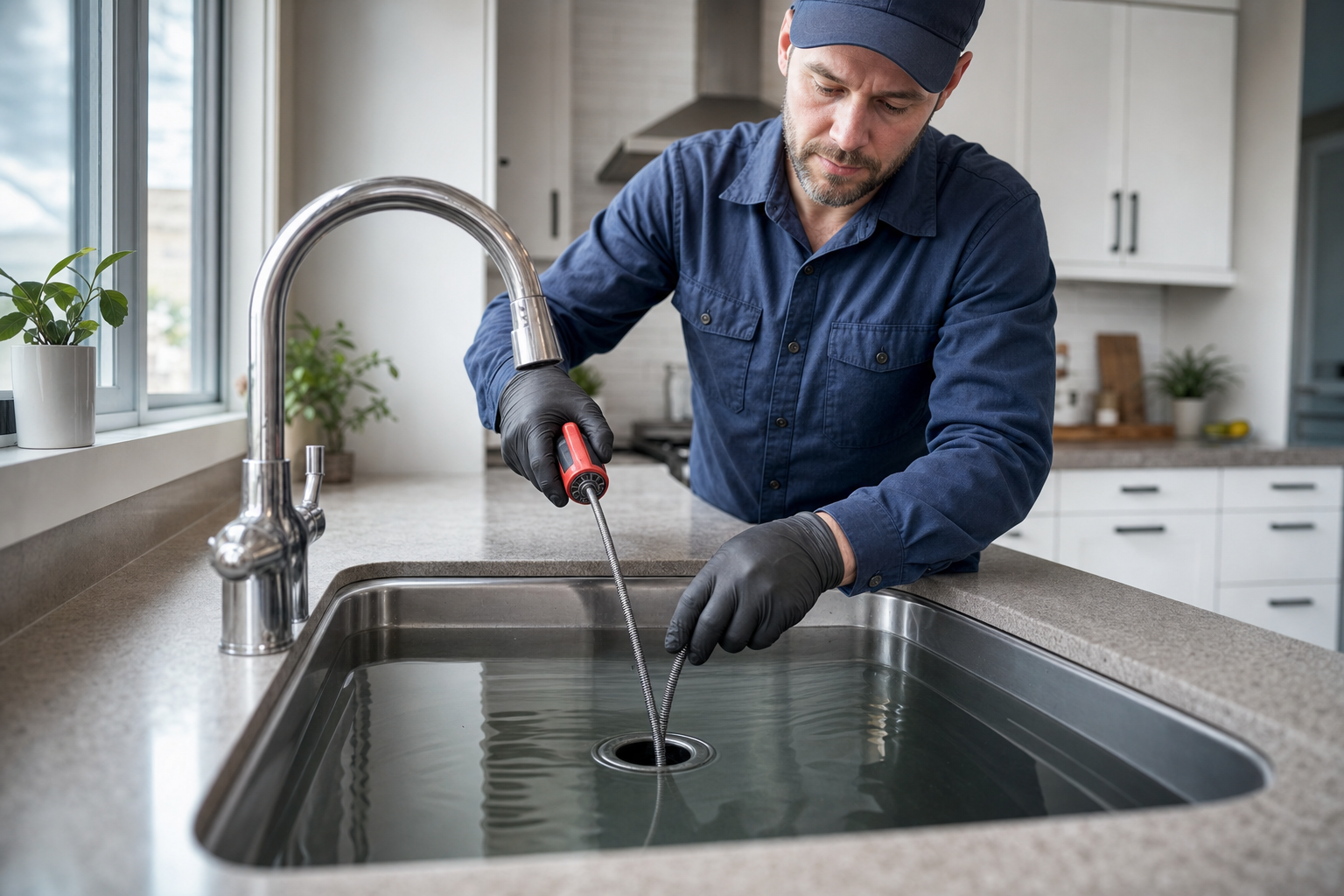
Will a Plumber Clear a Drain if There Is Standing Water in the Sink?
Yes. A drain cleaning professional will absolutely clear your drain even when there is standing water sitting in the sink. In fact, standing water is one of the most common conditions we see on service calls at Just Drains. It simply tells us there is a blockage that needs clearing — and it is exactly the kind of situation we handle every day. You do not need to empty the sink yourself before we arrive.
If you are staring at a sink full of water that will not budge, you are not alone, and the situation is completely fixable. This article walks you through why it happens, what you can do right now, what to expect when a drain cleaning professional shows up, and how to tell whether your clog is a simple fix or something deeper in the line.
Why There Is Standing Water in Your Sink
Standing water means something is blocking the pipe between your drain opening and the main sewer line. The water has nowhere to go, so it sits. The cause depends on which sink is affected.
Kitchen Sink Clogs
Kitchen drains collect grease, cooking oil, food scraps, and soap residue over time. These materials coat the inside of the pipe and the P-trap — the curved section of pipe directly under the sink. Eventually the buildup narrows the pipe enough to stop water from passing through entirely. A garbage disposal can mask the problem for a while by grinding food smaller, but grease-based blockages still form deeper in the line.
Bathroom Sink Clogs
Bathroom sink drains deal with hair, soap scum, toothpaste residue, and product buildup. Hair is the most common culprit. It tangles around the drain stopper and the inside of the P-trap, trapping soap and debris along with it. Over weeks or months, the mass grows thick enough to block the pipe completely.
In both cases, the clog has usually been building for a while before the sink stops draining altogether. A slow drain that you have been ignoring is often the early warning sign.
What to Do Right Now — Before You Call
If your sink is full of standing water and you are deciding what to do next, here are a few practical steps that can help.
Things Worth Doing
- Stop running water into the sink. Adding more water will not push the clog through. It will only make the mess bigger.
- Scoop out some water if you want to. A cup and a bucket work fine. This is optional — a drain cleaning professional can work with the water in place — but removing some of it can reduce the risk of splashing.
- Check your other fixtures. Run the bathroom faucet, flush a toilet, or check whether the tub is draining. If multiple fixtures are slow or backing up, that is useful information. It may mean the blockage is deeper in the line, not just in one sink trap.
- Note what you have already tried. If you used a plunger, tried baking soda and vinegar, or poured anything into the drain, make a mental note. The technician will want to know.
Things to Avoid
- Do not pour chemical drain cleaners into standing water. Store-bought liquid drain openers are designed for slow drains, not fully blocked ones. When the water is not moving, the chemicals sit in the pipe without reaching the clog. They can corrode older pipes, and if a technician needs to work near the drain shortly after, the standing chemical solution creates a real safety concern — it can cause skin burns and release harsh fumes when disturbed.
- Do not keep running the faucet to “test” whether the clog has cleared on its own. If the water is not moving, adding more only raises the water level.
- Do not try to disassemble the pipes under the sink. Loosening the P-trap with standing water above it will release everything in the line at once, creating a mess and potential exposure to contaminated water. Leave pipe disassembly to a professional.
What Happens When a Drain Cleaning Professional Arrives
If you have never called a drain cleaning service before, the visit is more straightforward than most homeowners expect. Here is what a typical standing-water sink call looks like from your side of it.
- The technician assesses the situation. They will ask which fixtures are affected, whether other drains in the house are slow, and whether you have used any chemicals or tried any fixes. This takes about two minutes and helps them understand whether the blockage is in the sink trap, the branch line behind the wall, or possibly deeper in the system.
- They prepare the work area. The technician will set up to contain any water or debris. If there is standing water in the basin, they will work with it in place — you do not need to empty it first.
- They clear the clog. For most sink clogs, a drain snake — a flexible metal cable that feeds into the pipe and breaks apart or retrieves the blockage — is the primary tool. The technician feeds the snake through the drain opening or through the cleanout access under or behind the sink. When the cable reaches the clog, it either breaks it apart so it can flush through or pulls the material back out. You may hear some mechanical noise, and the process is often quicker than people expect.
- They verify the drain is flowing. Once the blockage is cleared, the technician will run water through the drain to confirm it is moving freely. They will also check that the standing water has fully drained from the basin.
For a standard clogged sink, many service calls take roughly 30 to 60 minutes from arrival to a clear, flowing drain, though timing can vary depending on the nature and location of the blockage.
At Just Drains, drain cleaning starts at $63, and we work to reach homeowners in Central New Jersey and the Jersey Shore area within 60 minutes. If your sink is full of water and nothing you have tried has worked, this is exactly the kind of call we handle every day.
When Standing Water Might Mean a Bigger Problem
Most of the time, standing water in a single sink means a localized clog — something stuck in the trap or the short stretch of pipe behind it. That is a routine situation.
But sometimes the blockage is not in one sink. It is deeper in the system, in the main sewer line that connects your house to the municipal sewer or septic tank. Here is a simple way to tell the difference.
| Sign | Likely a Local Sink Clog | Could Be a Main Line Issue |
|---|---|---|
| Which fixtures are affected? | Only one sink | Multiple sinks, tubs, or toilets |
| Does flushing a toilet cause backup elsewhere? | No | Yes — water comes up in a tub, shower, or floor drain |
| Do you hear gurgling from other drains? | No | Yes |
| Is there a sewage smell near floor drains or the basement? | Usually not | Often yes |
If you are seeing signs from the right column, the blockage may be in the main sewer line rather than in one sink’s drain pipe. Just Drains handles both drain cleaning and sewer line clearing, so whether the problem is under your kitchen sink or deeper in the line running out to the street, it is something we can help with.
A single clogged sink does not automatically mean a sewer line problem. But if other fixtures in the house are acting up at the same time, it is worth mentioning when you call so the technician arrives prepared.
Why DIY Methods Sometimes Are Not Enough
There is nothing wrong with trying a plunger or a hand snake before calling for help. Many homeowners do, and sometimes it works. But when the water is still standing after you have tried the basics, there are a few common reasons why.
- The clog is deeper than the P-trap. A plunger and most homeowner-grade snakes can only reach the first few feet of pipe. If the blockage is farther into the branch line behind the wall, those tools cannot reach it.
- The blockage is dense or compacted. A thick mass of grease and food debris in a kitchen line, or a solid wad of hair in a bathroom line, may not respond to a plunger’s pressure or a thin hand snake. Professional drain snakes are longer, stronger, and designed to work through tougher blockages.
- There is more than one partial clog. Sometimes the pipe has multiple spots where buildup has narrowed the flow. Clearing one section with a plunger may improve things temporarily, but the next restriction keeps the drain slow or causes it to back up again soon.
If you have plunged, tried baking soda and hot water, and the standing water has not moved — or if it drains but comes back within a day or two — that is a clear signal that a professional drain snake is the right next step.
What to Tell the Technician When You Call
A short, clear description when you call helps the technician arrive ready to address the problem. Here is what is most helpful to share.
- Which fixture is clogged — kitchen sink, bathroom sink, tub, or toilet
- Whether the water drains at all, even slowly, or is completely standing
- Whether any other drains in the house are slow or backing up
- Whether you have used any chemical drain cleaners recently
- Roughly how long the problem has been going on
You do not need to diagnose the problem yourself. Even saying “my kitchen sink is full of water and nothing I have tried is working” gives the technician a solid starting point.
If you are in Monmouth, Mercer, Union, Morris, or Ocean County and need help now, call Just Drains at (732) 279-2427. We will ask a few quick questions, and a licensed drain cleaning technician can be on the way.
Frequently Asked Questions
Should I drain the sink before the plumber arrives?
You do not have to. A drain cleaning professional expects standing water and can work with it in place. If you want to scoop some out with a cup and bucket to reduce the mess, that is fine, but it is not required.
How do you snake a sink that is full of water?
The technician feeds a drain snake directly through the drain opening or the cleanout access point, even with water in the basin. The snake cable passes through the standing water and reaches the clog. As the blockage clears, the water drains on its own.
Will drain cleaner work in standing water?
Usually not well. Chemical drain cleaners are formulated to work in moving or slow-moving water so the product can travel to the clog. When the water is completely still, the chemicals tend to sit near the top of the pipe without reaching the blockage. They can also corrode pipes over time and create a safety hazard for anyone working on the drain afterward.
How much does it cost to unclog a sink with standing water?
At Just Drains, drain cleaning starts at $63. The final cost depends on where the clog is located and how deep in the line the blockage sits. When you call, we can give you a clearer picture based on your specific situation.
What if my sink keeps clogging after it is cleared?
Recurring clogs often mean there is buildup deeper in the line that a single clearing did not fully address, or that habits like pouring grease down the kitchen drain are causing the problem to return. If your sink keeps backing up, mention the pattern when you call so the technician can assess whether a deeper clearing of the drain line or the sewer line is needed.
What if the sink is not draining but does not seem clogged?
Sometimes the blockage is not visible from above. It could be inside the P-trap, behind the wall in the branch line, or even further down the system. If the water is not moving, something is blocking it — even if you cannot see the cause from the sink. A drain cleaning professional can identify the location and clear it.
Standing Water Is Routine — Getting Help Should Be Too
A sink full of standing water feels urgent, and it is inconvenient. But it is one of the most common situations a drain cleaning professional handles. You do not need to fix it yourself, you do not need to empty the water first, and you do not need to worry that the situation is too messy for a professional to deal with. This is what we do.
If you are a homeowner in Central New Jersey or the Jersey Shore area and your sink will not drain, Just Drains can help. We are a licensed drain and sewer cleaning company, drain cleaning starts at $63, and we work to reach you within 60 minutes.
Call Just Drains now at (732) 279-2427 and let us get your drain flowing again.