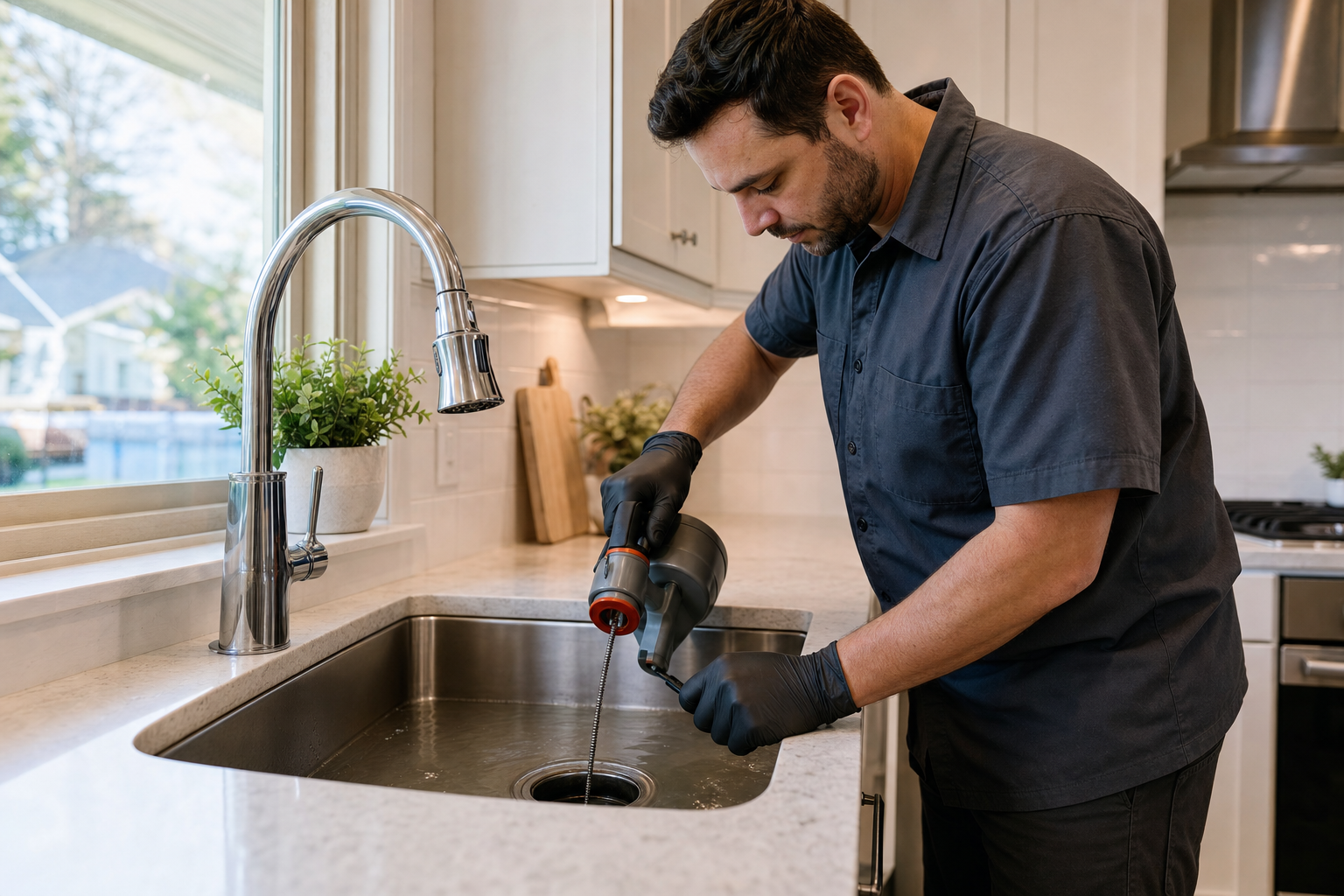
How Much Does It Cost to Clear a Greasy Kitchen Sink Clog in NJ
For homeowners in central New Jersey and the Jersey Shore area, the cost to clear a greasy kitchen sink clog varies depending on how badly grease has built up, how deep the blockage sits in your drain line, and whether you need service during regular hours or on short notice.
Below, we break down what actually drives the price, why grease clogs behave differently than other blockages, and how to tell whether a quote you receive is fair. If your kitchen sink is backed up right now and you already know you need help, Just Drains offers drain cleaning starting at $63 for homeowners across Monmouth, Mercer, Union, Morris, and Ocean Counties. Call Now: (732) 279-2427.
What Affects the Cost of Clearing a Greasy Kitchen Sink Clog in New Jersey
Not every greasy clog is the same job. A shallow grease buildup near your sink trap is a different situation than a thick blockage deeper in the branch line. Here is how the type of service needed typically affects what you pay.
Basic Drain Snaking
A drain snake — also called an auger — is a flexible metal cable that a technician feeds into your pipe to break through the blockage. For a kitchen sink clog caused by grease buildup near the trap or in the first several feet of pipe, this is usually the first method a drain professional will try. It handles the majority of residential kitchen grease clogs effectively and represents the lower end of the cost range.
Motorized Auger or Power Snaking
When a grease blockage is farther down the line or has hardened enough that a standard snake cannot cut through it, a motorized auger provides more force. This is common in older homes where grease has been accumulating inside the pipes for years. The additional equipment and time push the cost higher.
Emergency or Same-Day Service
If your kitchen sink is completely blocked and you need someone quickly — especially on a weekend, holiday, or after regular business hours — expect the cost to increase. Emergency and after-hours situations typically carry additional charges on top of the standard service price, depending on the company and the timing of your call.
Just Drains provides drain cleaning starting at $63 — a straightforward starting price that makes it easier to get professional help early, before a slow drain turns into a full backup with standing water and a mess you did not plan for.
Why Grease Clogs Are Different From Other Kitchen Sink Blockages
A greasy kitchen sink clog does not behave the same way as a clog caused by food scraps or soap buildup. Understanding the difference helps explain why pricing can vary and why some fixes last longer than others.
When cooking grease, oil, or fat goes down your kitchen drain, it is liquid and warm. As it moves through the pipe, it cools. Once it cools, it sticks to the inside walls of the pipe and begins to harden. Over time, this grease coating gets thicker. It traps small food particles, soap residue, and other debris that pass through, building a stubborn blockage layer by layer.
This is what makes grease clogs different:
- They coat the pipe walls. Unlike a solid object blocking the pipe, grease narrows the pipe gradually from the inside out.
- They harden over time. Fresh grease is soft, but old grease buildup becomes waxy and firm, making it harder to clear.
- They can re-form after clearing. A drain snake can punch through a grease blockage and restore flow, but if the pipe walls are still coated, a new clog can develop in weeks or months.
- They trap other debris. Grease acts like a binding layer inside the pipe. Small bits of food, coffee grounds, and soap scum stick to it and accelerate the buildup.
This is why a kitchen sink that drains slowly for weeks before finally stopping is often a grease problem. The blockage did not happen all at once — it built up over time.
What Actually Affects Your Final Price
When you call for a greasy kitchen sink clog, several factors determine where your job lands on the cost spectrum. Here is what matters most.
How Severe the Blockage Is
A slow-draining sink with partial flow is usually a simpler job than a sink full of standing water that has not drained in hours. Complete blockages often mean thicker buildup or a clog that has moved deeper into the pipe, both of which take more time and effort to clear.
Where the Clog Is Located
A grease clog sitting in or near the P-trap — the curved section of pipe directly under your sink — is one of the easiest to reach. The P-trap is designed to hold a small amount of water to block sewer gases, but it is also where grease loves to collect because the curve slows the flow.
If the blockage has moved farther down the branch line — the horizontal pipe that connects your sink drain to your home’s main drain line — the technician needs to work the snake deeper into the system. Deeper clogs take more time and more cable, which increases the cost.
Whether a Garbage Disposal Is Involved
A garbage disposal can complicate a greasy clog in two ways. First, disposals can push finely ground food particles into the drain line, where they combine with grease and create denser blockages. Second, the disposal unit itself sometimes needs to be worked around during the clearing process, which can add time to the job.
Time of Day and Urgency
Calling during regular weekday hours is almost always less expensive than calling on a weekend evening or a holiday. If your kitchen sink backs up on Thanksgiving morning while you are preparing dinner, expect the price to reflect the urgency. Noticing the early signs of a slow drain and calling before it becomes a full blockage can save real money.
Service or Trip Fees
Some drain cleaning companies charge a separate trip fee or service call fee just to show up, on top of the cost of the work itself. Others include the trip fee in their service price. When you call for a quote, ask whether the price they give you is all-inclusive or whether there is a separate charge for the visit.
How to Know If a Quote Is Fair
If you are comparing quotes or wondering whether a price you were given is reasonable, here is a practical framework.
A fair quote for a greasy kitchen sink clog in central New Jersey should:
- Clearly state what is included — the service visit, the drain clearing method, and any trip fee
- Be based on at least a brief phone conversation about your specific situation, not a one-size-fits-all number with no questions asked
- Not pressure you into adding services you did not ask about before the technician has even looked at the drain
Watch for these red flags:
- An unusually low price with no explanation of what is included — it may be a bait price that changes once the technician arrives
- An unusually high quote before anyone has assessed the actual problem — that can signal upselling without justification
- A company that will not give you any price range over the phone and insists on an in-person visit before discussing cost at all
- Pressure to approve additional services immediately, before the original clog has been addressed
Just Drains keeps this simple. Drain cleaning starts at $63, and the goal is to get your drain cleared quickly so your kitchen is back to normal. If you want a straightforward answer about what your job will cost, call and describe what is happening — that is the fastest way to get a real number. Call Now: (732) 279-2427.
What to Expect During a Professional Drain Cleaning Visit
If you have never called a drain cleaning company before, here is what a typical kitchen sink grease clog visit looks like from start to finish.
- You call and describe the problem. Tell the company what is happening — standing water, slow drain, bad smell, how long it has been going on, whether you have a garbage disposal, and whether you have tried anything yourself. This helps the technician arrive prepared.
- The technician arrives and takes a look. They will check the sink, look at the drain setup, and ask a few questions to confirm where the blockage likely is.
- They select the right approach. For most kitchen grease clogs, a drain snake or motorized auger is the standard method. The technician feeds the cable into the drain to break through and clear the grease buildup.
- They test the drain. After clearing the line, the technician runs water to confirm the drain is flowing freely. They are checking that the clog is fully cleared, not just punched through temporarily.
- Cleanup and wrap-up. A good technician leaves the area the way they found it. The whole process for a kitchen sink grease clog typically takes 30 to 60 minutes.
Just Drains is built around getting to you quickly and clearing your drain without a complicated process. With a goal of reaching homeowners in central New Jersey and the Jersey Shore area within 60 minutes, the aim is to turn a stressful backed-up kitchen into a working kitchen as fast as possible.
Can You Clear a Greasy Kitchen Sink Clog Yourself
Sometimes, yes. It depends on how far along the grease buildup is.
When DIY May Work
If your kitchen sink is draining slowly but still moving, a minor grease buildup near the surface may respond to a simple approach:
- Hot water flush. Heat a full kettle or pot of water until hot but not boiling — especially important if you have PVC pipes, which can be damaged by boiling water. Pour it slowly down the drain in two or three stages, pausing a few seconds between each pour. Hot water can soften fresh grease enough to move it through the pipe. This works best on light, recent buildup — not on clogs that have been forming for weeks.
- Dish soap and hot water. Squirt a generous amount of liquid dish soap into the drain, then follow with hot water using the same caution about water temperature above. Dish soap is designed to break up grease, and the combination can help clear a shallow buildup.
When DIY Is Not Enough
If any of these describe your situation, the clog is likely beyond what hot water can handle:
- The sink has standing water that is not draining at all
- You have tried hot water or dish soap and the drain is still slow or stopped
- The clog keeps coming back within days or weeks after clearing
- You notice a bad smell coming from the drain even when water is not backed up
- Other drains in the house are also slow or backing up — this may indicate a deeper blockage in the branch line or main drain
Why Chemical Drain Cleaners Are Risky for Grease Clogs
It is tempting to pour a chemical drain cleaner down the sink to save money. Here is why that approach often backfires with grease clogs specifically:
- Most chemical cleaners are designed for hair and organic matter, not hardened grease. They may dissolve a small channel through the buildup without actually clearing the pipe walls, which means the clog comes back.
- Chemical cleaners can damage pipes. Older homes in central New Jersey and the Jersey Shore area may have PVC, cast iron, or galvanized pipes. Harsh chemicals can weaken joints and corrode older pipe materials over time.
- They create a safety issue if a professional visit is needed later. If a drain contains chemical cleaner and a technician needs to snake it, the splashback can be hazardous.
If you have already tried a chemical cleaner and the clog is still there, let the technician know when you call. It is helpful information and it keeps everyone safe.
Signs Your Kitchen Sink Clog Is Grease-Related
Not sure whether grease is the culprit? These signs point toward a grease buildup rather than a different type of blockage:
- The drain got slower gradually over days or weeks rather than stopping suddenly
- You notice a greasy or rancid smell coming from the drain, especially in warm weather
- Water pools in the sink and drains very slowly, sometimes with small bubbles or gurgling sounds
- The problem is worse after cooking meals that involve oil, butter, or animal fat
- A plunger helps temporarily but the slow drain returns within a day or two
If these describe what is happening in your kitchen, the clog is very likely grease-related — and it is the kind of problem that a licensed drain cleaning professional can typically clear quickly with the right equipment.
When a Kitchen Sink Clog Could Mean a Bigger Problem
Most greasy kitchen sink clogs are straightforward drain cleaning jobs. But occasionally, what looks like a simple kitchen clog is actually a sign of something deeper.
Call a professional promptly if you notice:
- Multiple drains in the house backing up at the same time — the kitchen sink and a bathroom drain, for example
- Water backing up into the kitchen sink when you flush a toilet or run the washing machine
- A sewage smell that is not coming from the kitchen drain alone
- Recurring clogs that come back every few weeks despite clearing
These can indicate a blockage in your home’s main sewer line rather than just the kitchen branch line. A main line blockage is a different scope of work — it involves clearing the larger pipe that carries all your home’s wastewater out to the municipal sewer or septic system.
Just Drains handles both: kitchen drain cleaning for straightforward grease clogs, and sewer cleaning and sewer line clearing for deeper main line blockages. If the technician finds that your kitchen clog is actually part of a main line issue, they can address it during the same visit rather than referring you elsewhere.
How to Prevent Grease Clogs From Coming Back
Once your kitchen drain is cleared, a few simple habits can keep grease from building up again.
- Never pour cooking grease or oil down the drain. Let it cool in a container and throw it in the trash. This is the single most effective prevention step.
- Wipe greasy pans with a paper towel before washing. Even small amounts of grease add up inside your pipes over months.
- Run hot water for 30 seconds after doing dishes. This helps flush any residual grease through the line before it cools and sticks.
- Use a sink strainer. A simple mesh strainer catches food particles before they enter the drain, so they cannot combine with grease to form blockages.
- Be realistic about your garbage disposal. A disposal grinds food, but it does not eliminate grease. Greasy food scraps sent through the disposal still coat your pipes downstream.
Even with good habits, some grease will make its way into your kitchen drain over time. If you notice the drain starting to slow down again, calling early — before it becomes a full blockage — is faster, cheaper, and far less stressful than waiting until you have standing water in the sink.
Frequently Asked Questions
How much does it cost to unclog a kitchen sink in NJ?
The cost varies based on the severity of the blockage, how deep the clog sits in the pipe, and the time of day you call. Just Drains offers drain cleaning starting at $63 for homeowners in Monmouth, Mercer, Union, Morris, and Ocean Counties. Call to describe your situation and get a real number for your specific job.
Is a greasy clog harder to clear than a regular sink clog?
It can be. Grease coats the inside walls of your pipe and hardens over time, which makes it stickier and more resistant than a simple food or soap clog. A grease clog may also re-form faster if the pipe walls are still coated after clearing, which is why professional-grade drain snaking tends to work better than DIY methods for this type of blockage.
Will the clog come back after snaking?
A thorough drain cleaning should restore full flow. However, grease clogs are more likely to recur than other types if the conditions that caused them continue — mainly pouring cooking grease down the drain. Good kitchen habits after clearing go a long way toward reducing the chance of a repeat.
Does a garbage disposal make grease clogs worse?
It can contribute. A garbage disposal grinds food into small particles, but greasy food scraps still coat the pipe downstream. Homeowners with disposals sometimes send more food waste down the drain than they otherwise would, which can accelerate grease buildup.
How long does it take to clear a greasy kitchen sink drain?
Most residential kitchen grease clogs take 30 to 60 minutes to clear once the technician begins work. The total visit, including a quick assessment and testing the drain afterward, is typically under an hour for a standard job.
Can I use chemical drain cleaner to save money on a grease clog?
Chemical drain cleaners are generally not the best option for grease. Most are formulated for hair and organic buildup, not hardened cooking grease. They may open a small channel without clearing the pipe walls, so the clog returns. They can also damage certain pipe materials, especially in older homes. If the clog is beyond what hot water and dish soap can handle, a professional drain cleaning is a safer and more lasting solution.
Get Your Kitchen Sink Draining Again
A greasy kitchen sink clog is one of the most common drain problems homeowners in central New Jersey and the Jersey Shore area deal with. It is frustrating, it smells, and it can bring your kitchen to a standstill — but it is also a problem that a licensed drain cleaning professional can typically resolve in under an hour.
If your kitchen sink is backed up or draining slowly and you have already tried the basics, there is no reason to wait for it to get worse. Just Drains provides drain cleaning starting at $63, with a goal of reaching homeowners across Monmouth, Mercer, Union, Morris, and Ocean Counties within 60 minutes.
Call Now: (732) 279-2427