How Much Does a Main Sewer Line Cleanout Cost in Monmouth County
Main sewer line cleaning is one of those services where pricing can shift considerably based on the severity of the blockage, when you reach out, and how easy it is to access your line. Before getting into what drives cost, there is one thing worth addressing upfront. The phrase “main sewer line cleanout” can refer to two entirely different things, and that confusion often makes pricing seem harder to understand than it actually is.
Most homeowners searching for this term need sewer line cleaning — removing a clog or obstruction from the main drain line that connects the house to the municipal sewer. A smaller group needs a cleanout access point installed, which is a separate and more involved project that requires excavation, permits, and a different type of contractor. This article addresses both, but centers on cleaning, since that is what most Monmouth County homeowners are dealing with.
What the Term “Main Sewer Line Cleanout” Actually Refers To
This term creates a lot of confusion for homeowners, so a brief explanation helps.
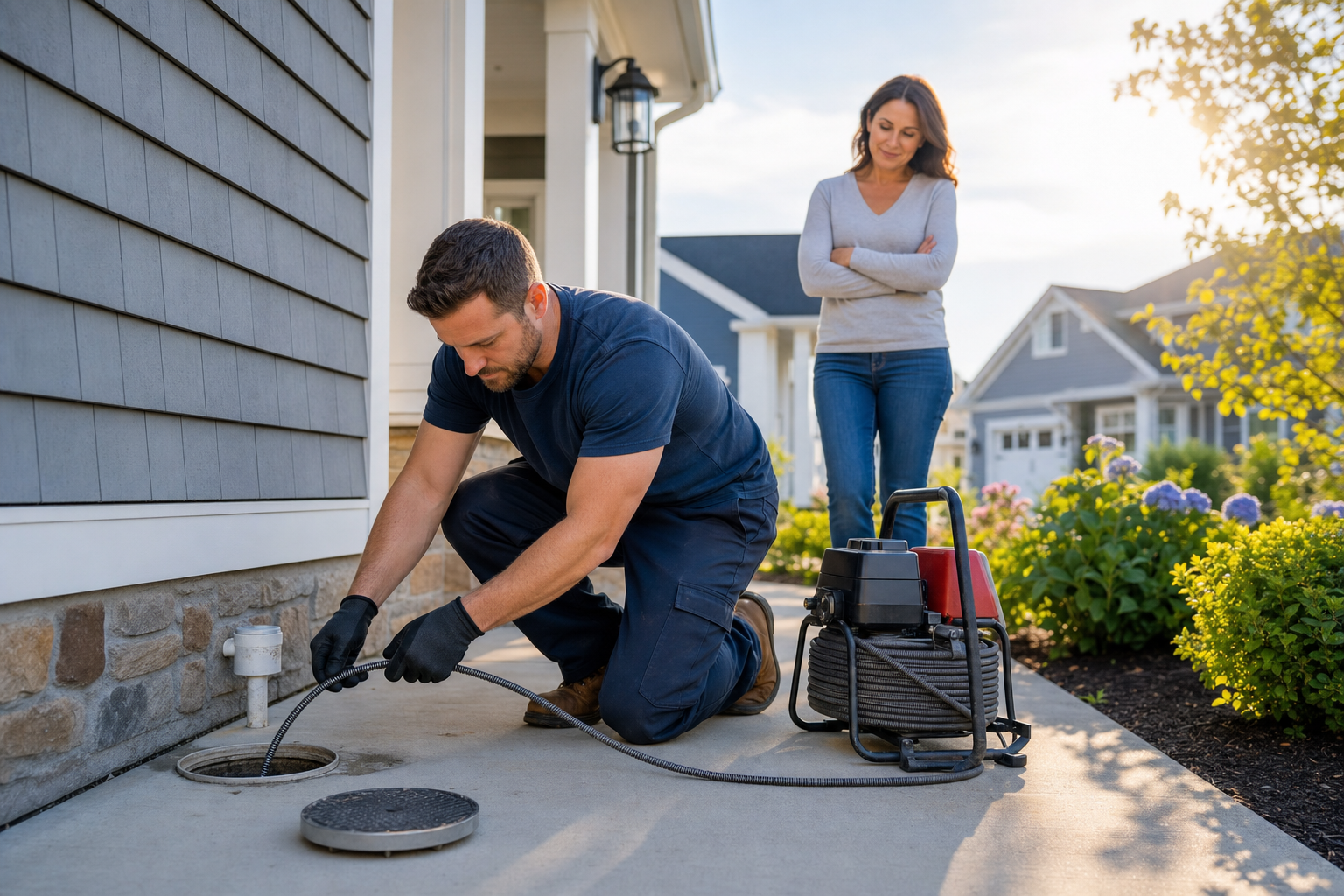
A sewer cleanout is a capped pipe, generally four inches across, that gives a technician direct access to the main sewer line. You will often find it along the exterior wall of the home near ground level, and occasionally inside the basement or crawl space. Its purpose is to allow a technician to reach the sewer line without routing through an interior drain fixture.
When homeowners use the phrase “main sewer line cleanout,” they are almost always describing one of two situations:
- Clearing the main sewer line: A licensed technician runs a motorized snake or auger through the cleanout or another drain entry point to break apart and flush out a blockage. This is the standard same-day service most people need when sewage is backing up or several drains are running slow at once.
- Adding a new cleanout access point: When a home has no usable cleanout — or the existing one is buried or damaged — a contractor may need to create one. This requires cutting into the sewer line, adding an access fitting, backfilling, and often obtaining a permit. It is a distinct type of project handled by contractors who focus on that kind of excavation work.
If your drains are backed up and you need the line cleared, you are looking at a cleaning service. That is the focus of this guide.
Main Sewer Line Cleaning Costs in Monmouth County
What you pay for sewer line cleaning in Monmouth County reflects local labor rates in central New Jersey and depends heavily on the details of your specific situation. The nature of the blockage, how far down the line it sits, and when you make the call all influence the final price. Below is a breakdown of the main factors that affect cost by type of work involved.
Standard Snaking or Rodding
For a routine main line blockage, a technician threads a motorized snake or drain auger through the cleanout or an available access point to break apart the obstruction and get water flowing again. This is the most widely used approach for clearing grease accumulation, soft clogs, and moderate blockages.
The final price depends on how deep the blockage sits, how easily the line can be reached, and whether the appointment is scheduled during regular hours or called in as an emergency. As a general starting point, Just Drains offers drain cleaning beginning at $63, and the cost for your particular situation will depend on what the technician observes during their assessment.
Severe or Deep Blockages
When a clog is located further along the line, has become compacted, or involves tree root intrusion, the job takes more time and may call for heavier equipment or several passes through the pipe. Monmouth County features a large number of mature trees alongside older homes with clay or cast-iron sewer pipes, which makes root-related blockages a recurring problem in this area.
These jobs typically require extended service time, additional labor, and sometimes a follow-up check to confirm the line is fully open. Costs will run higher than a basic snaking job, and once a technician has evaluated the situation, they can give you a straightforward account of what the work involves.
Emergency or After-Hours Service
When sewage is actively coming back into your home, waiting until the next scheduled appointment is not an option for most homeowners. Calls made outside of regular business hours or on an emergency basis generally carry a surcharge above the standard rate, reflecting the cost of dispatching a technician quickly. This is common practice throughout the industry in central New Jersey.
Spotting early indicators like sluggish drains or occasional gurgling and acting on them promptly can often help you sidestep the additional cost of an emergency dispatch.
What About Installing a New Cleanout Access Point
If your home has no accessible sewer cleanout — or the one that exists is buried, damaged, or no longer functional — you may need to have an access point installed before the line can be properly serviced.
This is a fundamentally different project from routine drain cleaning. It generally involves excavation, opening the sewer line, fitting a new access point, backfilling the area, and, in many Monmouth County municipalities, pulling a plumbing permit. What you pay will vary based on how deep the line runs, the soil conditions on your property, and what local permit requirements apply.
Work of this type is outside the scope of standard sewer line cleaning. If you think a cleanout installation may be necessary, a licensed contractor who focuses on that kind of excavation work can evaluate the situation and walk you through what needs to happen before any cleaning can begin.
What Drives the Price Up or Down in Monmouth County
Sewer line cleaning jobs are not priced identically, and knowing what affects cost helps you make sense of any quote you receive. The following factors matter most for homeowners in Monmouth County.
How Serious the Blockage Is
A soft grease or soap clog near the cleanout is quicker and simpler to clear than a compacted obstruction sitting deep in the line. As the severity of the blockage increases, so does the time and effort required — and with it, the cost.
Tree Root Intrusion
Throughout Monmouth County, particularly in established neighborhoods, large trees send root systems into aging clay and cast-iron sewer pipes by working through existing cracks and pipe joints. This is among the most frequent causes of main sewer line backups in the area. Root removal takes more effort than clearing a soft clog and often needs to be redone over time.
Pipe Material and Age
Homes with clay or cast-iron pipes experience blockages more frequently and require more careful handling than properties with newer PVC piping. If your home was constructed before the 1980s, your sewer pipes may be more vulnerable to buildup, root intrusion, and partial structural failures that complicate the cleaning process.
How Accessible the Line Is
A cleanout with a clearly visible cap near the home’s exterior is easy to work with and speeds the job along. When the cleanout is buried beneath landscaping, tucked into a narrow crawl space, or absent altogether, the technician may need significantly more time just to reach the line before any clearing can begin.
When You Call
Jobs scheduled during regular business hours consistently cost less than calls placed at night, on weekends, or during holidays. If you catch early warning signs like slow drainage or gurgling sounds and call before things escalate, you can frequently avoid paying the premium that comes with emergency service.
Signs You Need Main Sewer Line Cleaning
Many homeowners are uncertain whether they are dealing with a single clogged fixture or a main sewer line problem. Here is a straightforward way to read the situation.
| What You Are Noticing | What It Likely Means |
|---|---|
| One sink or tub drains slowly | Likely a single drain clog, not the main line |
| Multiple drains are slow or backing up at the same time | Likely a main sewer line blockage |
| Flushing a toilet causes water to back up in a tub or shower | Strong sign of a main line issue |
| Sewage smell coming from drains or near the foundation | May indicate a backup in the main sewer line |
| Water or sewage backing up in the lowest drain in the home | Almost certainly a main line problem |
| Gurgling sounds from drains when water runs elsewhere in the house | Often a sign the main line is partially blocked |
If two or more of these signs are occurring at once, a plunger is not going to resolve the problem. This is the point at which calling a licensed drain and sewer cleaning company is the right move. The blockage is typically located further down the line than any homeowner can safely reach or clear without professional equipment.
If sewage is flowing back into your home, stay clear of the affected water and call for service without delay. A backed-up sewer line creates unsanitary conditions that become more serious the longer the line remains obstructed.
How to Know If You Are Getting a Fair Price
When homeowners call about a sewer line problem, one of their most common concerns is whether the quote they receive is reasonable. A few things are worth keeping in mind.
What a Legitimate Quote Should Cover
- A straightforward explanation of what the technician plans to do
- Whether pricing is flat-rate or based on time
- Whether a trip fee or service call charge is included
- What happens if the blockage turns out to be more complicated than anticipated
Warning Signs to Watch For
- Vague pricing that does not clarify what is covered
- Pressure to commit immediately before you can ask questions
- Recommendations for major repairs or replacements before the line has been properly assessed
- Quoting additional services you never requested before establishing whether cleaning alone would fix the issue
Seeking a second opinion is always a reasonable approach. That said, when sewage is backing up into your home, you also need someone who can arrive quickly. The best option is a company that gives you a direct, honest account of what the work entails and what it costs before anyone shows up at your door.
What to Expect When You Call for Sewer Line Cleaning
If you have not gone through this process before, here is a general overview of how a sewer line cleaning service typically unfolds.
- You call and describe what is happening. The person who answers will ask which fixtures are affected, how long the problem has been going on, and whether sewage is actively backing up. This helps them gauge urgency and bring the appropriate equipment.
- A technician arrives and takes a look. They will identify the cleanout or best available entry point for the line and assess the situation before beginning any work.
- The line is cleared. Using a motorized snake or auger, the technician works through the blockage until the line is flowing freely. Stubborn obstructions may require multiple passes.
- The technician verifies the line is open. After the blockage is removed, water is run through the line to confirm everything is draining correctly before the job is considered complete.
Most standard sewer line cleaning appointments take somewhere between 30 minutes and two hours, depending on how serious and how far down the blockage is.
At Just Drains, sewer line clearing and drain cleaning for homeowners across Monmouth County and central New Jersey is all we do. That focus means we can often get to your home quickly and take care of the problem without steering you toward services you do not actually need. Drain cleaning starts at $63, and we aim to have a technician at your door within 60 minutes of your call.
Frequently Asked Questions
How much does it cost to snake a main sewer line in Monmouth County?
The cost depends on how deep the clog is located, how easily the line can be accessed, and whether the call comes in during regular hours or as an emergency. Blockages caused by tree root intrusion or compacted debris require more time and effort than straightforward soft clogs. At Just Drains, drain cleaning starts at $63, and a technician will give you a clear cost picture after evaluating your specific situation.
How do I know if my main sewer line is clogged?
The clearest indicator is when multiple drains throughout the house begin running slow or backing up around the same time. If flushing a toilet causes water to rise in a shower or bathtub, or if you detect a sewage odor near floor drains or around the foundation, a main line blockage is a likely cause. A single slow drain on its own usually points to a branch line issue rather than the main sewer line.
How often should I have my main sewer line cleaned?
For most households, scheduling main sewer line cleaning every 18 to 24 months is a sensible preventive measure. Properties with aging pipe materials, significant tree cover near the sewer line, or a track record of backups may warrant cleaning on a more frequent schedule. Addressing the line proactively is far less disruptive than responding to a full backup.
Does homeowners insurance cover sewer line cleaning?
The majority of standard homeowners insurance policies exclude routine sewer line cleaning and blockages that result from gradual wear, pipe aging, or root intrusion. There are some policies that provide coverage for property damage linked to a sudden sewer backup event, though the cost of the cleaning service itself is generally not reimbursed. Reviewing your policy directly or speaking with your insurance provider is the best way to understand what your coverage includes.
Do I need a cleanout installed if my home does not have one?
Not necessarily. A technician can frequently gain access to the main sewer line through an interior drain or the main drain stack. That said, having a dedicated cleanout in place makes future service faster and less complicated. If your home lacks one and you have been dealing with recurring sewer line problems, it may be worth a conversation with a contractor who specializes in that type of installation.
What to Do Next
If you are dealing with a backed-up sewer line, several slow drains, or a sewage odor in your Monmouth County home, the priority is getting the line cleared before conditions deteriorate further.
Just Drains is a licensed drain and sewer cleaning company serving homeowners throughout Monmouth County and central New Jersey. We focus on clearing clogged drains, backed-up sewer lines, and main line obstructions — and we keep it straightforward. Drain cleaning starts at $63, and we aim to reach your home within 60 minutes of your call.
No upselling. No pressure. Just drains.