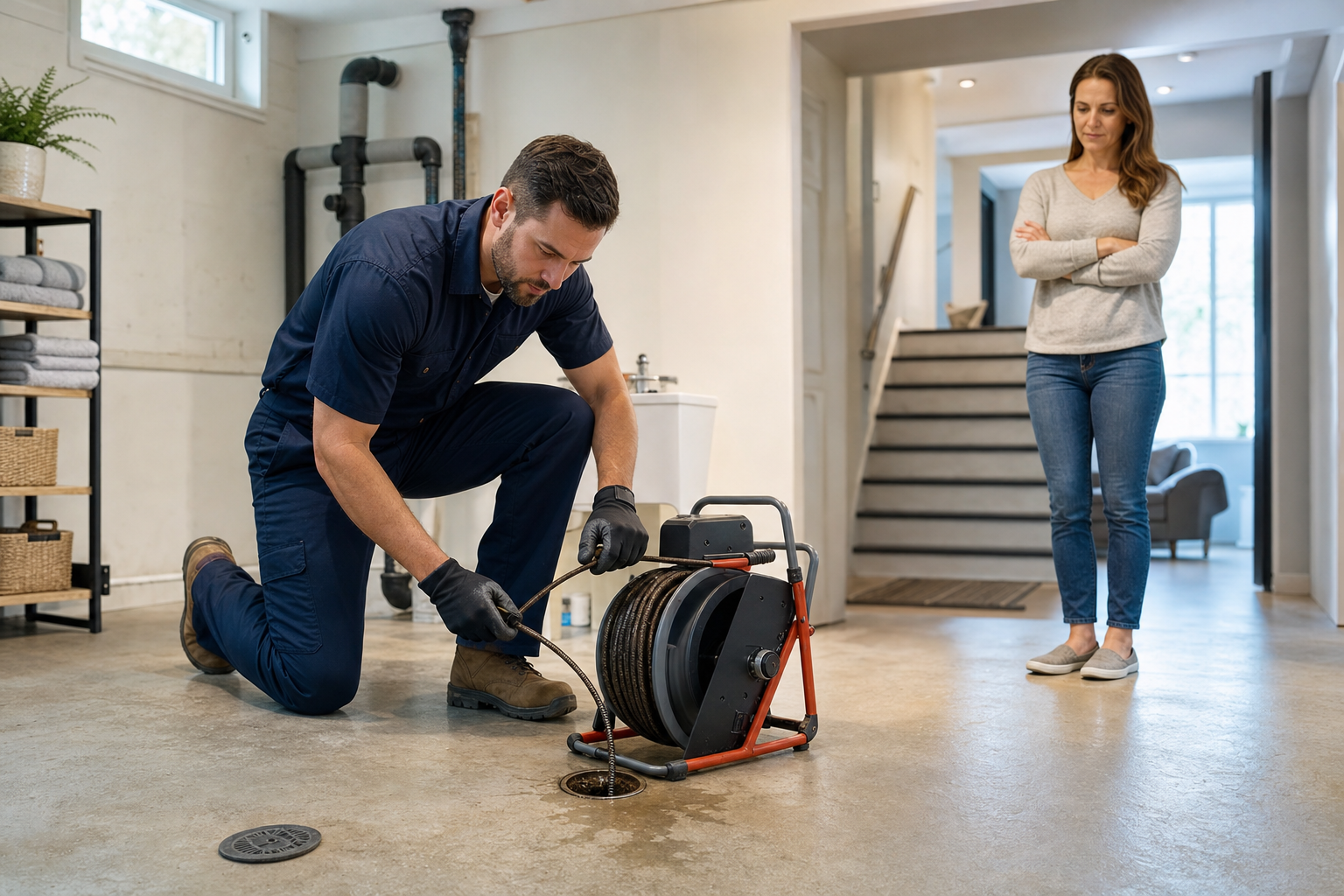
How Fast Can a Drain Specialist Get to Ocean County for an Overflow?
For an active drain or sewer overflow in Ocean County, a local drain specialist can typically arrive within 60 minutes during normal service hours. During periods of high demand — heavy rainstorms, weekends, or evening calls — that window may stretch to two to three hours depending on where you are in the county and how many calls are ahead of yours.
At Just Drains, our goal is service in 60 minutes for drain and sewer cleaning emergencies across Ocean County. We know that when water is backing up onto your floor or sewage smell is filling your home, every minute matters. Below, we’ll walk you through what affects arrival time, what you should do right now while you wait, and exactly what happens once a drain specialist gets to your door.
If you’re dealing with an active overflow right now, you don’t need to read the whole article first. Call Just Drains now at (732) 279-2427 and let us know what’s happening. We can talk you through immediate steps while we dispatch help.
What Affects How Quickly a Drain Specialist Reaches You in Ocean County
Ocean County covers a large area — from Lakewood in the north down to Long Beach Island at the shore. Not every call has the same arrival window, and understanding the variables helps you set realistic expectations.
Your Location Within the County
If you’re in a more centrally located area of Ocean County, a drain specialist who is already out on calls nearby may reach you faster. If you’re farther out toward the barrier islands or more rural parts of the county, travel time adds to the window. This is one reason why calling a company that already works regularly in Ocean County — rather than one dispatching from far outside the area — makes a real difference.
Time of Day and Day of the Week
During standard business hours on a weekday, response times tend to be the shortest. Evenings and weekends can extend the window because fewer technicians are on the road and demand often spikes. If you’re calling on a Saturday morning after a storm, you may not be the only homeowner with a backed-up drain.
Weather and Seasonal Demand
Heavy rain and nor’easters increase call volume across Ocean County significantly. Storm runoff can overwhelm older drain lines, and sudden temperature changes can shift ground conditions around sewer pipes. During these periods, even a well-staffed drain cleaning company will have a longer queue. Calling early — at the first sign of a slow drain or gurgling — can help you get ahead of the rush.
The Type of Overflow You Describe
When you call, how you describe the problem matters. A single slow sink is handled differently from a main sewer line backing up through multiple fixtures. If you tell the dispatcher that sewage is actively coming up through your floor drain or that multiple toilets and sinks are backing up at once, that call is typically treated with higher urgency than a report of a slow-draining bathtub.
Being specific helps. Rather than a vague description, try to explain exactly what you’re seeing — for example, telling the dispatcher that sewage and water are rising from your basement floor drain and that none of your toilets will flush. That gives the dispatcher a clear picture and helps prioritize your call accurately.
What to Do Right Now During an Active Overflow
If you’re reading this while water is already on your floor, here’s what to do before your drain specialist arrives. These steps can help limit the mess and keep your household safe.
- Stop using water in the house. Don’t flush toilets, run sinks, or start the washing machine or dishwasher. Every bit of water you send down the drain adds to the backup.
- Shut off the water at the fixture if possible. Most sinks and toilets have a small shut-off valve on the wall or floor behind them. Turn it clockwise to close it. If you can’t find one or if the backup is coming from a floor drain, skip to the next step.
- If the backup is widespread, shut off the main water supply. Your main shut-off valve is usually near the water meter, often in the basement or on an exterior wall. Turning this off stops all water flow into your home’s plumbing, which stops feeding the backup.
- Keep people and pets away from the overflow area. Backed-up sewer water can contain bacteria and waste. Avoid walking through it barefoot or letting children or pets near it.
- Move valuables and absorbent items away from the water. Rugs, shoes, boxes, and anything sitting on the floor near the backup should be moved to a dry area if you can do so safely.
- Use towels or old rags to contain the spread. You won’t stop the flow this way, but you can slow it from reaching other rooms while you wait for help.
- Do not pour chemical drain cleaners into a backed-up drain. During an active overflow, chemical products won’t reach the blockage, and they can make the standing water more hazardous for you and for the technician who arrives to clear the line.
- Call a licensed drain and sewer cleaning specialist. Describe the situation clearly and ask how quickly they can get to your location in Ocean County.
If you need help right now, call Just Drains at (732) 279-2427. Let us know what you’re seeing and where you’re located in Ocean County so we can get someone headed your way.
Drain Overflow vs. Main Sewer Line Backup: How to Tell the Difference
Understanding which type of problem you’re dealing with helps you describe it accurately when you call — and helps the drain specialist arrive prepared with the right approach.
| Sign | Single Drain Clog | Main Sewer Line Backup |
|---|---|---|
| Which fixtures are affected? | Only one sink, toilet, tub, or shower | Multiple fixtures across the house |
| Where is water backing up? | At the fixture itself (e.g., water rising in the sink bowl) | At floor drains, the lowest fixtures, or toilets bubbling when you run a sink |
| Is there sewage smell? | Usually mild or absent | Often strong, especially near basement drains |
| Does flushing one toilet affect another fixture? | No | Yes — water may come up in a tub or another drain |
| Has a plunger helped at all? | Sometimes temporarily | Rarely — the blockage is too far down the line |
A single drain clog — like a clogged kitchen sink or a toilet that won’t flush — is usually located in the drain line right below that fixture. A drain cleaning specialist can often clear it quickly.
A main sewer line backup means the blockage is in the main pipe that connects your home to the municipal sewer system. When this line is blocked, wastewater from every fixture in your house has nowhere to go, so it backs up through the lowest opening it can find — usually a basement floor drain or a first-floor toilet.
Both situations fall under drain cleaning and sewer line clearing, which is exactly what Just Drains handles. Knowing which one you’re dealing with just helps the conversation go faster when you call.
What Happens When the Drain Specialist Arrives
If you’ve never called a drain cleaning company during an overflow, it’s natural to wonder what the actual visit looks like. Here’s a realistic walkthrough so you know what to expect.
Step 1: Assessment
The technician will ask you a few questions and take a look at the affected area. They’ll want to know which fixtures are backed up, when the problem started, and whether you’ve noticed any gurgling or slow drains in the days before the overflow. This helps them determine whether the clog is in a branch drain line or the main sewer line.
Step 2: Locating and Clearing the Blockage
For a clogged sink, toilet, tub, or shower drain, the technician will typically use a professional drain snake or auger to reach the blockage and break it up or pull it out. For a main sewer line backup, they’ll access the main cleanout — usually a capped pipe in the basement, crawl space, or outside your home — and clear the line from there.
The technician needs clear access to the affected fixture and, in the case of a main line issue, to the cleanout. If you can move any items away from those areas before they arrive, it saves time.
Step 3: Confirming Flow Is Restored
Once the blockage is cleared, the technician will run water and flush fixtures to confirm that everything is draining normally. They’ll check that the backup has stopped and that flow through the line is steady.
How Long Does the Actual Work Take?
For a straightforward clogged drain — a single fixture with a blockage close to the surface — the work often takes 30 to 45 minutes from start to finish. A deeper main sewer line blockage can take one to two hours depending on the severity, the location of the cleanout, and what caused the clog.
This is in addition to the travel and arrival time. So if a drain specialist arrives within 60 minutes and the work takes another 30 to 60 minutes, you could have your drains flowing again in under two hours total from when you picked up the phone.
Why Calling Sooner Matters During an Overflow
This isn’t about scare tactics — it’s practical reality. When a drain is actively overflowing, water is continuously accumulating in your home. The longer it sits, the further it spreads. Floors, baseboards, and stored belongings absorb water quickly, and sewage-contaminated water is harder to clean up the longer it remains.
Calling at the first sign of trouble — a toilet that won’t flush after two attempts, a sink that’s filling instead of draining, gurgling sounds from other fixtures — gives you a shorter wait and a smaller mess to deal with afterward. You don’t have to wait until water is on the floor to call a drain specialist.
When a Drain Problem Is a True Emergency
Not every slow drain is an emergency, but some situations do call for urgent action. Here’s a simple way to think about it:
- Call immediately if sewage or water is actively coming up from a floor drain, if multiple fixtures are backing up at the same time, or if there is standing water spreading across your floor.
- Call soon if a single drain is completely blocked, a toilet won’t flush after plunging, or you notice a strong sewage smell from any drain — even if water isn’t on the floor yet.
- Schedule a visit if a drain is running slowly but still clearing, or if one fixture takes longer than usual to empty. This may be an early sign of a growing blockage, and getting it cleared now can prevent an emergency later.
Just Drains handles all three situations. Whether it’s an active overflow or a slow drain that’s been getting worse for a few days, drain cleaning and sewer line clearing is what we do. Call (732) 279-2427 and tell us what you’re dealing with.
Frequently Asked Questions
What is the typical response time for an overflow in Ocean County?
During normal service hours, a local drain specialist can often arrive within 60 minutes in Ocean County. During high-demand periods — storms, weekends, or evenings — the window may extend to two to three hours. Calling sooner and describing the situation clearly helps the dispatch team prioritize your call.
Can a drain specialist get to an Ocean County emergency in under two hours?
In most cases during regular service hours, yes. Just Drains targets service in 60 minutes for drain and sewer cleaning calls in Ocean County. Your exact wait depends on your location within the county, the time of day, and current demand. Calling a local drain-focused company rather than a general plumber often means faster arrival for drain-specific emergencies.
How long does it take to actually fix an overflow once the specialist arrives?
A straightforward single-fixture clog often takes 30 to 45 minutes to clear. A main sewer line blockage can take one to two hours depending on the severity and location of the blockage. The technician will confirm that all drains are flowing before wrapping up.
Does emergency drain service cost more?
Pricing varies depending on the type of blockage and the work required. Just Drains offers drain cleaning starting at $63, which gives homeowners a clear, affordable entry point. When you call, ask about pricing for your specific situation so there are no surprises.
What should I NOT do during a drain overflow?
Do not pour chemical drain cleaners into a backed-up drain — they won’t reach the clog and can make the water more hazardous. Do not continue flushing toilets or running water, as this feeds the backup. Avoid walking through standing sewage water, and keep children and pets away from the affected area.
What causes drain overflows in Ocean County homes?
Common causes include tree root intrusion into sewer lines, buildup of grease and debris in kitchen drain lines, flushing items that don’t break down (wipes, hygiene products), and aging pipes that have narrowed over time. Heavy rainfall can also overwhelm older sewer connections. A licensed drain and sewer cleaning specialist can clear the blockage and help you understand what caused it.
How do I know if the problem is a single clogged drain or a main sewer line issue?
If only one fixture is backed up, it’s likely a localized clog. If multiple fixtures are affected — especially if flushing a toilet causes water to rise in a tub or floor drain — the blockage is probably in your main sewer line. Both situations are handled through drain cleaning and sewer line clearing.
The Bottom Line
An active drain overflow in Ocean County doesn’t have to mean hours of waiting and worsening damage. A local drain specialist who knows the area and focuses specifically on drain cleaning and sewer line clearing can often reach you within 60 minutes and have your drains flowing again shortly after.
Just Drains is a licensed drain and sewer cleaning company serving Ocean County and the surrounding Central New Jersey and Jersey Shore areas. We offer drain cleaning starting at $63 and target service in 60 minutes — because we know that when your drains back up, fast and affordable help is what matters most.
Call Just Drains now at (732) 279-2427. Tell us what’s happening, where you are in Ocean County, and we’ll get a drain specialist headed your way.