How Much Does Emergency Drain Cleaning Cost in Monmouth County?
For most residential drain problems in Monmouth County, emergency drain cleaning generally falls somewhere between $150 and $500. When the issue involves the main sewer line, expect the range to shift higher — often $250 to $600 or more. Calls made outside of regular business hours, on weekends, or on holidays typically carry an added surcharge, which companies apply either as a fixed dispatch fee or as a percentage added to the base job rate.
If you are a homeowner dealing with a backed-up drain or sewer line right now, those figures give you a reasonable industry baseline to work from. The sections below break down what drives pricing, how to judge whether your situation qualifies as a true emergency, and what questions to ask before any work gets approved.
At Just Drains, standard drain cleaning begins at $63, and we work to reach homes throughout Monmouth County and surrounding areas within 60 minutes. If you already know you need help and want to speak with someone now, call us at (732) 279-2427. If you would rather understand the full cost picture first, keep reading.
Emergency Drain Cleaning Cost Breakdown by Situation
The price to clear a drain varies based on the type of fixture involved, how severe the blockage is, and whether the problem is isolated to one drain or tied to the main sewer line. The table below reflects general industry pricing ranges for central New Jersey — these are not Just Drains’ prices and are not guaranteed quotes from any company. They are provided to help you understand the general pricing landscape before you call around. Just Drains’ drain cleaning begins at $63, and we will walk you through the scope and cost of your specific job before any work begins.
| Situation | Typical Business-Hours Cost (Industry Range) | Typical Emergency or After-Hours Cost (Industry Range) |
|---|---|---|
| Clogged sink drain (kitchen or bathroom) | $100 – $250 | $175 – $400 |
| Clogged toilet | $100 – $275 | $175 – $425 |
| Clogged tub or shower drain | $100 – $250 | $175 – $400 |
| Slow drain (single fixture) | $100 – $225 | $150 – $375 |
| Main sewer line clearing | $200 – $450 | $300 – $600+ |
Important: The figures above represent general industry ranges drawn from common pricing in central New Jersey. They are not guaranteed quotes from Just Drains or any other specific company. Your actual cost will depend on a number of variables covered in the sections below. Any reputable drain cleaning company should give you a clear explanation of the work involved and what you will be charged before anything begins.
Why Emergency Drain Cleaning Costs More Than a Standard Call
There are three main reasons the word “emergency” tends to increase what you pay. Knowing what they are helps you evaluate whether a quote makes sense or whether something seems unreasonable.
After-Hours and Weekend Surcharges
Drain cleaning companies commonly charge more for service calls made in the evening, overnight, on weekends, or during holidays. That added cost generally takes one of two forms:
- A fixed dispatch or trip fee, commonly ranging from $75 to $200, charged simply for sending a technician to your home outside of standard hours
- A percentage-based surcharge, frequently 25% to 50% added on top of the standard job rate
Some companies credit the dispatch fee against your total bill, so it is not a separate charge on top of everything else. Others do not. This is one of the first things to clarify before you confirm a visit.
Where the Blockage Is Located
A backed-up kitchen sink is a fundamentally different job from a blocked main sewer line. Here is the practical distinction:
- Single-fixture blockages — one sink, one toilet, one shower — are typically caused by localized accumulation such as hair, soap residue, grease, or a small object. These jobs tend to be quicker and less costly to handle.
- Main sewer line blockages affect the primary pipe connecting your entire home to the municipal sewer system. When this pipe is obstructed, multiple fixtures can back up simultaneously, and sewage may surface through floor drains or the lowest points in your home. These jobs require different equipment, take more time, and cost more.
If drains throughout your home are all slowing down or backing up at the same time — or if sewage is coming up through a floor drain — that pattern typically indicates a main line issue rather than a single clogged fixture.
Severity and Access
Some blockages clear quickly with standard equipment. Others require more effort. Factors that can push costs toward the upper end of the range include:
- A clog positioned deep in the line where it is harder to reach
- No accessible cleanout point on the property, making the work more time-consuming
- Tree roots that have intruded into an older sewer line
- Heavy buildup inside the pipe from extended periods of use
Flat-Rate Pricing vs. Hourly Pricing: What the Difference Means for Your Bill
Drain cleaning companies do not all structure their pricing the same way. Understanding the difference can help you avoid an unexpected bill.
Flat-rate pricing means the company gives you a set price for the job before any work starts. That number holds regardless of how long the work actually takes — whether it wraps up in 30 minutes or runs two hours. You know exactly what you are agreeing to upfront.
Hourly pricing means the company bills based on time, usually combined with a trip fee. If the clog turns out to be more complicated than it appeared, the total grows accordingly. This approach can be less expensive for straightforward jobs but introduces uncertainty whenever the work gets complicated.
When you are calling during an emergency, ask directly: “Is this a flat rate for the job, or is it charged by the hour?” The answer lets you compare quotes on equal footing and reduces the chance of an unexpected total when the job is finished.
Is Your Clogged Drain Actually an Emergency?
Not every drain problem genuinely requires an immediate after-hours call. Some situations truly cannot wait. Others can hold until normal business hours, which typically means avoiding the emergency surcharge entirely. Here is a practical framework for thinking it through:
Situations That Generally Qualify as True Emergencies
- Sewage is backing up into your home through a floor drain, toilet, or bathtub
- Several drains throughout the house are backing up at the same time
- Standing water or waste is actively spreading and causing damage you cannot stop
- A strong sewage odor is present inside the home with no clear simple explanation
- The only toilet or drain in the house is completely blocked with no alternative available
Situations That May Be Able to Hold Until Business Hours
- One sink is draining slowly but is still functional
- A secondary toilet is clogged while another is available for use
- A shower drain is sluggish but not overflowing into the room
- You can stop using the affected fixture temporarily without significant disruption
If your situation fits the “can wait” category and you schedule during normal hours, you will likely avoid the emergency surcharge and land closer to the lower end of market pricing. That said, if sewage is entering your home, multiple fixtures are backing up, or things are getting worse, waiting is not worth the risk. The cost of addressing water or sewage damage to a home typically far exceeds what an emergency service call runs.
What to Have Ready Before You Call
When a backed-up drain is stressing you out, having a few details organized before you pick up the phone makes the conversation smoother and helps you get a clearer answer about what to expect:
- Identify which drains are affected. Is it one fixture, or are multiple drains in the house backing up? This tells the company a great deal about the likely scope of the problem.
- Note when it started. Did the problem come on suddenly, or has it been gradually worsening over several days or weeks?
- Locate your cleanout access point if you can. This is typically a capped pipe near the foundation outside your home or in the basement. If you know where it is, mention it. If sewage is actively overflowing from it, share that detail right away.
- Have your address ready. It sounds obvious, but in a stressful moment having it top of mind means the company can give you a more accurate arrival estimate without delay.
Questions to Ask Before You Approve Emergency Drain Work
A reliable drain cleaning company should answer these questions directly before any work begins. If a company is unclear about pricing or pressures you to commit without explaining the scope of the job, treat that as a warning sign.
- Is there a dispatch fee or trip fee, and does it apply toward the total cost of the job?
- Will I receive a clear price explanation before work starts?
- Is this priced as a flat rate, or does it run by the hour?
- What method will you use to clear the blockage?
- What does the quoted price include? Confirm whether cleanup, waste removal, and any follow-up steps are part of the cost or billed separately.
- How long do you expect the job to take?
Asking these questions adds very little time to the process and protects you from the kind of billing surprise that makes an already stressful situation significantly worse.
What Happens During an Emergency Drain Cleaning Visit
If you have never had a drain cleaning company out for an emergency, uncertainty about the process can add to the stress. Here is a general walkthrough of what to expect:
The call: You describe what is happening. The company provides an estimated arrival window and, ideally, a general sense of what the job is likely to involve and cost.
Arrival and assessment: The technician inspects the affected fixtures, asks a few clarifying questions, and identifies where the blockage is likely located. Before picking up any equipment, they should walk you through what they plan to do and what it will cost.
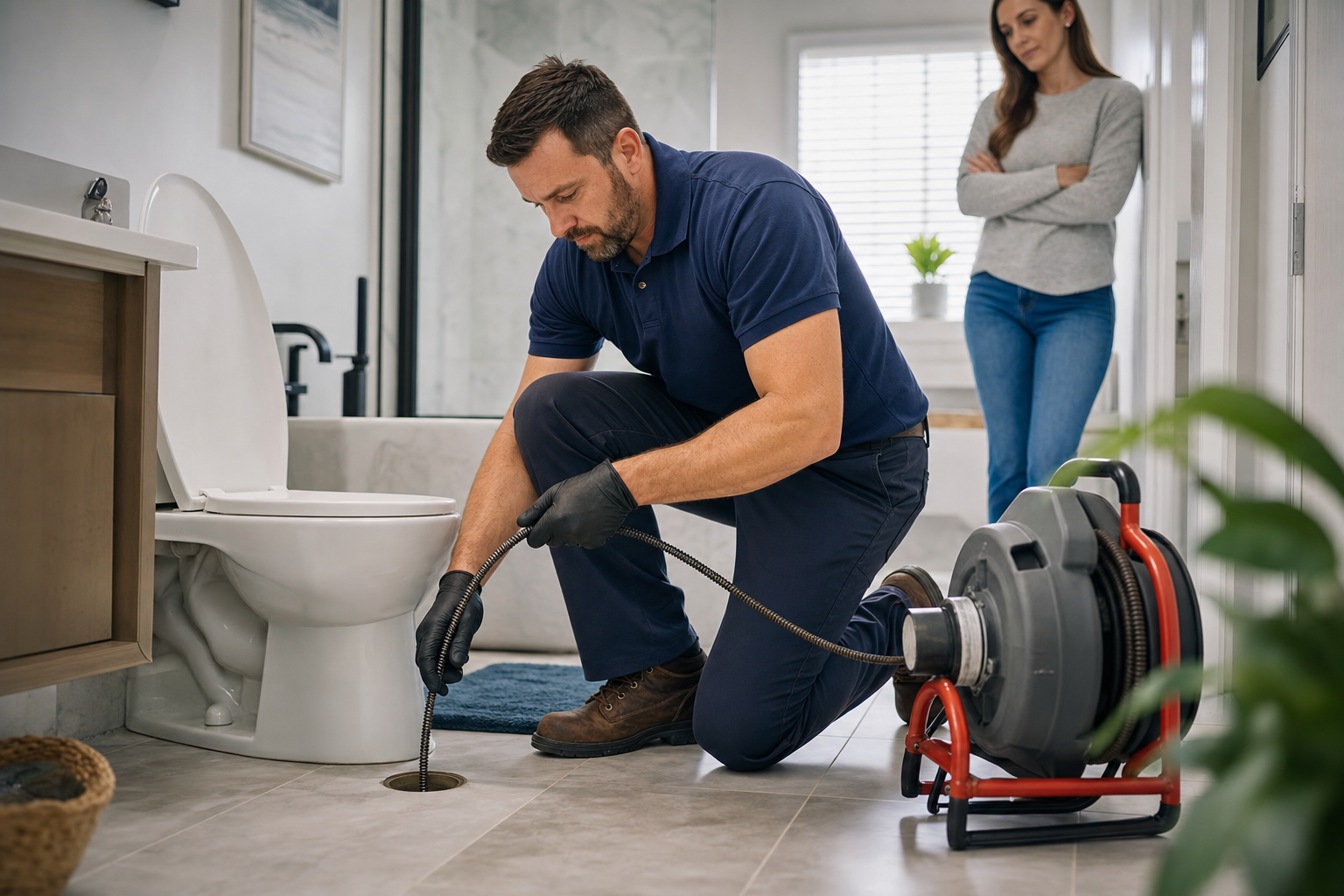
The work: For the majority of residential drain clogs, the technician feeds a mechanical drain-cleaning cable — commonly called a snake — into the line to break apart or retrieve the blockage. A main sewer line clearing uses a heavier-duty version of the same tool, typically introduced through a cleanout access point. Most single-drain jobs wrap up within 30 minutes to an hour once work is underway. Main sewer line clearing can run longer depending on how severe the blockage is and how easily the line can be accessed.
After the work: The technician runs water through the drain to confirm it is flowing properly. They should explain what they found, what was done to resolve it, and whether there is anything you should monitor going forward.
How Just Drains Handles Emergency Drain Calls in Monmouth County
Just Drains is a licensed drain and sewer cleaning company serving Monmouth County and surrounding areas, including Mercer, Union, Morris, and Ocean Counties. Drain cleaning and sewer line clearing is our specific focus — not a side service offered alongside other trades.
Here is what working with us generally looks like:
- Standard drain cleaning begins at $63. That is our starting price for standard drain cleaning work. Emergency situations and main sewer line jobs may cost more based on the specifics involved. We explain scope and cost before any work begins.
- We work to reach your home within 60 minutes. When you call, we dispatch a technician promptly so the problem does not have a chance to worsen while you wait.
- We explain the job before we begin. You will know what we are going to do and what it will cost before we start.
If you are dealing with a clogged drain, a backed-up sewer line, or a toilet that a plunger has not been able to clear, and you are located in Monmouth County or the surrounding area, reach out to us. We will assess the situation and work to get your drains cleared as quickly as possible.
Reach Just Drains now: (732) 279-2427
Frequently Asked Questions
How much does it cost to snake a drain in New Jersey?
Based on general industry pricing in central New Jersey, snaking a single clogged sink, toilet, or tub drain during normal business hours typically falls between $100 and $275. Emergency and after-hours service calls tend to run higher because of dispatch fees or surcharges. Clearing a main sewer line costs more than clearing an individual fixture drain. These figures represent general market ranges, not quotes from any specific company — always ask for a clear price explanation before work begins.
Is emergency drain cleaning more expensive than regular service?
In most cases, yes. Drain cleaning performed outside of standard business hours typically costs more than the same job scheduled during the day. Some companies add a flat dispatch fee; others apply a percentage-based surcharge. The exact difference varies by company and by when the call comes in. Always ask about after-hours fees before confirming a visit.
How long does emergency drain cleaning take?
A typical single-drain blockage can often be cleared within 30 minutes to an hour once the technician is on-site and working. Main sewer line blockages may take longer, particularly when the clog is deep in the pipe or access is restricted. The total time from your initial call to a cleared drain depends on how quickly a technician can be dispatched and how severe the blockage turns out to be.
How do I know if my main sewer line is clogged?
The clearest indicator of a main sewer line blockage is several drains in your home backing up at the same time. Other signs include water surfacing through floor drains, a gurgling noise from toilets when water is running elsewhere in the house, or a persistent sewage smell inside the home. When only one fixture is affected, the problem is more likely localized to that specific drain rather than the main line.
Do drain cleaning companies charge a trip fee?
Many do, particularly for after-hours or emergency service calls. Trip fees across the industry commonly range from $75 to $200. Depending on the company, that fee may be credited toward the total job cost or billed as a separate line item. Always clarify this before confirming a service call so you understand exactly what you are agreeing to.
Can I try to fix a clogged drain myself before calling a professional?
For a minor single-drain clog, using a standard plunger is a reasonable starting point. If several attempts with a plunger do not resolve it, stop and contact a licensed drain cleaning professional. Avoid chemical drain cleaners — they can cause pipe damage and frequently do not address the actual source of the blockage. If you are facing multiple backed-up drains, a sewage odor, or water that keeps rising, skip DIY attempts and call a professional immediately.
What is the difference between a clogged drain and a backed-up sewer line?
A clogged drain is confined to a single fixture — one sink that drains slowly or one toilet that will not flush properly. A backed-up sewer line involves the main pipe that connects your entire home to the municipal sewer system. When that pipe is obstructed, multiple fixtures can back up simultaneously and sewage may enter your home through the lowest-positioned drains. Clearing a sewer line is a more involved job and typically costs more than clearing a single fixture drain.
What to Do Next
If you are reading this because you have a drain or sewer emergency right now, here is what matters most: industry pricing for emergency drain cleaning in Monmouth County generally runs between $150 and $500 for standard residential clogs, with main sewer line problems often costing more. Ask about dispatch fees upfront, make sure you have a clear price before any work starts, and work with a company that explains what they are doing before they do it.
Just Drains is a licensed drain and sewer cleaning company serving Monmouth County and the surrounding central New Jersey area. Drain cleaning starts at $63, and we work to reach your home within 60 minutes of your call.
Reach Just Drains now: (732) 279-2427