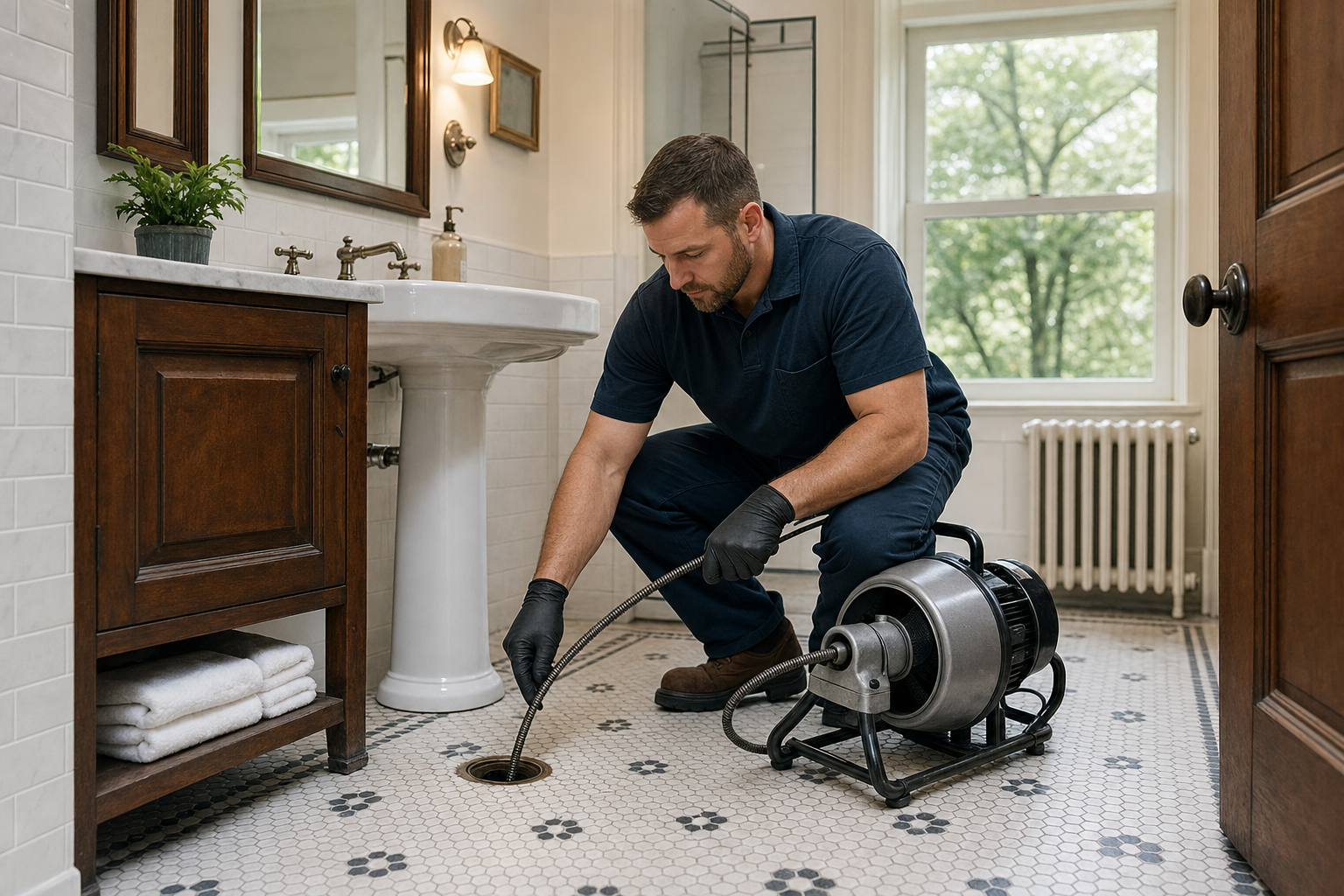
Drain Cleaning for Historic Homes in Princeton, NJ: What Every Homeowner Should Know
If you own an older home in Princeton, your drain system is not the same as what you would find in a house built in the last 20 or 30 years. The pipes are different, the way they age is different, and the kinds of clogs they develop are different. That means drain cleaning in a historic home requires a careful, experienced approach — not just someone who shows up with a machine and hopes for the best.
This guide explains what makes your older home’s drains unique, what problems to watch for, why store-bought solutions can actually make things worse, and how to find drain cleaning help that respects your home’s plumbing without creating new problems. If you already have a clog or backup that needs attention now, Just Drains provides licensed drain cleaning and sewer line clearing throughout Mercer County, including Princeton — with service in 60 minutes and drain cleaning starting at $63. Call Now: (732) 279-2427.
What Makes Drain Systems in Older Princeton Homes Different
Princeton’s housing stock includes homes dating back well over a century. Many of the properties near the university, along the borough’s tree-lined streets, and throughout the surrounding area were built during periods when plumbing materials and installation methods were very different from what is standard today. Understanding what is actually in your walls and under your floors helps you make better decisions about drain care.
Pipe Materials Common in Older Homes
Cast iron was the most common drain pipe material in homes built from roughly the late 1800s through the 1970s. Cast iron is durable, but as decades pass, its interior walls corrode and become increasingly rough. That roughness catches grease, soap residue, hair, and debris that would slide through a smooth modern pipe. Over time, the pipe’s effective diameter shrinks, and clogs become more frequent even when you are careful about what goes down the drain.
Clay (terra cotta) pipes were widely used for sewer lines running from the house to the municipal connection. Clay pipes are installed in short sections joined together, and those joints can shift, separate, or crack over the decades. When joints open up even slightly, tree roots find their way in — and once roots are inside a clay sewer line, they grow quickly and create blockages that no plunger can fix.
Galvanized steel was used for water supply lines and sometimes for drain lines in homes built during the early-to-mid 1900s. Galvanized pipes corrode internally, building up mineral deposits that narrow the pipe and slow drainage over time.
If your home was built before 1960, there is a strong chance your drain system includes at least one of these materials. Homes built between the 1940s and 1970s may also have Orangeburg pipe — a fiber-based pipe made with tar that was popular because it was cheap and easy to install. Orangeburg deteriorates significantly with age and can collapse or deform, creating persistent sewer-line problems.
How Decades of Use Change Your Drains
Even when older pipes are structurally intact, the interior surface changes over the years. Cast iron develops scale and corrosion buildup. Clay joints collect sediment. Galvanized steel narrows from mineral accumulation. The result is a drain system that works harder to move the same amount of water, and that is more prone to clogs from everyday use — cooking grease, soap, hair, toilet paper, and food particles that would pass through newer pipes without issue.
This is why many historic homeowners notice that their kitchen sink drains slowly no matter how careful they are, or that the same bathroom drain clogs every few months. The problem is not always what is going down the drain. It is often what the pipe has become after decades of service.
Princeton’s Trees and Root Intrusion
Princeton and the surrounding Mercer County area are known for mature trees — oaks, maples, and other large species with aggressive root systems. Those roots seek moisture, and a clay sewer line with even a hairline crack at a joint is an invitation.
Once roots enter a sewer line, they grow into a mass that traps waste, paper, and grease. The clog builds gradually. You might notice toilets flushing slowly, multiple drains backing up at once, or gurgling sounds from a drain you are not using. These are signs that the blockage is not at a single fixture but deeper in the sewer line — and that roots may be involved.
Root intrusion is one of the most common reasons historic homeowners in tree-heavy areas need professional sewer line clearing rather than simple drain cleaning at an individual fixture.
Common Drain Problems in Historic Princeton Homes
Not every clog in an older home is the same. Understanding what you are dealing with helps you decide whether to try a simple fix or call for professional help right away.
Recurring Slow Drains
If the same sink or tub drains slowly and the problem keeps returning after you clear it, the issue is likely inside the pipe itself — buildup on corroded cast iron walls, mineral deposits in galvanized steel, or a partial root blockage in the line downstream. A plunger or a basic drain snake may clear the immediate clog, but the underlying buildup remains and the clog returns.
Kitchen Sink That Will Not Drain
In older homes, kitchen drain lines often have more turns and narrower effective diameters than in newer construction. Grease, soap, and food particles accumulate faster in these conditions. When a kitchen sink stops draining entirely, it can mean the line is packed with decades of grease buildup combined with corrosion scale — a combination that store-bought drain products rarely reach or dissolve effectively.
Clogged Toilets That a Plunger Cannot Fix
A toilet that clogs once and clears with a plunger is usually a minor issue. A toilet that clogs repeatedly, or that backs up sewage when you flush, may indicate a problem deeper in the drain line or even in the main sewer line. In older homes with cast iron or clay drain lines, this pattern often means the pipe has narrowed enough that normal waste flow is restricted.
Multiple Fixtures Backing Up at the Same Time
This is one of the clearest signs of a mainline sewer problem rather than a single-fixture clog. When flushing a toilet sends water rising in the bathtub, or operating the washing machine causes the basement floor drain to overflow, the obstruction lies in the shared sewer line responsible for carrying all household waste to the municipal system. In a historic home, this often points to root intrusion, a collapsed pipe section, or a severe buildup in the main line.
Sewer Smell in the Basement or Lower Level
Older homes sometimes develop a persistent sewer odor in the basement, especially near floor drains or laundry areas. This can mean a drain trap has dried out, but in many cases it signals a partial sewer-line blockage that is allowing sewer gas to push back into the home. The smell is unpleasant and the situation can worsen quickly — a partial blockage today can become a full sewage backup tomorrow.
Why Chemical Drain Cleaners Are Risky for Older Pipes
Many homeowners reach for a bottle of chemical drain cleaner at the first sign of a slow drain. In a newer home with PVC pipes, that product may clear a minor clog without causing immediate damage. In a historic home with cast iron, clay, or galvanized pipes, the situation is different.
Chemical drain cleaners work by generating heat and dissolving organic material. In cast iron pipes that already have internal corrosion, that heat and chemical reaction can accelerate deterioration of the pipe wall. In clay pipes with compromised joints, the chemicals may not reach the actual blockage — they pool at the obstruction and attack the pipe material instead of clearing the clog.
Repeated use of chemical drain cleaners on older pipes can weaken the system over time, creating a risk of leaks or further deterioration. For a slow drain or recurring clog in a home with older plumbing, professional mechanical drain cleaning is generally a safer and more effective approach.
How to Tell if Your Problem Is a Single Drain Clog or a Sewer Line Issue
This distinction matters because it changes the urgency and the type of service you need. Here is a simple way to assess what you are dealing with:
| Sign | Likely a Single-Fixture Clog | May Be a Sewer Line Issue |
|---|---|---|
| Only one sink, tub, or toilet is affected | Yes | Unlikely |
| Multiple fixtures are slow or backing up | Unlikely | Yes |
| Flushing one fixture causes backup in another | No | Yes — this is a strong indicator |
| Sewer smell in basement or near floor drains | Possible (dry trap) | Likely if persistent |
| Plunger clears the problem and it stays clear | Yes | No — if the problem returns, the issue is deeper |
| Gurgling sounds from drains you are not using | Unlikely | Yes |
| Water backing up through the lowest drain in the house | No | Yes — call for help promptly |
If your situation matches the right-hand column, the problem is likely in the main sewer line rather than at a single fixture. This is especially common in historic homes where cast iron or clay sewer lines have been in service for decades. Professional sewer line clearing can address the blockage in the shared line and restore normal drainage throughout the house.
What to Look for in a Drain Cleaning Company for an Older Home
Not every drain cleaning company approaches older plumbing the same way. When your home has pipes that are 50, 80, or 100+ years old, the company you call should understand the difference. Here is what matters most:
- Licensed and focused on drain and sewer cleaning. A company that specializes in drain cleaning and sewer line clearing — rather than offering it as one of 20 general plumbing services — is more likely to have direct, hands-on experience with the kinds of clogs older homes produce.
- Willingness to assess before acting. A responsible drain cleaning professional will ask about your home’s age, listen to your description of the problem, and adjust their approach based on what they find — not apply the same aggressive method to every call.
- Experience with older pipe materials. The technician should understand how cast iron, clay, and galvanized pipes respond to cleaning, and should be comfortable working carefully within those systems.
- Clear pricing and no pressure to buy services you did not call for. You called about a clogged drain or a backed-up sewer line. The company should address that problem directly and honestly.
- Fast, local response. When you have a sewage backup or a drain that has stopped working entirely, waiting hours or days is not realistic. A local company that can respond quickly makes a meaningful difference.
When to Stop Trying DIY and Call for Professional Help
There is nothing wrong with using a plunger on a clogged toilet or pulling hair from a slow shower drain. Those are reasonable first steps. But in a historic home, there are clear signals that the problem is beyond what DIY can solve:
- The plunger is not working. If a toilet or sink will not clear with a plunger, forcing it further can stress old pipe joints and connections.
- The clog keeps coming back. A recurring clog in the same fixture — especially in a home with cast iron or clay pipes — usually means there is buildup or damage inside the pipe that only professional cleaning can address.
- More than one drain is affected. When multiple fixtures slow down or back up together, the problem is in the shared drain line or main sewer line.
- You smell sewage inside the house. Sewer odor means waste is not flowing out of the house properly. This can escalate from an odor to a full backup quickly.
- Water or sewage is coming up through a floor drain or tub. This is a sewer-line emergency. Avoid contact with the water and call a licensed drain and sewer cleaning professional promptly.
- You have already used chemical drain cleaner more than once without solving the problem. At this point, a professional approach is both safer for your pipes and more likely to work.
In any of these situations, a licensed drain and sewer cleaning company can clear the blockage using mechanical methods that are effective without putting unnecessary stress on older pipes.
What to Expect During a Drain Cleaning Service Call at an Older Home
If you have not called a drain cleaning company before — or if you have had a bad experience in the past — knowing what a good service call looks like can help you feel more confident about the process.
Before the technician arrives:
- Know which drains are affected and when the problem started.
- Note whether the problem is at one fixture or multiple fixtures.
- If you know the approximate age of your home, mention it when you call — it helps the technician prepare.
- Clear the area around the affected drain or the access point to the sewer cleanout if you know where it is.
During the service call:
- The technician should ask about your home’s history and the symptoms you are seeing.
- For a single-fixture clog (a kitchen sink, bathroom drain, toilet, or tub), the technician will typically use a professional drain snake or cable to clear the blockage mechanically.
- For a sewer-line issue, the technician will access the main line — often through an exterior cleanout or basement access point — and clear the blockage from the shared sewer line.
- A good technician will tell you what they found and whether the problem is likely to recur based on the condition of the line.
The goal is simple: clear the blockage, restore drainage, and give you honest information about what caused the problem.
Seasonal Factors for Princeton-Area Homes with Older Drains
Central New Jersey’s climate creates seasonal patterns that affect older drain systems in specific ways.
Fall: Falling leaves and organic debris can clog exterior drain openings and downspout connections. Inside the house, increased use of kitchen drains during the holiday season puts extra stress on lines that are already narrowed by buildup.
Winter: Freeze-thaw cycles can shift soil around older sewer lines, especially clay pipes with joints that are already slightly separated. A pipe that was flowing slowly in November may develop a full blockage during a January cold snap.
Spring: Tree roots grow most aggressively in spring as moisture levels rise. If roots have already found their way into a cracked clay sewer joint, spring growth can turn a partial obstruction into a complete blockage.
Summer: Heavy rain events, common in the Mercer County and Central New Jersey area, can overwhelm older drain connections and reveal weaknesses in sewer lines that handle fine during dry weather.
If your older home has a pattern of drain problems during a particular season, that pattern is usually telling you something about the condition of the pipes — and addressing it proactively is almost always less stressful and less expensive than waiting for a full backup.
How Just Drains Helps Historic Homeowners in Princeton and Mercer County
Just Drains is a licensed drain cleaning and sewer line clearing company serving Princeton and the surrounding Mercer County area, as well as homeowners across Central New Jersey, the Jersey Shore, and parts of North Jersey including Monmouth, Union, Morris, and Ocean Counties.
We focus specifically on drain cleaning and sewer cleaning — that is what we do, and that focus means our team works with clogged drains, slow drains, backed-up sewer lines, clogged sinks, clogged toilets, clogged tubs and showers, and mainline sewer blockages every day. When you call about a drain problem in an older home, we understand that your pipes may need a more careful, experienced approach than a newer home would require.
What we offer:
- Drain cleaning starting at $63
- Service in 60 minutes
- Licensed, focused drain and sewer cleaning — not a general contractor trying to upsell you on services you did not ask for
- A straightforward service call: we clear the clog, tell you what we found, and let you get back to your day
If your historic Princeton home has a drain that will not clear, a sewer line that is backing up, or a recurring clog that keeps coming back, we can help.
Call Now: (732) 279-2427
Frequently Asked Questions
Can drain cleaning damage old pipes?
Professional mechanical drain cleaning — the kind performed by an experienced, licensed company — is designed to clear blockages without damaging the pipe. The risk to older pipes comes primarily from chemical drain cleaners that corrode already-weakened metal, or from aggressive methods applied without regard for the pipe material and condition. When you call a company that understands older plumbing, the approach is adapted to what your pipes can handle.
How do I know if my historic home’s drains need professional cleaning?
The most reliable signs are recurring slow drains, clogs that return after you clear them, gurgling sounds from drains, sewer odor inside the house, or multiple fixtures draining poorly at the same time. If you have tried a plunger and basic cleaning without lasting results, the problem is likely deeper in the line and needs professional attention.
What causes recurring clogs in older homes?
In most cases, the pipe itself is the contributing factor. Cast iron pipes develop internal corrosion and scale that narrows the opening. Clay sewer lines develop root intrusion at the joints. Galvanized pipes accumulate mineral deposits. These conditions mean that even normal household use — cooking grease, soap, hair, toilet paper — creates clogs more easily than it would in newer pipes.
Is drain cleaning different for cast iron pipes compared to clay pipes?
Yes, in terms of where the problem typically occurs and what causes it. Cast iron clogs tend to develop inside the pipe due to corrosion buildup. Clay pipe clogs tend to occur at joints where roots enter or where sections have shifted. A drain cleaning professional who understands these materials will know where to focus and how to clear the blockage without stressing the pipe unnecessarily.
How often should drains be cleaned in a historic home?
There is no universal schedule, because it depends on the pipe material, the condition of your sewer line, and your household’s usage patterns. However, if you notice that drains are getting progressively slower over months, or if you have had a sewer-line backup in the past, periodic professional cleaning can prevent the kind of full blockage that creates an emergency. Many homeowners with older homes find that having their main sewer line cleared once a year or once every two years keeps problems from escalating.
What should I do before calling a drain cleaning company?
Note which drains are affected, when the problem started, and whether the issue is at one fixture or throughout the house. If you know the age of your home, share that when you call — it helps the team prepare. Stop using chemical drain products if you have been trying them, and if there is any sewage backup, avoid direct contact with the water. Then call a licensed professional.
Your Next Step
Owning a historic home in Princeton comes with real rewards — and real plumbing realities. The drain system in your older home has served the house for decades, but it needs care that matches its age and materials. When a clog or backup happens, the right response is not a bottle of chemicals or a harder push on the plunger. It is a call to a licensed drain and sewer cleaning company that understands what is in your walls and under your yard.
Just Drains provides fast, focused drain cleaning and sewer line clearing for homeowners across Princeton, Mercer County, and the surrounding Central New Jersey area. Drain cleaning starts at $63, and we can be there in 60 minutes.
Call Now: (732) 279-2427