Fast Drain Cleaning for Severe Clogs in Morris County, NJ
If your drain is completely blocked, water is backing up, and a plunger is doing nothing, you need a licensed drain cleaning professional who can get to your Morris County home fast. A severe clog will not resolve on its own, and the longer it sits, the worse the mess and disruption become.
Just Drains is a licensed drain and sewer cleaning company that serves Morris County and surrounding areas. We offer drain cleaning starting at $63 and work to reach your home quickly, with a service-in-60-minutes response. If you are dealing with a severe clog right now, the fastest next step is to Call Now: (732) 279-2427.
If you have a few minutes before you call, this article will help you figure out whether your clog is truly severe, what to do right now to limit the mess, what causes the worst drain blockages in Morris County homes, and what professional drain cleaning actually looks like when a technician arrives.
How to Tell If Your Drain Clog Is Severe
Not every slow drain is an emergency. But certain signs tell you the problem has moved past what a plunger, a store-bought product, or patience can fix. A severe clog typically means there is a significant blockage somewhere in your drain line or your main sewer line, and water has little to no path forward.
Signs of a Single-Drain Clog
A single-drain clog affects one fixture. Your kitchen sink might be completely backed up while the bathroom drains fine. Or your shower is holding standing water but the toilet flushes normally. This usually means the blockage is in the branch drain line connected to that one fixture.
Even a single-drain clog can be severe if:
- A plunger has no effect after several attempts
- Water is not draining at all, not just draining slowly
- There is a foul smell coming from the drain opening
- The clog keeps coming back within days of clearing it
Signs That Your Main Sewer Line May Be Involved
A main sewer line blockage is more serious than a single clogged fixture. The main sewer line is the large underground pipe responsible for moving all wastewater out of your home and into the municipal sewer system or septic tank. When this line is blocked, the problem shows up in multiple places at once.
Warning signs of a main line issue include:
- Multiple fixtures backing up at the same time — for example, flushing the toilet causes water to rise in the bathtub or shower
- Water backing up in the lowest drains first — basement floor drains, ground-floor showers, or laundry drains are often affected before upstairs fixtures
- Gurgling sounds coming from drains you are not currently using
- Sewage odor inside the home, especially near drains or the basement
- Wastewater visible around your outdoor cleanout, if your home has one at ground level
If you notice two or more of these signs, you likely have a mainline sewer clog, and it needs professional attention quickly. This is not a situation where waiting will help.
Quick Reference: Single Drain vs. Main Line Problem
| What You Notice | Likely a Single-Drain Clog | May Be a Main Line Blockage |
|---|---|---|
| Only one fixture is affected | Yes | Unlikely |
| Multiple fixtures are backed up | No | Yes |
| Flushing one fixture causes backup in another | No | Yes |
| Gurgling sounds from other drains | Uncommon | Common |
| Sewage smell throughout the home | Uncommon | Common |
| Lowest drains in the house are affected first | No | Yes |
Whether it is a single stubborn drain or a full mainline backup, a severe clog means it is time to call a licensed drain and sewer cleaning professional. Just Drains handles both situations for homeowners across Morris County. Call Now: (732) 279-2427.
What to Do Right Now Before Help Arrives
When a drain is severely clogged or sewage is backing up, there are a few practical steps you can take in the next few minutes to limit the mess and protect your home while you wait for a professional.
- Stop using water in the affected area. Do not run the faucet, flush the toilet, or use the dishwasher or washing machine if drains are backing up. Every bit of water you add has nowhere to go and will make the backup worse.
- Do not pour chemical drain cleaners down the drain. Store-bought chemical products are designed for minor, surface-level slowdowns. On a severe blockage, they typically sit in the standing water without reaching the clog. They can also damage older pipes and create a hazard for the technician who arrives to clear the line.
- Note which fixtures are affected. Before you call, take a quick mental inventory. Is it just the kitchen sink? Is the bathtub also holding water? Does the toilet gurgle when you run the bathroom faucet? This information helps the technician understand the scope of the problem before arriving.
- Locate your outdoor cleanout if you can. Many homes have a capped pipe at ground level outside, often near the foundation. If you know where it is, mention it when you call. If you do not know or cannot find it, that is completely fine.
- Keep people and pets away from any standing wastewater. If sewage has backed up onto a floor, avoid contact with the water. It can contain bacteria and should be cleaned up after the line is cleared.
These steps take about two minutes and can make a real difference in limiting damage. The next step is to call for professional help.
What Causes Severe Drain Clogs in Morris County Homes
Severe clogs do not usually happen overnight. They build up over time, and certain factors common in Morris County homes can make them more likely.
Tree Root Intrusion
Morris County has a lot of mature trees. Older, established neighborhoods with large trees along streets and in yards are especially prone to tree root intrusion into sewer lines. Roots seek out moisture, and even a small crack or joint in an underground pipe can allow roots to enter. Once inside, they catch debris and grow, gradually blocking the line until wastewater cannot pass.
Root-related blockages tend to cause slow drainage across multiple fixtures before progressing to a full backup. If your drains have been getting gradually slower over weeks or months and then suddenly stop, tree roots are a common cause.
Grease and Buildup in Kitchen Drain Lines
Cooking grease, oil, and food residue poured down the kitchen sink coat the inside of the drain pipe over time. The grease hardens as it cools, narrowing the pipe until water cannot flow through. This is one of the most common causes of severe kitchen sink clogs and can eventually affect the main drain line if the kitchen line connects before the cleanout.
Aging Pipe Materials
Many homes in Morris County were built in the mid-twentieth century or earlier. Homes from this era often have drain and sewer lines made of cast iron or clay pipe. Both materials are durable but degrade over decades. Over time, cast iron develops interior corrosion that leaves a rough, debris-catching surface along the pipe walls. Clay pipes are prone to joint cracking, which opens gaps where soil and roots can work their way in. Both conditions make severe clogs more likely than in newer PVC plumbing systems.
Accumulation of Hair, Soap, and Household Debris
Bathroom drains, especially in showers and tubs, collect hair, soap residue, and personal care products over time. In most cases, these cause slow drains that are easy to clear. But when buildup goes unaddressed for a long time, or when it combines with other obstructions further down the line, it can contribute to a fully blocked drain that a plunger cannot resolve.
Seasonal Factors
Freeze-thaw cycles in winter can shift soil around buried sewer lines, stressing joints and creating new entry points for roots and debris. Heavy spring and summer rains can also overwhelm older drain systems, especially if the home’s main line already has partial blockages. These seasonal pressures mean that clogs sometimes seem to come out of nowhere, even in homes that have not had drainage problems before.
Why Chemical Drain Cleaners Do Not Work on Severe Clogs
Most homeowners try a store-bought drain cleaner before calling for help. For a minor slowdown caused by soap or hair near the drain opening, that sometimes works. For a severe clog, it almost never does, and it can create new problems.
Chemical drain cleaners work by dissolving organic material on contact. But a severe blockage is usually located deeper in the pipe, well beyond where the chemical can reach when there is standing water in the way. The product sits in the backed-up water, does not contact the actual clog, and leaves you with a drain full of caustic liquid that a technician now needs to work around.
In homes with older cast iron or clay pipes, repeated use of chemical cleaners can accelerate corrosion and weaken pipe joints. This can turn a clogged drain into a larger plumbing issue down the road.
If you have already tried a chemical product and it did not work, let the technician know when you call. It does not change the service, but it is useful information.
How Professional Drain Cleaning Works for Severe Clogs
If you have never called a drain cleaning company before, you may not know what to expect. Here is what a typical service visit looks like when Just Drains responds to a severe clog in Morris County.
Step 1: You Call and Describe the Problem
When you call (732) 279-2427, you will describe what is happening: which fixtures are affected, whether you see standing water or sewage, and how long the problem has been going on. This helps us understand the likely scope before we arrive.
Step 2: A Technician Arrives at Your Home
Just Drains works to get a licensed technician to your Morris County home fast, with a service-in-60-minutes response. When the technician arrives, they will assess the situation in person, confirm which fixtures are affected, and determine the best access point for clearing the line.
Step 3: The Drain or Sewer Line Is Cleared
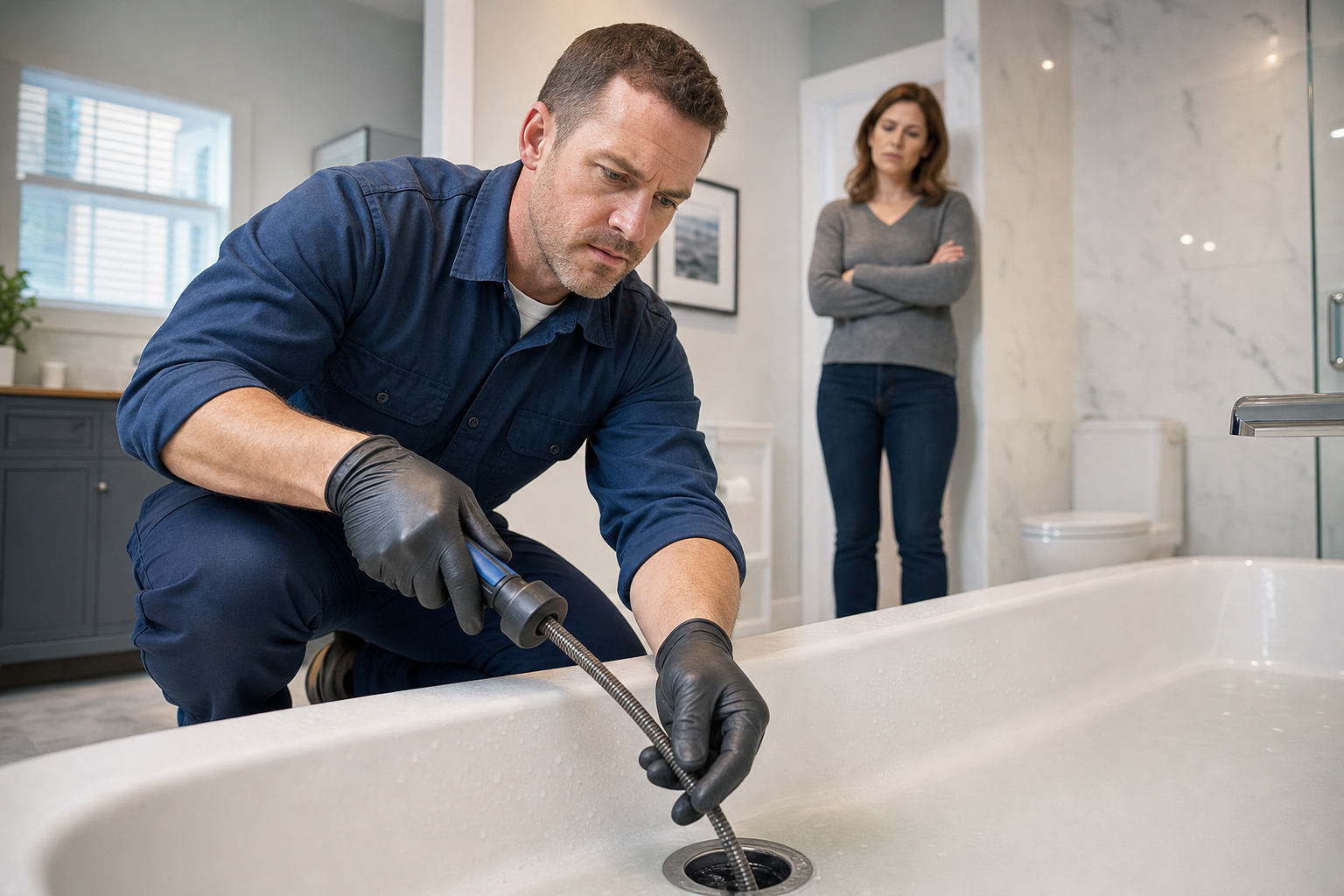
Mechanical drain snaking is the core method used to clear severe clogs. A drain snake, also called an auger, is a flexible cable with a cutting or boring head that is fed into the pipe. It physically breaks through the blockage, whether that is compacted grease, a mass of roots, or a buildup of debris, and restores flow through the line.
For a single-fixture clog, the snake is typically inserted through the drain opening or a nearby access point. For a main sewer line blockage, the technician accesses the line through an exterior cleanout or another appropriate entry point and feeds a larger, more powerful cable through to the obstruction.
Step 4: Flow Is Confirmed
After clearing the blockage, the technician runs water through the line to confirm it is draining properly. They can also let you know what they encountered in the pipe, which gives you useful context about whether the clog was a one-time problem or something that may recur without maintenance.
The entire process for many severe clogs can be completed in a single visit. Some situations, such as deep main line blockages caused by extensive root growth or pipe damage, may require additional steps beyond standard drain cleaning. If that is the case, the technician will explain what they found and what the next options are, so you can make an informed decision.
How Long Does It Take to Clear a Severe Clog?
Most homeowners want to know two things: how fast someone can get here, and how long the actual work takes.
Just Drains works to arrive at your Morris County home within 60 minutes of your call. Once on site, many severe single-drain clogs can be cleared within 30 minutes to an hour. Mainline sewer clogs may take longer, depending on the depth of the blockage, the accessibility of the cleanout, and what is causing the obstruction.
In most cases, the problem is resolved in a single visit. You do not need to schedule multiple appointments or wait days for parts.
How Much Does Drain Cleaning Cost in Morris County?
Cost is one of the first things homeowners ask about, especially during a stressful backup. It is a fair question.
Just Drains offers drain cleaning starting at $63. This makes professional drain cleaning accessible without the sticker shock that sometimes comes with emergency service calls from larger companies.
Factors that can affect the final cost of a drain cleaning visit include:
- Location of the clog — a bathroom sink clog near the drain opening is typically simpler than a deep mainline blockage
- Severity of the obstruction — a compacted grease buildup may take more time to clear than a single-point blockage
- Accessibility — whether the technician can reach the line easily through a cleanout or needs to access it another way
The $63 starting price gives you a real, concrete anchor when comparing options, not a vague “call for a quote” with no context. When you call Just Drains, we can give you more specific information based on what you describe.
When to Stop Trying to Fix It Yourself and Call for Help
There is nothing wrong with trying a plunger first. But there is a clear point where continued DIY efforts are unlikely to help and may make things worse.
Call a licensed drain and sewer cleaning professional when:
- A plunger has not worked after multiple firm attempts
- More than one fixture is backing up at the same time
- There is sewage or wastewater visible on the floor
- You notice a sewage smell that was not there before
- The same drain keeps clogging repeatedly within a short period
- Water backs up in a different fixture when you flush or run the tap
- You have already tried a chemical drain cleaner and it did not work
Each of these signs points to a blockage that is deeper or more substantial than what household tools can reach. A licensed professional with a mechanical drain snake can get to the actual obstruction and clear it, which is the only reliable way to restore full drainage in a severely clogged system.
Just Drains helps Morris County homeowners every day with exactly these situations. If any of the above sounds familiar, Call Now: (732) 279-2427.
Frequently Asked Questions
How do I know if my clog is severe enough to call a professional?
If a plunger is not working, water is not draining at all, or more than one fixture is backing up, your clog is beyond what household tools can handle. Sewage smells, gurgling sounds from other drains, and wastewater rising in the bathtub when you flush the toilet are also clear signs it is time to call a licensed drain cleaning professional.
Can I get fast drain cleaning in Morris County?
Yes. Just Drains serves Morris County with a service-in-60-minutes response. When you call (732) 279-2427, we work to get a licensed technician to your home as quickly as possible to assess and clear the blockage.
What is the difference between a clogged drain and a sewer line backup?
A clogged drain typically affects one fixture, such as a single sink or shower, and is caused by a blockage in the branch drain line connected to that fixture. A sewer line backup affects multiple fixtures at once because the blockage is in the main sewer line that serves the entire home. Sewer line backups often cause water to come up in the lowest drains first, such as basement drains or ground-floor bathtubs.
Should I try a chemical drain cleaner before calling?
For a severe clog, chemical drain cleaners are unlikely to help. They are designed for minor surface-level slowdowns and usually cannot reach a deep blockage when standing water is in the way. They can also damage older pipes and create a safety concern for the technician who clears the line. If you have already used one, let us know when you call.
How much does drain cleaning cost in Morris County, NJ?
Just Drains offers drain cleaning starting at $63. The final cost depends on where the clog is located, how severe it is, and how accessible the drain line is. Call (732) 279-2427 to discuss your situation and get more specific information.
What causes severe clogs in older Morris County homes?
Common causes include tree root intrusion into sewer lines, grease buildup in kitchen drain lines, and deterioration of older pipe materials like cast iron and clay. Many homes in Morris County were built with pipe systems that are now decades old, which makes them more susceptible to blockages than newer PVC plumbing.
What if the clog comes back after cleaning?
A recurring clog often means there is an underlying condition in the pipe, such as root growth, pipe deterioration, or a persistent buildup deeper in the line. When a Just Drains technician clears your drain, they can share what they encountered in the pipe so you understand whether the issue is likely a one-time blockage or something that may need ongoing attention.
Get Your Morris County Drain Cleared Fast
A severe clog is disruptive, messy, and stressful. It interrupts your daily routine and gets worse the longer it sits. The good news is that most severe drain and sewer line clogs can be cleared in a single professional visit, without the mess and uncertainty of trying to handle it yourself.
Just Drains is a licensed drain and sewer cleaning company that serves homeowners across Morris County and surrounding Central New Jersey areas. We offer drain cleaning starting at $63 and work to reach your home within 60 minutes.
If your drains are backed up and a plunger is not cutting it, the next step is simple.
Call Now: (732) 279-2427