When to Call for Emergency Drain Cleaning After a Basement Floor Drain Backup in Morris County
If sewage or contaminated water is coming up through your basement floor drain, water is actively rising and not going back down, or more than one drain in your home is backing up at the same time, call for emergency drain cleaning now. These are not situations that improve on their own, and waiting typically makes the damage and the cost worse.
If you are a Morris County homeowner standing near a wet, smelly basement right now, this article will help you figure out exactly how serious your situation is, what to do in the next few minutes, and when it makes sense to pick up the phone. Not every backup is a full emergency, and knowing the difference can save you stress and money. Just Drains provides licensed drain cleaning and sewer line clearing across Morris County and can often reach your home within 60 minutes of your call. If you already know you need help, call now: (732) 279-2427.
Why Basement Floor Drains Back Up First
Your basement floor drain sits at the lowest point in your home’s drainage system. Every sink, toilet, shower, and washing machine in your house sends wastewater down through pipes that eventually connect to one main sewer line running out to the municipal sewer or your septic system.
When that main sewer line gets blocked, wastewater has nowhere to go. It backs up through the pipes, and gravity pulls it to the lowest available exit, which is almost always the basement floor drain. That is why a backup here often means more than just a local clog. It can mean your main sewer line is partially or fully blocked, and that affects every fixture in the house.
A single slow sink upstairs is usually a localized clog in that one drain line. Water pushing up through the basement floor drain is a different situation entirely, and it usually requires professional sewer line clearing to resolve.
When to Call for Emergency Drain Cleaning Right Away
Not every basement floor drain backup requires an emergency call, but several specific conditions mean you should not wait. If any of the following match what you are seeing right now, it is time to call a licensed drain and sewer cleaning professional immediately.
You See or Smell Raw Sewage
If the water coming up from your floor drain is dark, has visible waste in it, or smells strongly of sewage, you are dealing with contaminated water. This is not rainwater or a minor overflow. Sewage backup poses a real health risk to everyone in your household, including children and pets. Stay out of the standing water, keep others away from the area, and call for help.
Sewage backup through a basement floor drain almost always points to a blockage in the main sewer line, which means the problem will not resolve until the line is professionally cleared.
Water Is Actively Rising and Not Going Back Down
If water is pooling around the floor drain and the level is climbing rather than receding, the blockage is severe enough that wastewater is accumulating faster than it can drain. This can cause damage to drywall, flooring, stored belongings, and any appliances or mechanical systems in your basement, including your furnace and water heater.
Rising water also increases the risk of mold beginning to develop. Mold growth can start within 24 to 48 hours of water exposure in a warm, enclosed space like a basement. Once mold takes hold, you are looking at a separate remediation problem on top of the drain issue itself.
More Than One Drain in Your Home Is Backing Up
This is one of the clearest signals that the problem is in your main sewer line, not in a single branch pipe. If your basement floor drain is backing up and you also notice that a toilet upstairs is slow to flush, a bathtub is draining poorly, or water is gurgling up in a sink when you run another fixture, the blockage is downstream of where all those lines connect.
When multiple drains are affected, a plunger or a bottle of drain cleaner will not reach the problem. The blockage is in the shared main line, and it needs professional sewer line clearing.
You Hear Gurgling From Other Fixtures
Gurgling sounds coming from a toilet, sink, or tub when you are not using them often mean air is being displaced in the pipes because wastewater cannot flow past a blockage. This is an early warning sign that a full backup may be developing, and it frequently accompanies or precedes a basement floor drain overflow.
If you are hearing gurgling and your floor drain has already started to back up, the situation is progressing and a professional should clear the line before it gets worse.
The Backup Started During or After Heavy Rain
Morris County homeowners sometimes experience basement floor drain backups during or after significant rainstorms. Many homes in the area have older sewer laterals, including clay and cast iron pipes, that are more vulnerable to groundwater infiltration during heavy rain. When the ground is saturated, water can seep into aging pipe joints or cracks and overwhelm a line that is already partially blocked by debris or root growth.
If your backup coincides with a storm, it may not resolve once the rain stops, especially if tree roots or buildup have narrowed the pipe. A rain-triggered backup that brings sewage or dark water into your basement still qualifies as an emergency and should be addressed by a drain and sewer cleaning professional promptly.
You Already Tried to Clear It and the Backup Returned
If you plunged the floor drain or used a basic household snake and the water went down temporarily but came back within minutes or hours, the blockage is deeper in the line than household tools can reach. Repeated backups after attempted clearing are a strong sign that the main sewer line is involved and needs professional equipment to open.
At this point, continuing to try DIY methods delays the real fix and gives the water more time to cause damage. This is a good time to call a licensed drain and sewer cleaning company for help.
Just Drains handles exactly this kind of situation for Morris County homeowners. If your basement floor drain is backing up and matches any of the conditions above, call now: (732) 279-2427. Just Drains offers drain cleaning starting at $63 and can often provide service within 60 minutes of your call.
When You Can Likely Wait Until Regular Hours
Not every floor drain issue requires an emergency response. Being honest about this helps you make a better decision and avoids unnecessary stress.
You may be able to schedule service during regular hours if all of the following are true:
- Only one drain is affected. The floor drain is slow but no other fixture in the house is backing up or gurgling.
- There is no sewage odor or visible waste. The water is clear or lightly discolored, not dark or foul-smelling.
- The water receded on its own and has not returned. A brief, one-time backup that drains away and does not come back may indicate a partial obstruction rather than a full main line blockage.
- You are not using water-heavy appliances. You can avoid running the washing machine, dishwasher, or multiple showers until the line is inspected.
Even in a non-emergency situation, a slow or intermittently backing-up floor drain should still be professionally cleaned before it becomes a full blockage. Just Drains offers drain cleaning starting at $63 across Morris County, which makes it practical to address a developing problem before it turns into an emergency.
What to Do Right Now During an Active Backup
While you wait for a drain cleaning professional to arrive, these steps can help protect your home and your household.
- Stop using all water fixtures in the house. Do not flush toilets, run sinks, or start the washing machine or dishwasher. Every gallon of water you send down the drain adds to the backup because it has nowhere to go past the blockage.
- Keep everyone out of the standing water. Sewage-contaminated water carries bacteria and waste. Keep children and pets away from the basement until the water is removed and the area is cleaned.
- If you smell sewer gas, leave the area immediately. Sewer gas can accumulate in enclosed spaces and cause headaches and nausea. Do not attempt to ventilate the space yourself. Exit the basement, get fresh air, and contact your drain cleaning professional or emergency services to report the situation.
- Stay away from standing water near any electrical source. If there is standing water near electrical outlets, your breaker panel, or any plugged-in appliances, do not enter the water. Do not attempt to interact with electrical equipment in a flooded area. If you believe there is an active electrical hazard, contact emergency services before re-entering the space.
- Move valuables above the water line if you can do so safely. If you can reach boxes, documents, or electronics without stepping into contaminated water, move them to a higher surface.
- Take photos and note the time. Documenting the backup, the water level, and any visible damage can be helpful if you need to file a homeowners insurance claim later.
- Do not pour chemical drain cleaners into the floor drain. Chemical cleaners are not designed for main sewer line blockages. They will not reach the problem, and they can damage older pipes. They also create a hazardous situation for the technician who arrives to clear the line.
What to Tell the Drain Cleaning Professional When You Call
When you call for emergency drain cleaning, having a few details ready helps the technician prepare and may speed up the process once they arrive.
- Which drain or drains are backing up
- Whether you see or smell sewage
- Whether the water is still rising or has stopped
- How long ago the backup started
- Whether any other fixtures in the house are affected, slow, or making gurgling sounds
- Whether you tried anything to clear it yourself, and what happened
- Where your sewer cleanout access point is, if you know
You do not need to diagnose the problem. That is what the technician is there to do. But this basic information helps them arrive prepared.
To reach Just Drains for emergency drain cleaning in Morris County, call (732) 279-2427.
What Happens During an Emergency Drain Cleaning Visit
If you have never called for emergency drain cleaning before, knowing what to expect can ease some of the stress.
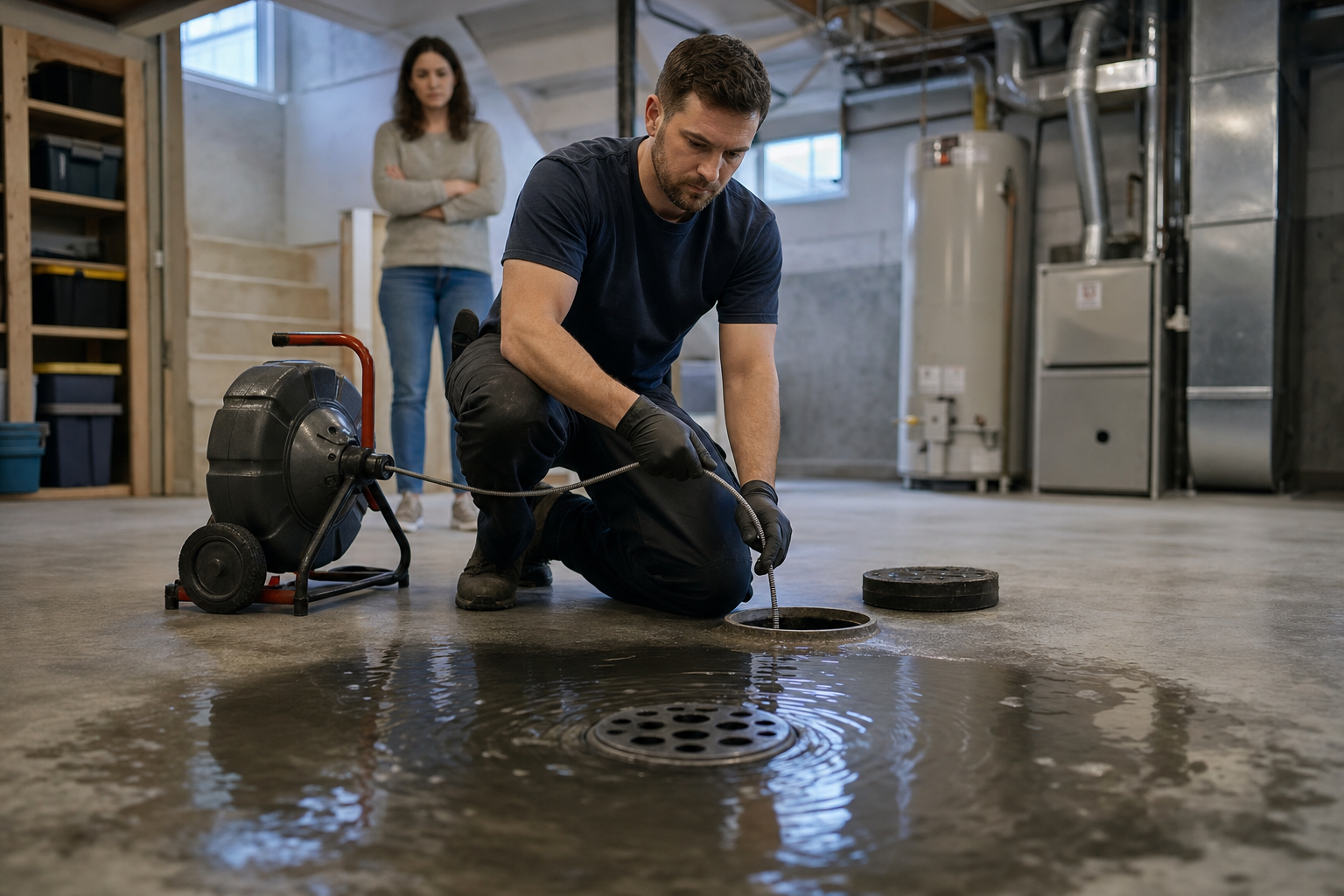
A licensed technician will arrive and first assess the situation, checking which drains are affected and locating the sewer cleanout access point. The cleanout is usually a capped pipe near your home’s foundation or in the basement that provides direct access to the main sewer line.
The technician will then use a professional drain snake, also called an auger, to reach the blockage inside the main line. A professional-grade snake is significantly longer and more powerful than a household version, which is why it can clear obstructions that your own attempts could not reach.
Once the line is cleared, the technician will run water to confirm that drainage is restored and that the backup does not return. In most cases, the visit resolves the immediate problem and gets your household back to normal use of sinks, toilets, and showers.
Just Drains specializes in drain cleaning and sewer line clearing. It is what we do, and it is all we do, which means our technicians arrive focused and equipped specifically for this kind of work.
Common Causes of Basement Floor Drain Backups in Morris County
Understanding why floor drains back up in this area can help you recognize the warning signs earlier next time.
Tree root intrusion. Mature trees are common across Morris County properties. Roots are drawn toward moisture and gradually work their way through sewer pipe joints and hairline cracks. Once they have entered the pipe, they continue to expand and collect debris, slowly reducing or completely cutting off flow through the line.
Aging sewer laterals. Many homes in Morris County were built decades ago with clay or cast iron sewer pipes. These materials deteriorate over time, developing cracks, joint separations, and rough interior surfaces that catch grease, soap residue, and solid waste. An aging pipe that has been slowly narrowing for years can go from slow to fully blocked without much warning.
Heavy rain and municipal sewer capacity. During significant rainstorms, the municipal sewer system can approach capacity. At the same time, groundwater can infiltrate older sewer laterals through cracks and loose joints. The combination of higher pressure from the municipal side and infiltration from the ground side can push wastewater back toward your home, especially if there is any existing partial blockage in your line.
Buildup from household use. Grease from kitchen sinks, soap scum from showers, hair, and other debris accumulate inside drain lines over time. This gradual buildup narrows the pipe until one day it reaches the point where flow is restricted enough to cause a backup.
How to Reduce the Risk of Future Backups
Once your immediate backup is resolved, a few practical habits can help reduce the chance of it happening again.
- Schedule regular drain cleaning. Periodic professional cleaning removes buildup before it reaches the point of causing a blockage. Just Drains offers drain cleaning starting at $63, which makes routine maintenance accessible for most homeowners.
- Be mindful of what goes down your drains. Avoid pouring cooking grease or oil down kitchen sinks. Use drain screens in showers and tubs to catch hair. Do not flush anything other than toilet paper.
- Know where your sewer cleanout is. If you ever need emergency service again, knowing where the cleanout access point is located saves time and helps the technician get started faster.
- Pay attention to slow drains. A drain that is gradually slowing down is often a sign that buildup is accumulating. Addressing a slow drain early is simpler and less expensive than dealing with a full backup later.
Frequently Asked Questions
Is water coming up from my basement floor drain considered sewage?
If the water is dark, has an odor, or contains visible waste, it is likely sewage or sewage-contaminated water that has backed up from the main sewer line. Even water that looks relatively clear but carries a sewage smell should be treated as contaminated. Keep people and pets away from it and call a licensed drain and sewer cleaning professional to clear the line.
Can I use my sinks and toilets if my basement floor drain is backing up?
No. If your basement floor drain is actively backing up, using any water fixture in the house sends more water into a system that is already blocked. Every flush or faucet run adds volume to the backup. Stop all water use until the line is cleared.
What causes basement floor drain backups during heavy rain in Morris County?
Heavy rain can overwhelm municipal sewer capacity and saturate the ground around older sewer laterals. Groundwater seeps into cracked or deteriorating pipe joints, adding volume to a line that may already have partial blockage from roots or buildup. The combined pressure pushes wastewater back toward the lowest drain in your home, which is typically the basement floor drain.
Should I try to unclog a basement floor drain myself before calling?
You can try a plunger on the floor drain if the backup is minor and there is no sewage present. However, if plunging does not resolve the problem quickly, or if the backup returns after you clear it, the blockage is likely in the main sewer line and beyond the reach of household tools. Avoid chemical drain cleaners entirely — they are not effective against blockages in the main line, can cause harm to older pipe materials, and may create unsafe conditions for the technician who responds. Reach out to a licensed professional for proper service.
How quickly can a drain cleaning company respond to an emergency in Morris County?
Response times vary by provider and time of day. Just Drains serves Morris County and can often provide service within 60 minutes. When you call, let the dispatcher know the situation is urgent and describe what you are seeing so the technician can arrive prepared. Call Just Drains at (732) 279-2427.
How often should a basement floor drain be cleaned to help prevent backups?
There is no single schedule that works for every home. Homes with older sewer lines, large trees near the sewer lateral, or a history of slow drains may benefit from more frequent cleaning. If you have experienced a backup before, scheduling regular drain cleaning is one of the most practical steps you can take to reduce the risk of a repeat. Just Drains offers drain cleaning starting at $63 for Morris County homeowners.
Get Help Now for a Basement Floor Drain Backup in Morris County
A basement floor drain backup is stressful, but knowing what you are dealing with makes it easier to take the right next step. If sewage is present, water is rising, or multiple drains in your home are affected, do not wait. These conditions point to a main sewer line blockage that requires professional clearing.
Just Drains is a licensed drain cleaning and sewer line clearing company serving Morris County and surrounding areas in Central and North New Jersey. We focus entirely on drain and sewer cleaning, which means fast, focused service for exactly this kind of problem. Drain cleaning starts at $63, and we can often reach your home within 60 minutes.
Call Just Drains now: (732) 279-2427